

 English
 русский
 Español
 Français
 Português
 عربى
عربى



+86-13588556918
Content
- 1 Container Loading and Unloading Equipment: What It Is and Why It Matters
- 2 Common Types of Container Loading and Unloading Equipment and Their Features
- 3 Working Principles and Structural Design
- 4 Global Demand Trends for Container Loading and Unloading Equipment
- 5 Application Scenarios and Selection Criteria Across Industries
- 6 Automation Investment Trends Reshaping Loading and Unloading Operations
- 7 Where Manufacturing and Logistics Companies Are Directing Automation Budgets
- 8 Detailed Comparison of Loading and Unloading Equipment Types
- 9 Container Terminal Automation: How Much Growth Potential Remains
- 10 Maintenance Guidance for Long-Term Equipment Reliability
- 11 Choosing a Reliable Container Loading and Unloading Equipment Manufacturer
- 12 Frequently Asked Questions
- 12.1 Q1: What is the difference between a rear dumper and a side dumper?
- 12.2 Q2: How do I choose between car loading equipment and a container tippler?
- 12.3 Q3: How often should container loading and unloading equipment be serviced?
- 12.4 Q4: Can loading and unloading equipment be customized for different container or truck sizes?
Container Loading and Unloading Equipment: What It Is and Why It Matters
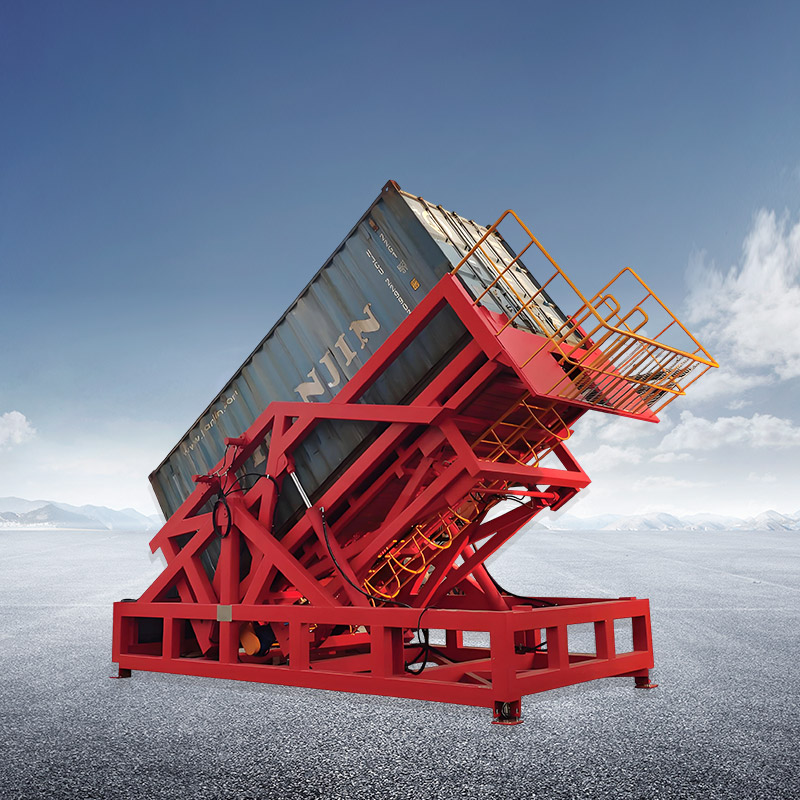
Container loading and unloading equipment is the general term for mechanized systems that tilt, lift, or rotate trucks, wagons, or containers so that bulk or palletized cargo can be discharged or loaded without manual shoveling or crane assistance. This category typically includes rear (tail) truck dumpers, side dumpers, car or truck loading machines, and container tipplers or flippers. For industries that move large volumes of granular, powdered, or block material — steel, chemicals, cement, coal, grain, oil, and food processing among them — this equipment determines how quickly a vehicle turns around at a receiving dock, how much product is lost to spillage, and how consistently a facility can hold to its loading schedule.
Selecting a capable container loading and unloading equipment manufacturer has a direct effect on daily throughput, staffing needs, and long-term maintenance costs, which is why procurement teams increasingly compare structural design, cycle time, and after-sales support before committing to a supplier. The sections below walk through the common equipment types, how they are built, where each one fits best, how the wider market is trending, and what to check before signing off on a manufacturer.
- Common equipment types and their distinguishing features
- How the tilting and restraint mechanisms are engineered
- Application scenarios by industry and equipment selection criteria
- Market and automation trends supported by industry research
- A detailed side-by-side comparison, maintenance guidance, and frequently asked questions
Key takeaway: There is no single "best" configuration among container and truck loading and unloading equipment. The right choice depends primarily on cargo characteristics, required throughput, and available site footprint, not on brand reputation alone.
Common Types of Container Loading and Unloading Equipment and Their Features
Manufacturers of automatic loading and unloading equipment generally group their product lines into four broad families. Each family is built around a different way of moving cargo out of, or into, a vehicle body or container, and each carries its own advantages depending on the material being handled.
Rear (Tail) Truck Dumper
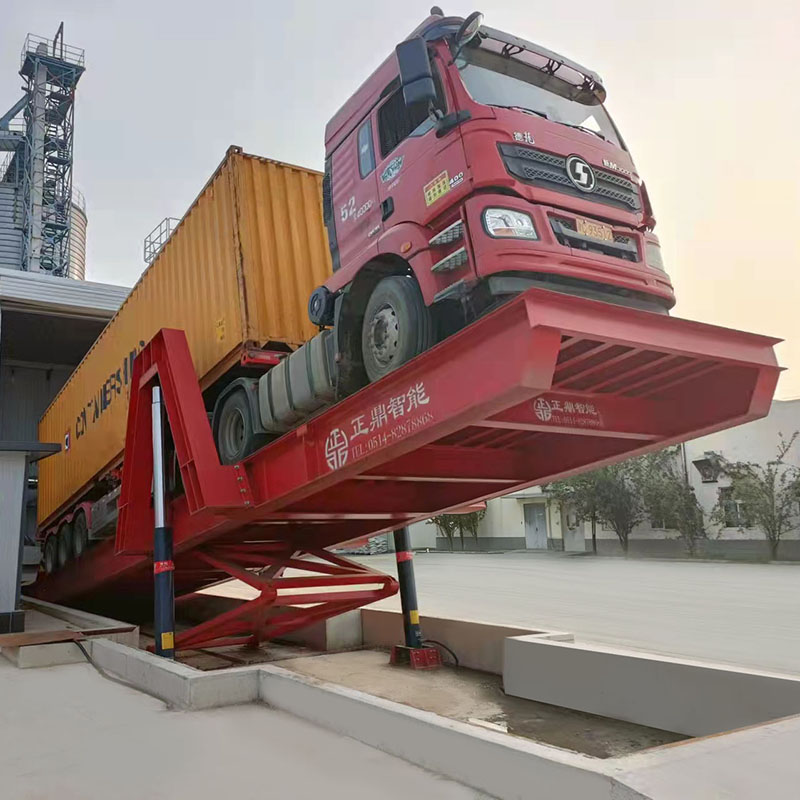
Lifts the rear of a loaded truck so cargo slides out through the tailgate under gravity. Well suited to free-flowing bulk solids such as grain, coal, and aggregate.
Side Dumper / Side Tipper
Tilts a vehicle or bin sideways instead of rearward, useful where discharge space behind the vehicle is limited or where cargo needs to be directed to a side-mounted receiving hopper.
Car (Truck) Loading Equipment
Works in the opposite direction, feeding bulk material from a silo, hopper, or conveyor into a waiting truck bed or rail car in a controlled, metered flow.
Container Tippler / Flipper
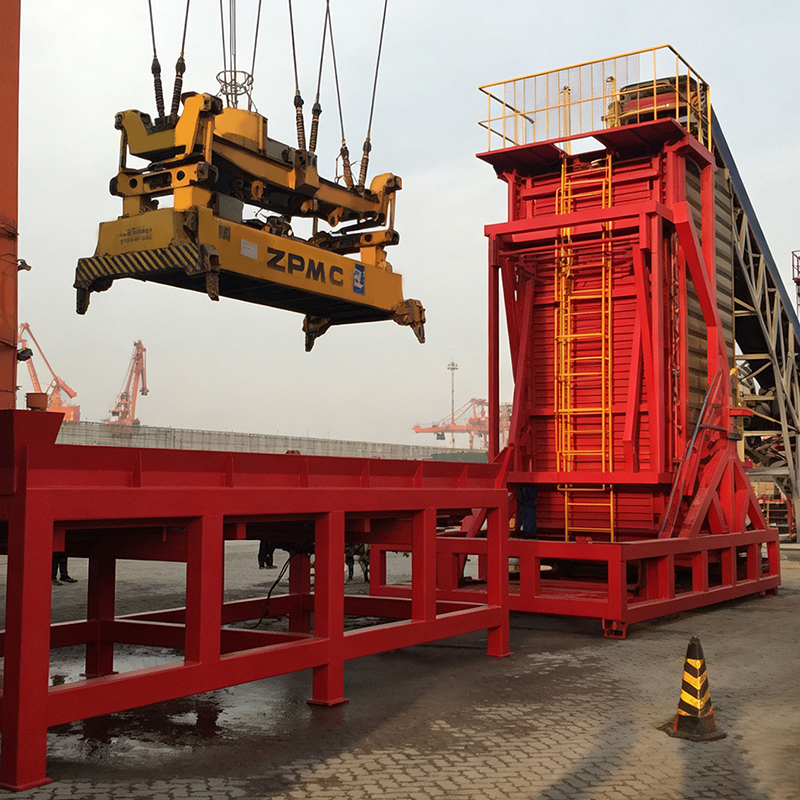
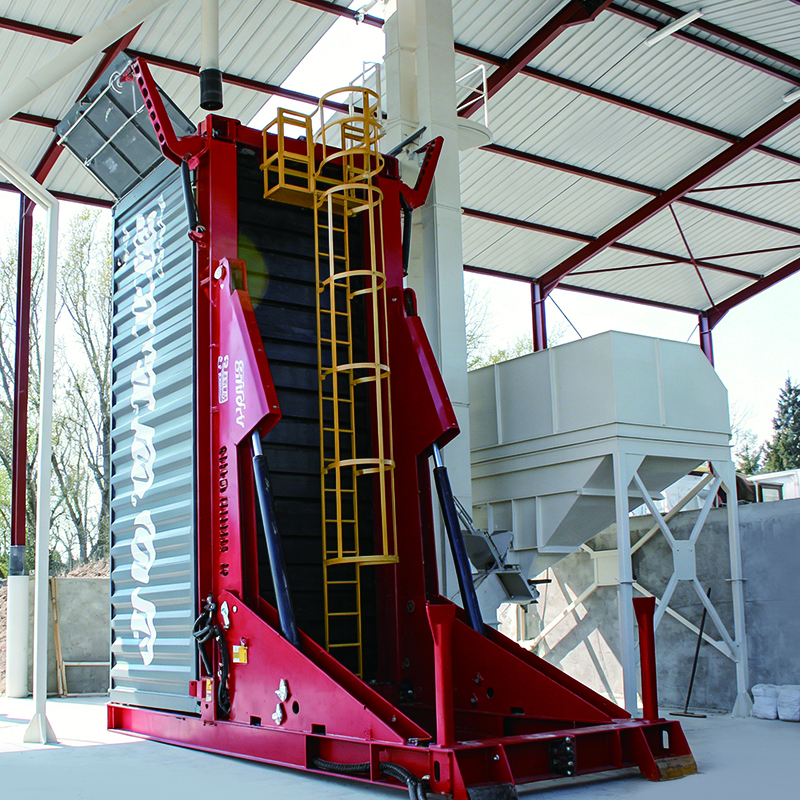
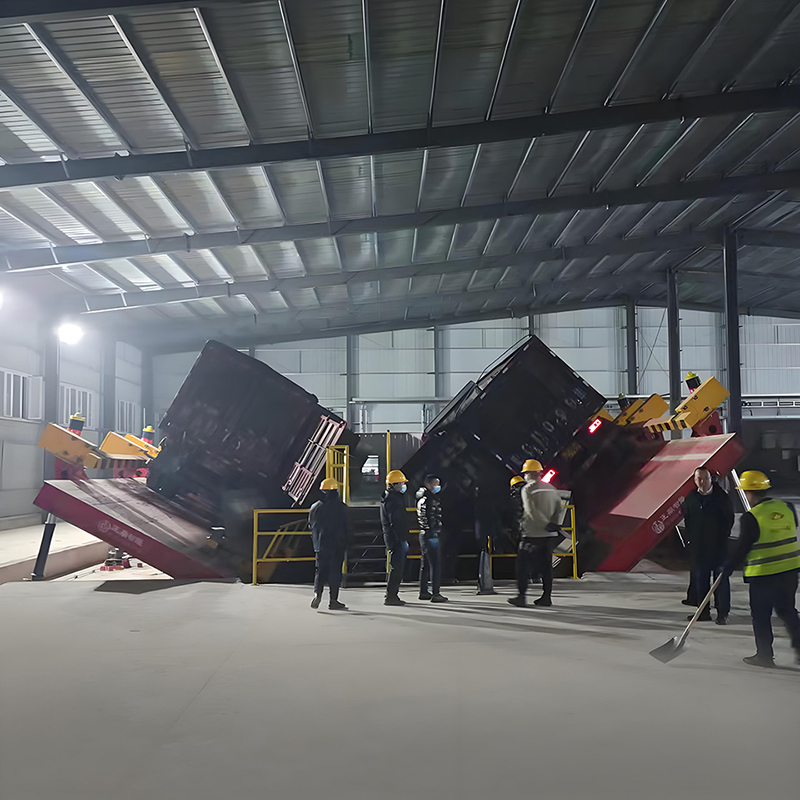
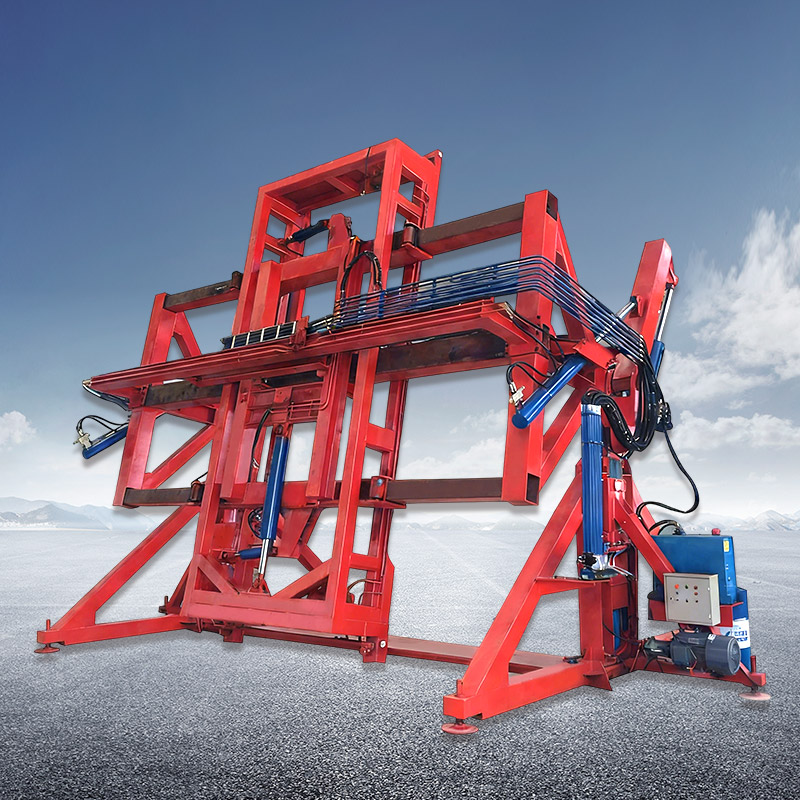
Clamps and rotates an entire shipping or storage container to empty it through the door end or a dedicated discharge opening, commonly used for export-grade bulk cargo.
Across all four families, the equipment is generally rated by maximum vehicle or container weight it can safely tilt, the tilt angle it can reach, and the cycle time from arrival to full discharge. Heavier-duty rear and side dumpers built for steel or mining applications are typically engineered for higher gross weights and more frequent daily cycles than lighter units designed for grain or food ingredient transfer, where gentler handling and easier cleaning matter more than raw capacity. Container loading and unloading equipment chosen for export operations also needs to accommodate standard container dimensions and locking points so that clamping is secure across repeated cycles.
Key takeaway: Rear and side dumpers discharge cargo out of a vehicle, car loading equipment feeds cargo in, and container tipplers handle the container itself — matching the family to the direction and container type of material flow is the first filtering step in equipment selection.
Working Principles and Structural Design
Regardless of family, most container and truck loading and unloading equipment shares the same core mechanical logic: a steel platform or cradle carries the vehicle or container, a hydraulic cylinder set tilts that platform to a target angle, and a clamp or restraint arm keeps the load secured throughout the cycle so the vehicle cannot shift or roll. A welded steel base frame anchors the whole assembly to the foundation and absorbs the bending loads generated as the platform rises. Tilt angles for rear and side dumpers commonly fall in a moderate-to-steep range that is enough to fully empty a bed through gravity without exceeding the structural or stability limits of the vehicle being tilted, and the exact angle is normally tuned to the specific cargo's flow characteristics.
The hold-down clamp is arguably the component that separates a well-engineered unit from a basic one. It has to press evenly on the vehicle chassis or container frame so that repeated tilting cycles do not loosen the contact points, and it typically works together with position sensors and interlocks that prevent the hydraulic system from lifting the platform until the clamp is fully engaged. Control cabinets house the programmable logic that sequences clamping, lifting, holding, and lowering, and on more advanced systems this logic also logs cycle counts and flags irregular hydraulic pressure that may indicate a developing fault. Automatic loading and unloading equipment built with heavier steel sections at the pivot points and reinforced clamp brackets generally sustains more duty cycles before requiring structural attention, which is one of the reasons structural design deserves as much buyer attention as headline capacity figures.
Key takeaway: The clamp and restraint system, not just the hydraulic cylinder, is usually the component that determines how safely and how many cycles a tilting dumper can sustain over its service life.
Global Demand Trends for Container Loading and Unloading Equipment
Demand for container and truck loading and unloading equipment does not move in isolation; it tracks the broader growth of global containerized and bulk trade, port and warehouse capacity expansion, and the modernization plans of industries such as steel, cement, chemicals, and food processing. Buyers evaluating a purchase often want to know whether the market they are entering is expanding steadily or leveling off, because that affects how easily replacement parts, technical support, and future capacity upgrades will remain available. Several independent research firms track this market from slightly different angles, but their growth trajectories point in a consistent direction. The chart below illustrates one widely cited projection for the broader container handling equipment category, which includes the loading and unloading systems discussed in this article. It gives a useful reference point before we look at automation-specific trends in the following sections.
According to a market report by IMARC Group, the global container handling equipment market was valued at approximately USD 8.3 billion in 2024 and is projected to reach roughly USD 11.5 billion by 2033, which implies a compound annual growth rate near 3.5 percent across the forecast window. The intermediate points on the chart are a smooth trajectory calculated from that published growth rate and should be read as an illustrative projection rather than a year-by-year forecast from the original report. Growth of this kind is rarely driven by a single factor; rather, it reflects the combined effect of rising global trade volumes, continued build-out of port and inland logistics infrastructure, and the steady replacement of manual or semi-manual discharge methods with mechanized systems across bulk-handling industries. Food, chemical, and construction-material producers in particular have been expanding warehouse and terminal capacity to keep pace with shifting supply chains, which supports ongoing purchases of loading and unloading systems even in years when overall industrial output growth is modest.
A related but distinct category, bulk material handling equipment more broadly, was estimated at around USD 50.4 billion in 2025 with a forecast climb toward roughly USD 81 billion by 2035 at close to a 5 percent compound annual growth rate, according to a separate industry report from Global Market Insights. Reading the two figures together suggests that demand for mechanized bulk handling — including the container and truck loading and unloading equipment covered in this article — is expanding at a pace that is neither explosive nor stagnant, but steady enough that manufacturers with established engineering teams and export experience are generally well positioned to keep investing in product development and regional service coverage. For buyers, this steadiness is a practical signal that spare parts, technical documentation, and manufacturer support are likely to remain available over the equipment's working life, which typically runs well beyond a decade for well-maintained hydraulic dumpers and tipplers.
Key takeaway: The container handling equipment market is projected to grow at a moderate, steady pace of roughly 3 to 5 percent annually through the early 2030s, according to IMARC Group and Global Market Insights, supporting continued availability of parts and technical support from established manufacturers.
Application Scenarios and Selection Criteria Across Industries
Because container loading and unloading equipment is used across such a wide range of industries, the "right" configuration changes considerably depending on what is being moved and under what site conditions. Steel plants unloading scrap or coil differ enormously from a grain terminal receiving free-flowing bulk, and both differ again from a food ingredient plant that needs frequent washdown between batches. The table below lines up common application scenarios against the selection factors that typically matter most when narrowing down equipment options.
Typical Application Scenarios
|
Key Selection Criteria
|
In practice, most buyers start by fixing the cargo type and required throughput, then work backward to a family of equipment and finally to a specific capacity rating. A cement terminal moving abrasive bulk at high volume, for example, usually prioritizes wear-resistant lining and a shorter cycle time over gentle handling, while a food ingredient plant will weigh ease of cleaning and lower discharge impact more heavily than raw throughput. Outdoor installations exposed to weather generally call for additional corrosion protection and sometimes weatherproof control cabinets, whereas indoor installations can often use a simpler enclosure but need to account for ceiling height and dust extraction ducting. Getting these selection criteria right before requesting quotations tends to shorten the sourcing process considerably, since it lets a container loading and unloading equipment manufacturer propose a configuration that fits the application on the first pass rather than through several rounds of revision.
Key takeaway: Defining cargo characteristics and required throughput before contacting a supplier is the single most effective way to narrow equipment options and speed up the sourcing process.
Automation Investment Trends Reshaping Loading and Unloading Operations
Beyond the base market for loading and unloading equipment itself, a parallel and faster-growing trend is the shift toward automated material handling more broadly, which affects how much sensor integration, programmable control, and remote monitoring buyers now expect as standard features rather than optional extras. This shift is visible in how quickly the automated segment of material handling equipment has been expanding compared with the overall market. Industry researchers have tracked this acceleration closely over the past several years, and the projected trajectory is notably steeper than that of conventional, non-automated equipment. The chart below sets out one widely referenced projection for this automated segment across three benchmark years. It helps explain why even relatively traditional dumper and tippler manufacturers are increasingly building sensor packages and programmable logic into standard product lines.
According to a market report by Precedence Research, the global automated material handling equipment market was valued at approximately USD 72.6 billion in 2025 and is projected to reach roughly USD 170.6 billion by 2034, implying a compound annual growth rate near 10 percent — considerably faster than the broader container handling equipment category discussed earlier. The 2030 figure on the chart is an interpolated estimate based on that published growth rate, included to show the shape of the curve rather than as a standalone forecast. The same report notes that the Asia-Pacific region held more than 39 percent of global revenue share in 2024, reflecting the concentration of manufacturing, port, and export activity in the region, and that robotics accounted for the largest single product segment at roughly 23 percent of revenue that year.
For buyers of container and truck loading and unloading equipment specifically, this broader automation curve matters for two practical reasons. First, it signals that programmable logic controllers, load sensors, and remote diagnostics are moving from premium options toward standard specification, which means equipment purchased today without these features may look comparatively basic within a normal replacement cycle. Second, it suggests that manufacturers who have already invested in automation-ready platforms — rather than retrofitting older mechanical designs — are likely to offer smoother upgrade paths as a facility's own automation needs grow. This is one reason procurement teams increasingly ask about control system architecture and sensor compatibility alongside the more traditional questions about tonnage capacity and cycle time.
Key takeaway: The automated segment of material handling equipment is growing roughly twice as fast as the broader container handling equipment market, according to Precedence Research, which is pushing sensor-based and programmable controls toward becoming a standard rather than optional feature.
Where Manufacturing and Logistics Companies Are Directing Automation Budgets
Knowing that automation spending is rising overall is useful, but it is also worth understanding how that spending gets divided once it reaches a facility's budget, since this affects what buyers should expect a modern loading and unloading system to integrate with. Recent industry survey data gives a reasonably clear picture of this split between direct automation equipment and the surrounding software layer. The pattern is fairly consistent across manufacturing and logistics operations of different sizes. The chart below summarizes that budget allocation using survey figures published in 2025. It is worth reading alongside the earlier growth chart, since the two together explain both how fast automation spending is rising and where most of it is actually going.
According to the 2025 Modern Materials Handling survey, referenced in a Precedence Research industry report, roughly 64 percent of companies reported investing in automation solutions, while about 32 percent directed budget toward supporting technology such as warehouse management systems and enterprise resource planning platforms, leaving a small remainder allocated elsewhere. The same survey found that a significant share of respondents had already increased material handling spending by around 20 percent compared with the prior fiscal year, and that further increases of up to roughly 35 percent were expected over the following two to three years. Read together, these figures suggest that automation budgets are not simply being spent on machinery in isolation; a substantial third of that spending is going toward the software layer that coordinates equipment, tracks inventory, and schedules loading and unloading cycles.
For a facility evaluating car and container loading and unloading equipment, this budget split is a useful reminder that the physical dumper or tippler is only one part of a modern operation. Equipment that can report cycle counts, hydraulic pressure, and fault codes back to a warehouse management system tends to fit more naturally into this spending pattern than a purely mechanical unit with no data output. It also means that when comparing quotations from different manufacturers, it is reasonable to ask specifically how each unit's control system communicates with existing plant software, since that compatibility affects how much of the 32 percent "technology" portion of a budget will need to be spent on custom integration work later.
Key takeaway: About a third of typical automation budgets goes to supporting software rather than machinery, so confirming how a unit's control system integrates with existing plant systems is as important as confirming its mechanical specifications.
Detailed Comparison of Loading and Unloading Equipment Types
With the broader market context established, it helps to bring the four main equipment families back together in a single, direct comparison. The table below lines up rear truck dumpers, side dumpers, car loading equipment, and container tipplers across the attributes that most often decide a purchase: primary function, general capacity positioning, footprint, and the cargo and industries each is typically matched with.
| Equipment Type | Primary Function | Typical Capacity Positioning | Footprint | Best-Fit Cargo & Industries |
|---|---|---|---|---|
| Rear (Tail) Truck Dumper | Tilts truck rearward to discharge through the tailgate | Light to heavy duty, high daily cycle counts | Requires clear space behind the platform | Grain, coal, aggregate, general bulk solids |
| Side Dumper / Tipper | Tilts vehicle or bin sideways for lateral discharge | Medium to heavy duty | Compact rear clearance, wider side clearance | Sites with limited rear discharge space, mixed bulk cargo |
| Car (Truck) Loading Equipment | Feeds metered bulk material into a truck bed or rail car | Scales from small batch to continuous high-volume feed | Positioned beneath or beside a silo or hopper | Cement, grain, chemical powders, food ingredients |
| Container Tippler / Flipper | Clamps and rotates a full container for discharge | Rated to standard container gross weights | Needs headroom and clamp clearance around the container | Export-oriented bulk cargo, steel, chemical, food industries |
A few patterns stand out when the families are compared side by side. Rear and side dumpers are essentially mirror images of the same principle applied in different directions, so the choice between them usually comes down to available site clearance rather than cargo type. Car loading equipment is the odd one out functionally, since it moves material into a vehicle rather than out of one, which means it is frequently paired with a rear or side dumper elsewhere in the same facility to handle both directions of flow. Container tipplers stand apart structurally because they clamp and rotate an entire standardized container rather than tilting an open truck bed, which is why they are especially common at facilities handling export-grade cargo that travels onward by sea.
Key takeaway: Rear and side dumpers cover discharge, car loading equipment covers intake, and container tipplers handle standardized containers — many facilities end up using more than one family together to cover the full material flow.
Container Terminal Automation: How Much Growth Potential Remains
Zooming out to the wider container handling sector adds useful context for anyone weighing a longer-term investment in mechanized loading and unloading equipment. Ports and terminals sit at one end of the same supply chains that inland factories, grain elevators, and chemical plants occupy at the other end, and research on how far automation has actually progressed at terminals gives a sense of how early the broader industry still is in its automation journey. This is a different measure from the automated material handling equipment market discussed earlier, since it looks specifically at how many physical terminal sites have adopted automated operations rather than at equipment spending. The gauge below visualizes that penetration rate using figures drawn from peer-reviewed research cited in an industry market report. It is a useful reality check against any assumption that automation has already become the norm across the sector.
According to a Grand View Research report, which cites peer-reviewed research on the subject, only about 3 percent of the world's container terminals were fully or semi-automated as of the research period, a figure that leaves the overwhelming majority of terminals still running on manual or conventional equipment. The same source notes that real acceleration in terminal automation is a fairly recent phenomenon, with roughly 47 terminals converting to automated operations between 2012 and 2021, compared with a much slower, more gradual pace of adoption during the 1990s and 2000s. That pattern — a long, slow build-up followed by a steeper recent climb — mirrors what is generally seen in capital-intensive industrial automation more broadly, where early adopters absorb higher upfront costs and integration risk before broader adoption follows.
The practical implication for facilities outside major seaport terminals — inland plants, rail yards, grain elevators, and factory receiving docks — is that there is still substantial room for automation to spread further down the supply chain, not just at the ports themselves. Loading and unloading equipment purchased today with sensor readiness and programmable control built in is better positioned to participate in that spread than equipment designed purely as a mechanical tilting mechanism with no data or automation pathway. Facilities that adopt automation-ready equipment earlier, even at a measured pace, may find themselves ahead of a broader industry curve that, based on the terminal data above, still has a long runway left.
Key takeaway: With only about 3 percent of container terminals fully or semi-automated according to Grand View Research, the wider container handling supply chain, including inland loading and unloading operations, still has considerable room to modernize.
Maintenance Guidance for Long-Term Equipment Reliability
Well-built container and truck loading and unloading equipment is designed to run for many years, but hydraulic tilting systems that cycle repeatedly under heavy load do need a structured maintenance routine to keep operating safely and efficiently. The steps below reflect standard practice for hydraulic dumper and tippler maintenance and are a reasonable starting checklist for a facility building or reviewing its own program.
- Check hydraulic fluid levels, filter condition, and cylinder seals on a fixed schedule, since seal wear is usually the first sign of developing hydraulic issues.
- Inspect the welded base frame and pivot points for fatigue cracking or deformation, particularly at high-cycle sites where the structure sees frequent load reversals.
- Calibrate and test the hold-down clamp and restraint arm to confirm even pressure and correct engagement before each tilt cycle.
- Test all position sensors and safety interlocks to verify that the hydraulic system cannot activate unless the clamp is fully engaged.
- Follow the manufacturer's lubrication schedule for bearings, pivots, and moving joints to reduce friction-related wear.
- Establish cleaning routines suited to the cargo handled, since corrosive or highly dusty materials accelerate wear on exposed components if left unaddressed.
- Refresh operator training periodically so that clamping, loading, and emergency-stop procedures remain second nature rather than a one-time onboarding exercise.
- Keep common spare parts on hand, including cylinder seals, bearings, and clamp linings, to avoid extended downtime while waiting on replacement components.
Facilities that invest in predictive rather than purely reactive maintenance tend to see measurable operational benefits. One industry market report on bulk material handling equipment notes that automation-assisted maintenance and monitoring practices were associated with improvements in loading precision of around 11 percent and reductions in material spillage of around 15 percent at surveyed sites, alongside broader productivity gains linked to AI-assisted monitoring at large-scale industrial installations. While these figures come from a broader material handling context rather than loading and unloading dumpers specifically, they illustrate a consistent theme: equipment that reports its own condition, whether through simple pressure gauges or full sensor packages, tends to be easier to keep running reliably than equipment maintained purely on a fixed calendar schedule with no feedback from the machine itself.
Key takeaway: A structured maintenance program built around hydraulic seals, clamp calibration, and safety interlock testing, supported where possible by condition monitoring, is the most reliable way to extend the service life of loading and unloading equipment.
Choosing a Reliable Container Loading and Unloading Equipment Manufacturer
Once the equipment family and technical specification are settled, the remaining decision is which manufacturer to work with. Beyond price and delivery lead time, buyers generally benefit from checking a supplier's engineering customization ability, the breadth of its product range across rear dumpers, side dumpers, car loading equipment, and container tipplers, the industries and export markets it has already served, and how responsive its after-sales technical support is once equipment is installed far from the factory. A manufacturer that only makes one narrow product line may struggle to advise objectively on which family actually fits a given application, whereas a supplier with a full range across all four equipment types has less incentive to force-fit a customer into whichever machine happens to be in stock.
Manufacturers based in China's advanced equipment manufacturing regions illustrate what this broader capability can look like in practice. Jiangsu Zhengding Intelligent Equipment Co., Ltd. is a national high-tech enterprise focused on the research, development, and manufacturing of intelligent logistics equipment, offering systematic solutions for the automatic loading and unloading of trucks and containers across a range of industries. Its product line spans rear dumpers, side dumpers, car loading equipment, and container flippers, giving it a comparatively complete lineup of automatic loading and unloading equipment for trucks and containers within the domestic market. The company's equipment is used across steel, chemical, cement, coal, grain, oil, and food processing operations, and its products are exported to markets including Japan, Brazil, Egypt, Pakistan, India, the Middle East, and Southeast Asia. Within China, the company's annual sales volume and technical performance for automatic truck loading and unloading equipment are reported to be in a leading domestic position, and its international customer base has included well-known names such as Budweiser, Heineken, Buhler Group, Wilmar International, Cargill, DuPont, Louis Dreyfus, Charoen Pokphand Group, and Saint-Gobain Group.
The specifics will differ from one supplier to another, but the underlying evaluation questions stay consistent: does the manufacturer engineer to the customer's actual cargo and site conditions rather than offering only standard catalog units, has it demonstrated reliable performance across multiple industries rather than a single niche, and does it have a track record of supporting equipment once it has shipped to an export market where a local service technician may not be immediately available. Requesting reference sites within a similar industry, and asking directly how spare parts and remote technical support are handled after installation, remains one of the most effective ways to stress-test a manufacturer's claims before placing an order for container loading and unloading equipment.
Key takeaway: A manufacturer's product breadth, cross-industry experience, and post-installation support track record are generally better indicators of long-term reliability than price alone.
Frequently Asked Questions
Q1: What is the difference between a rear dumper and a side dumper?A rear dumper tilts a vehicle backward so cargo discharges through the tailgate, while a side dumper tilts it sideways for lateral discharge. The choice usually comes down to available clearance at the discharge point rather than the type of cargo being handled. |
Q2: How do I choose between car loading equipment and a container tippler?Car loading equipment feeds bulk material into a vehicle or rail car from a silo or hopper, while a container tippler clamps and rotates a full standardized container to empty it. If the operation is receiving containerized export cargo, a tippler is usually the closer fit; if the operation is filling outgoing trucks or rail cars from storage, car loading equipment generally fits better. |
Q3: How often should container loading and unloading equipment be serviced?Service intervals vary by manufacturer and duty cycle, but hydraulic fluid, seals, and clamp calibration are generally checked on a routine fixed schedule, with more frequent inspection for high-cycle or corrosive-cargo sites. Following the manufacturer's specific maintenance schedule is the most reliable guide for a given unit. |
Q4: Can loading and unloading equipment be customized for different container or truck sizes?Most established manufacturers offer configurable platform dimensions, clamp positions, and tilt angles to accommodate different vehicle and container sizes, and many will engineer a specific layout around a customer's site conditions and cargo type rather than offering only fixed standard units. |


