

 English
 русский
 Español
 Français
 Português
 عربى
عربى



+86-13588556918
Content
- 1 What Is Oat Processing Equipment and What It Delivers
- 2 Common Types and Key Characteristics of Oat Processing Equipment
- 3 How Oat Processing Equipment Works: Structure and Process Flow
- 4 Global Oat Production and Regional Processing Demand
- 5 Application Scenarios and Selection Considerations
- 6 Detailed Comparison of Oat Processing Equipment Configurations
- 7 Yield Performance and Processing Efficiency
- 8 Maintenance Guidance for Oat Processing Equipment
- 9 Working with an Oat Processing Equipment Manufacturer and Supplier
- 10 Frequently Asked Questions About Oat Processing Equipment
- 10.1 Q1: What does kilning accomplish in an oat processing line?
- 10.2 Q2: How much yield loss should be expected during oat dehulling?
- 10.3 Q3: What distinguishes quick-cooking, old-fashioned, and instant rolled oats?
- 10.4 Q4: What should buyers look for when choosing an oat processing equipment manufacturer?
What Is Oat Processing Equipment and What It Delivers
Oat processing equipment is the group of machines that turns raw harvested oats into oat groats, steel cut oats, rolled oats, and oat flour, and a properly configured processing line typically achieves a finished-product yield of 70 to 75 percent from raw oat input. A complete line generally combines a pre-cleaning and grading stage, a dehulling stage, a kilning stage, a flaking or cutting stage, and a final sifting and grading stage. Each stage is handled by dedicated machinery, and the way these machines are matched to one another determines the output quality, the operating cost, and the overall throughput of the plant.
For cereal producers, breakfast food manufacturers, and health food ingredient suppliers, choosing the right combination of oat processing equipment is not simply a matter of buying individual machines. It requires understanding how a dehuller, a kilning oven, and a flaking mill interact with one another, how capacity should be sized against expected raw material intake, and how a facility will grow if demand increases. This article walks through the common types of oat processing equipment, explains how the equipment works from a structural point of view, compares configuration options for different scales of operation, and offers practical guidance on selection and maintenance for buyers evaluating an oat processing equipment manufacturer or an oat processing equipment supplier for a new or expanded line.
Global demand for oat-based food products has been rising steadily over the past several years, a trend that is examined in more detail later in this article using regional production data and a demand growth index. This rising demand is one of the main reasons more grain processors, OEM buyers, and food manufacturers are now researching oat processing equipment as a distinct investment category rather than treating it as a secondary line inside a broader grain mill.
A well matched oat processing line, from pre-cleaning through final grading, is the single largest factor separating a facility that reaches 70 to 75 percent finished-product yield from one that falls well short of it.
Common Types and Key Characteristics of Oat Processing Equipment
An oat processing line is built from several categories of machinery, and each category is responsible for one transformation in the journey from raw oats to a finished consumer product. Understanding what each machine does, and what distinguishes one supplier's version from another, is the starting point for any equipment selection process. The main equipment categories used across most oat processing equipment manufacturer product lines are summarized below, followed by a closer look at how they connect.
Pre-Cleaning and Grading Machine
Removes straw, dust, stones, and undersized kernels using air screening and gravity separation before oats enter the dehulling stage.
Drum Groats Cutter
A rotating drum unit used to cut cleaned groats into smaller, uniform pieces, a common intermediate step ahead of steel cut oat production.
Oat Dehuller
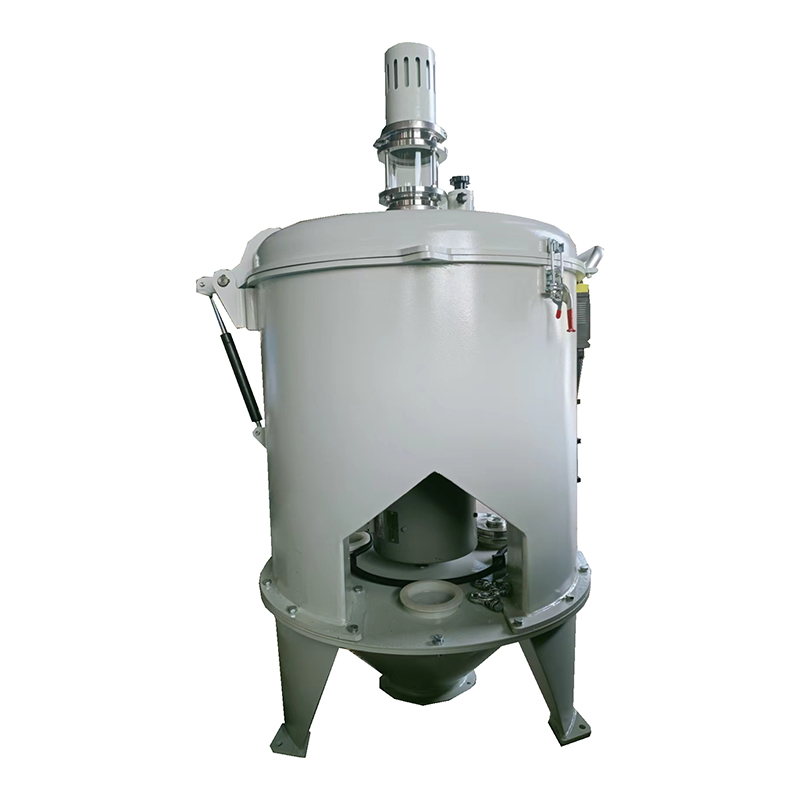
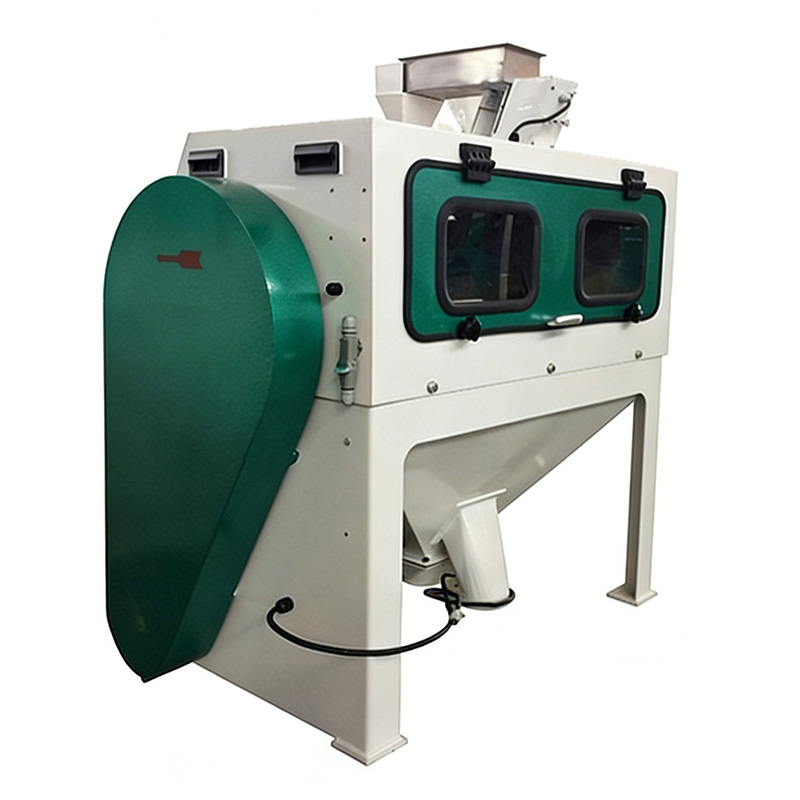
A centrifugal or impact huller that separates the outer husk from the oat groat, typically reaching a hull removal rate of 92 to 96 percent.
Kiln Granotherm
A heat treatment oven that stabilizes groats at roughly 90 to 110 degrees Celsius, reducing moisture and deactivating enzymes that cause rancidity.
Flaking or Rolling Mill
Presses conditioned groats between rollers to produce rolled oats, with roll gap settings controlling final flake thickness.
Sifting and Gravity Grader
Separates the finished product by particle size and density, removing fines and oversized material before packing.
These machines are rarely purchased in isolation. Because the output of one stage becomes the input of the next, a dehuller with a mismatched capacity relative to the kilning oven, or a flaking mill sized incorrectly against the upstream drying stage, will create a bottleneck that limits the entire line regardless of how efficient any single machine is on its own. This is one reason many buyers prefer to source a matched set of oat processing equipment from a single OEM oat processing equipment company rather than combining machines from several unrelated sources.
Beyond the core categories listed above, an oat processing equipment manufacturer will often offer variations within each category to support different finished product goals. A dehuller intended primarily for whole groat production may be tuned differently from one feeding a high-throughput flaking line, since the downstream tolerance for slight groat breakage differs between the two applications. Similarly, a kiln granotherm unit configured for a facility producing mostly instant oats may run a slightly different temperature and residence time profile than one supporting old fashioned rolled oats, since instant oat production generally calls for a more thorough pre-cook stage ahead of flaking. Buyers evaluating an oat processing equipment supplier should ask specifically how a given machine's default settings map onto their intended product mix, rather than assuming that any dehuller, kiln, or flaking mill within a given capacity tier will perform identically once installed. This is also where OEM customization becomes practically useful, since rather than retrofitting a general purpose machine after installation, many facilities work with their oat processing equipment manufacturer during the design stage to specify roll surface texture, kiln residence time, or dehuller rotor speed to match their target product from the outset.
A line is only as fast as its slowest stage, so capacity matching across the dehuller, kiln, and flaking mill matters more than the rated speed of any single machine.
How Oat Processing Equipment Works: Structure and Process Flow
Oat processing follows a sequential workflow that begins with raw grain intake and ends with a graded, packable finished product. Each machine performs one specific function, and the way these functions are integrated determines both product quality and overall plant efficiency. The diagram below sets out the typical structure of a complete oat processing line.
- Raw oats pass through air screen cleaners that remove light chaff, followed by heavy stone separators.
- Grading equipment sorts oats by width and thickness using disc separators or indented cylinders.
- Centrifugal dehullers spin the oats at high speed so that hulls crack and separate from the groats.
- Aspiration systems draw off the lightweight hull material, leaving cleaned groats behind.
- Groats move into the kiln for heat treatment, typically at 90 to 110 degrees Celsius, to stabilize moisture and enzyme activity.
- Depending on the target product, a drum groats cutter produces steel cut oats, or a flaking mill rolls the groats into rolled oats.
- Final sifting separates fines and oversized particles before the product moves to packing.
The diagram illustrates why oat processing equipment is generally evaluated as a system rather than as five unrelated machines. The pre-cleaning stage protects downstream equipment from abrasive stones and foreign material, the dehuller and kiln together determine the base quality of the groat, and the flaking or cutting stage together with the final grader determine which specific consumer product the line is capable of producing. Many oat processing equipment manufacturer product lines, including drum groats cutters, oat dehullers, and kiln granotherm units, are designed so that outlet and inlet capacities line up without requiring custom transition hardware. Modern facilities increasingly add optical sorters and near infrared sensors between the dehulling and kilning stages to remove discolored kernels and foreign material, which further protects downstream flaking rollers from damage. Total energy consumption for a complete oat processing line is typically in the range of 45 to 60 kilowatt hours per metric ton of finished product, a figure that is heavily influenced by kiln efficiency and by how well the dehuller is calibrated to the incoming grain moisture and variety.
The kilning stage is the structural link between raw hulled groats and a shelf-stable ingredient, and it is where enzyme deactivation and moisture control happen simultaneously.
Global Oat Production and Regional Processing Demand
Before selecting oat processing equipment, it helps to understand where global oat supply actually comes from, because regional production patterns influence raw material availability, seasonal intake planning, and the scale at which most processing facilities operate. Oat cultivation is concentrated in a relatively small number of temperate growing regions, and the volume produced in each region shapes local demand for processing capacity. The chart below summarizes the distribution of oat production across the major producing regions using industry data reported for the 2025 crop year. This regional picture is useful context for any buyer comparing capacity tiers of oat processing equipment. It also explains why certain regions have historically supported a denser concentration of oat processing equipment manufacturer activity than others.
According to FAO 2025 regional data, Canada, Australia, and Russia together account for close to 72 percent of the combined production volume shown, with the European Union and the United States making up most of the remainder. Canada is the single largest contributor at roughly a quarter of the total, reflecting its long-established oat growing regions and its role as a major exporter of milling oats. Australia's share is close behind, supported by its export-oriented grain sector and its proximity to Asian markets where demand for oat-based breakfast and snack products has been increasing. Russia's contribution reflects both large planted acreage and growing domestic processing capacity aimed at import substitution for finished oat products. The European Union's combined share, while smaller than the top three individually, still represents a substantial base of raw material supporting oat milling operations across several member states. The United States, despite lower total production relative to the other regions shown, remains an important market for oat processing equipment because a significant share of its oat supply is imported and then processed domestically into finished consumer products. For an oat processing equipment manufacturer or an oat processing equipment supplier, this regional concentration matters because it tends to correlate with where processing facilities are built, where OEM customization requests originate, and where replacement and expansion capacity decisions are being made most frequently. Buyers located outside these core producing regions, including facilities that rely on imported raw oats, often prioritize equipment flexibility and grain-variety adaptability more heavily than buyers situated close to the growing regions themselves, since imported oat lots can vary more in moisture content, kernel size, and foreign material load.
Three regions, Canada, Australia, and Russia, account for roughly seven out of every ten metric tons of oat production represented in this dataset.
Application Scenarios and Selection Considerations
Oat processing equipment is used across a range of facility types, from single-product mills that produce only rolled oats to integrated plants that also handle barley, wheat, or other cereal grains on the same site. Selecting the right combination of equipment starts with identifying the application scenario, then working through a checklist of technical selection factors that determine which capacity tier and configuration will fit the operation.
Typical Application Scenarios
|
Key Selection Factors
|
Compatibility with existing intake and storage infrastructure deserves particular attention during selection, since oat processing equipment rarely operates as a standalone island within a facility. A dehuller and kiln sized correctly on paper can still underperform if the raw oat intake system upstream cannot deliver a steady, consistent feed rate, since fluctuating input volume forces the dehuller to run below its calibrated setpoint for extended periods. Facilities that process oats alongside other cereal grains on shared intake infrastructure should also confirm that cleaning and grading equipment can be adjusted or swapped between grain types without extensive downtime, since oat kernels differ in size and hull characteristics from wheat, barley, or other commonly co-processed grains. For this reason, many buyers walk through their existing intake, storage, and outbound loading systems with a prospective oat processing equipment supplier before finalizing a capacity tier, so that any upstream or downstream constraints are identified before equipment is ordered rather than discovered during commissioning.
Once the application scenario is clear, capacity sizing becomes the next practical step. Each core machine in an oat processing line is rated with a minimum stable throughput and a maximum rated throughput, and understanding that range helps a buyer avoid purchasing equipment that is either chronically underused or constantly running at its ceiling. The chart below sets out typical capacity ranges reported for the four core machine categories discussed earlier in this article. These are illustrative operating ranges commonly referenced across oat processing equipment manufacturer specification sheets, intended to help buyers frame early capacity conversations rather than to represent a single fixed figure for every installation.
The chart shows each machine's rated capacity as a range beginning at an entry-level throughput and extending to an upper limit, rather than a single number, which reflects how oat processing equipment is typically specified in practice. The oat dehuller shows the narrowest range, from 2 to 15 metric tons per hour, which reflects the mechanical limits of centrifugal hulling equipment at higher speeds without sacrificing hull removal accuracy. The kilning oven has the widest range, from 5 to 30 metric tons per hour, because kiln capacity scales more directly with chamber size and belt length than with any moving mechanical part that has a fixed physical limit. The flaking mill sits in between at 3 to 20 metric tons per hour, with the upper end generally reserved for thicker, old fashioned style flakes that require less roll dwell time per unit of throughput. The gravity grader ranges from 4 to 25 metric tons per hour, giving it enough headroom to keep pace with either the dehuller or the flaking mill depending on which stage is the bottleneck in a given configuration. For a buyer sizing a new line, the practical implication is that the kilning oven and gravity grader can usually be selected with some capacity headroom built in at a modest cost, while the dehuller and flaking mill often become the limiting stages that should be sized first, with everything else specified to match. This is also why many facilities that plan to expand output over time choose an oat dehuller and flaking mill rated near the upper portion of their range from the outset, even if the kiln and grader are initially run below their own ceiling.
The oat dehuller and flaking mill are usually the true capacity bottlenecks in a line, and sizing them first tends to produce a more balanced overall configuration.
Detailed Comparison of Oat Processing Equipment Configurations
Oat processing lines are generally built around one of a few common configuration tiers, distinguished primarily by throughput, automation level, and the range of finished products they can support. The table below compares four common configuration tiers side by side to help buyers understand which tier is likely to match their intended scale of operation.
| Configuration Tier | Typical Capacity | Dehulling Method | Automation Level | Typical End Products |
|---|---|---|---|---|
| Entry-level line | 2 to 5 t/h | Single centrifugal dehuller | Semi-automatic, manual grade changes | Rolled oats, whole groats |
| Standard mechanical line | 5 to 12 t/h | Paired centrifugal dehullers | PLC controlled, batch grade changes | Rolled oats, steel cut oats, oat flour |
| Automated optical sorting line | 12 to 20 t/h | Centrifugal dehulling with optical color sorting | Fully automated, recipe based grade changes | Rolled, instant, and specialty grade oats |
| Precision controlled integrated system | 20 to 30 t/h | Multi-stage centrifugal dehulling with feedback control | Fully integrated plant control system | Full product range, export-grade specifications |
Moving between tiers is rarely a decision made purely on capacity numbers. An entry-level line may suit a facility supplying a single regional customer with rolled oats and whole groats, where product variety is limited and demand is relatively predictable from one season to the next. A standard mechanical line, with paired dehullers and batch grade changes, tends to suit facilities that need to switch between two or three finished product types within a single production week. Automated optical sorting lines become more relevant once a facility is exporting product or supplying customers with strict color and foreign material specifications, since the added sorting stage reduces manual inspection labor while improving consistency. Precision controlled integrated systems, sitting at the top of the comparison table, are generally reserved for facilities producing export-grade specifications across a full product range, where recipe based automation reduces changeover time between steel cut, rolled, and instant oat production runs. Buyers moving from one tier to the next should also confirm that upstream intake and downstream packing systems can support the higher throughput, since a processing line upgrade that outpaces its surrounding infrastructure will simply shift the bottleneck elsewhere in the facility.
Beyond configuration comparisons, it is also useful for buyers to understand the demand trend that is driving expansion decisions across the industry. Global demand for oat based food products has been on a sustained upward path for several years, and this trend has a direct bearing on how conservatively or aggressively a facility should size its equipment for future growth. The following five sentences set the stage before the trend itself is shown. Rising interest in plant based diets has increased consumer purchases of oat milk, oat based snacks, and fortified oat cereals across multiple regions. Health conscious consumers have also driven demand for oat products marketed around heart health and dietary fiber content. Retailers in North America, Europe, and parts of Asia have expanded oat product shelf space over the past several years in response to this consumer shift. Because oat products have a relatively long shelf life once properly kilned and packaged, growth in retail demand tends to translate fairly directly into growth in processing volume rather than being absorbed by inventory buffers. The chart below tracks a demand index for oat based products from 2018 through 2026, using 2018 as the baseline value of 100.
The area chart shows a demand index that climbs from a baseline of 100 in 2018 to approximately 168 by 2026, representing growth of roughly 68 percent over an eight year period. The steepest portion of the curve appears in the more recent segment of the chart, between 2022 and 2026, suggesting that growth has not only continued but accelerated in the years following broader consumer interest in plant based and functional foods. This pattern is consistent with what many oat processing equipment manufacturer and supplier businesses have reported anecdotally regarding order volume and inquiry frequency over the same period. For a facility currently operating an entry-level or standard mechanical line, this growth trajectory is a relevant input when deciding whether to size a new dehuller or kiln purchase toward the middle or upper end of its rated capacity range rather than the minimum needed for current output. It also explains why automated optical sorting lines and precision controlled integrated systems, which sit at the higher end of the configuration comparison table above, have become more common among newer facility builds rather than remaining a niche choice reserved only for the very largest processors. A facility that under-sizes its equipment during a period of sustained double digit growth risks facing a second capital investment cycle within just a few years, while a facility that slightly over-sizes non-bottleneck equipment such as the kiln or grader, both of which showed wide capacity ranges in the earlier chart, generally absorbs that additional headroom at a comparatively modest incremental cost.
Demand for oat based products has grown by roughly 68 percent between 2018 and 2026, with the steepest gains concentrated in the most recent years.
Yield Performance and Processing Efficiency
Hull separation efficiency is one of the most closely watched performance metrics for any oat dehuller, since it directly determines how much usable groat material a facility recovers from a given quantity of raw oats. Buyers comparing oat processing equipment often ask suppliers to quote this figure specifically, separate from the broader raw-to-finished yield figure discussed earlier in this article. Modern centrifugal dehullers are engineered to reach a consistent hull removal rate across a range of oat varieties and moisture conditions, though actual performance still depends on proper calibration and routine maintenance. The gauge below represents a typical average hull separation efficiency reported for well maintained modern centrifugal dehulling equipment. The five sentences above this gauge are intended to frame why this single metric receives so much attention during equipment evaluation.
The gauge shows an average hull separation efficiency of approximately 94 percent, which sits within the commonly reported range of 92 to 96 percent for modern centrifugal dehulling equipment. This figure represents the proportion of hull material successfully cracked and separated from the groat during a single pass through the dehuller, before any downstream aspiration or sifting takes place. A rate toward the upper end of this range generally indicates a well calibrated machine paired with oats of consistent moisture content and kernel size, while a rate toward the lower end can point to worn hulling components, inconsistent feed rate, or raw material with high variability. Because the dehuller sits early in the process flow, small changes in hull separation efficiency compound through the rest of the line, affecting how much material the kiln, flaking mill, and grader ultimately have to work with. A facility running at 92 percent rather than 96 percent hull separation efficiency will typically need a correspondingly larger volume of raw oat intake to hit the same finished product target, which has direct implications for storage, intake logistics, and raw material procurement costs even though no single component of the equipment has technically failed. The specification table below summarizes typical capacity and function data for the four core machine types discussed throughout this article, bringing the capacity, hull separation, moisture reduction, and flake thickness figures together in one reference table.
| Equipment Type | Capacity Range | Key Function |
|---|---|---|
| Oat Dehuller | 2 to 15 t/h | Hull separation efficiency of 92 to 96 percent |
| Kilning Oven | 5 to 30 t/h | Moisture reduction to 8 to 10 percent |
| Flaking Mill | 3 to 20 t/h | Flake thickness of 0.3 to 1.2 millimeters |
| Gravity Grader | 4 to 25 t/h | Product density and particle size separation |
A four percentage point swing in hull separation efficiency, from 92 to 96 percent, has a measurable knock-on effect on raw material requirements across the rest of the line.
Maintenance Guidance for Oat Processing Equipment
Consistent maintenance is one of the most direct ways a facility can protect both hull separation efficiency and overall line throughput over the life of the equipment. Because oats produce fine, fibrous dust during cleaning and dehulling, maintenance schedules for oat processing equipment tend to place particular emphasis on dust control and component wear inspection, in addition to the routine mechanical checks common to most grain processing machinery.
| Equipment Stage | Recommended Maintenance Focus |
|---|---|
| Pre-Cleaning and Grading | Inspect screen mesh for wear or blockage, clear aspiration ducts, check belt tension |
| Oat Dehuller | Check rotor and impeller wear surfaces, verify feed rate calibration, inspect bearing seals for dust ingress |
| Kiln Granotherm | Verify temperature uniformity across the chamber, inspect belt or conveyor mechanisms, clean heat exchange surfaces |
| Flaking Mill | Check roll surface condition, verify roll gap alignment, monitor roll bearing temperature |
| Sifting and Gravity Grader | Inspect screen surfaces for fatigue cracking, clean fines buildup, check drive motor and eccentric weight balance |
- Schedule dust collection system checks more frequently than on non-fibrous grain lines, since oat hull fiber accumulates quickly in ductwork.
- Log hull separation efficiency at regular intervals so gradual component wear can be identified before it affects finished product yield.
- Keep spare wear parts for the dehuller rotor and flaking mill rolls on hand, since these components see the highest abrasive contact.
- Coordinate kiln maintenance windows with production planning, since kiln downtime affects the entire downstream portion of the line.
Maintenance planning should also account for seasonal intake patterns, since many facilities receive the bulk of their annual raw oat supply within a concentrated harvest window and then process it steadily over the following months. Scheduling major maintenance work, such as kiln belt replacement or dehuller rotor overhaul, ahead of the peak intake period rather than during it helps avoid unplanned downtime when raw material availability and storage capacity are under the most pressure. Facilities working with an oat processing equipment manufacturer that offers structured maintenance support, including spare parts availability and technical guidance for calibration adjustments, are generally better positioned to keep hull separation efficiency and overall line throughput close to their rated values throughout a full production season rather than only immediately after commissioning.
Tracking hull separation efficiency over time gives maintenance teams an early warning signal that is often more useful than waiting for a mechanical failure.
Working with an Oat Processing Equipment Manufacturer and Supplier
Sourcing oat processing equipment typically involves more than comparing a single machine's specification sheet. Because a dehuller, kiln, flaking mill, and grader need to work together as a matched set, many buyers prefer to work with an oat processing equipment manufacturer capable of supplying custom, OEM configured equipment rather than assembling a line from unrelated single-machine vendors. This approach reduces the risk of interface mismatches between stages and generally simplifies commissioning and after sales support.
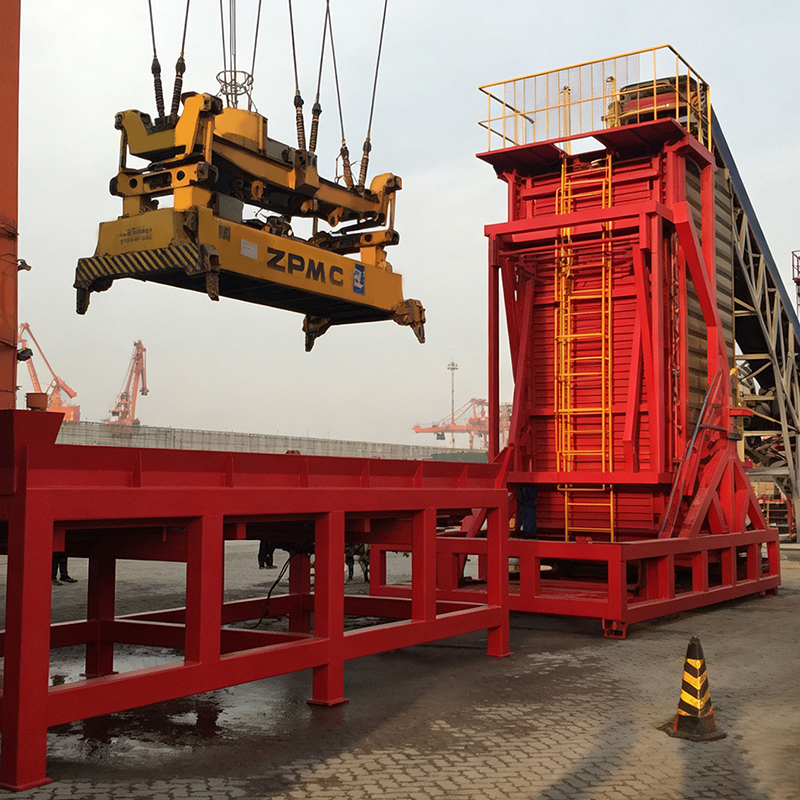
Jiangsu Zhengding Intelligent Equipment Co., Ltd. is a national high-tech enterprise mainly engaged in the research and development and manufacturing of intelligent logistics equipment, and it provides a complete set of oat processing equipment, including a drum groats cutter, an oat dehuller, and a kiln granotherm unit, along with other special purpose equipment for oat processing. The company operates as an OEM oat processing equipment company and oat processing equipment manufacturer, and it can provide systematic solutions for the automatic loading and unloading of cars and containers for customers across a range of industries, alongside its oat processing equipment line. Its broader product range includes various types of automatic loading and unloading equipment such as rear dumpers, side dumpers, car loading equipment, and container flippers, and these products are widely used across the steel, chemical, cement, coal, grain, oil, and food industries, with exports reaching Japan, Brazil, Egypt, Pakistan, India, the Middle East, and Southeast Asian countries. Typical international users of the company's broader equipment range include Budweiser, Heineken, Buhler Group, Wilmar International, Cargill, DuPont, Louis Dreyfuss, and Charoen Pokphand Group, among others.
For an oat processing facility, this combined background is directly relevant beyond the processing line itself. Zhengding's grain handling systems can support efficient raw oat receiving, storage transfer, and finished product loading, integrating with an existing oat processing line to reduce manual handling and improve overall facility throughput. Facilities that need to coordinate raw oat intake logistics with downstream processing capacity, or that need finished bulk product loaded efficiently for export, may find it practical to evaluate both the processing equipment and the material handling equipment from a single oat processing equipment supplier with experience across grain, food, and bulk material industries.
Pairing a matched oat processing line with compatible intake and loading equipment from the same manufacturer can reduce integration friction between raw material handling and processing.
Frequently Asked Questions About Oat Processing Equipment
Q1: What does kilning accomplish in an oat processing line?Kilning performs two main functions. It deactivates lipase enzymes that would otherwise cause rancidity and off flavors during storage, and it reduces groat moisture from around 14 percent down to roughly 8 to 10 percent, which extends shelf life. Kilning also develops the characteristic toasted flavor associated with finished oat products. |
Q2: How much yield loss should be expected during oat dehulling?Yield loss during dehulling depends on oat variety and equipment calibration. Modern centrifugal oat dehullers typically achieve a hull removal rate of 92 to 96 percent, with whole groat recovery of around 70 to 75 percent from raw oats. The remaining material generally consists of broken groats, fines, and hull fragments separated out during aspiration and sifting. |
Q3: What distinguishes quick-cooking, old-fashioned, and instant rolled oats?The main difference comes from flaking mill roll gap and groat preparation. Quick cooking oats are rolled thinner, typically 0.4 to 0.6 millimeters. Old fashioned oats are rolled thicker, typically 0.8 to 1.0 millimeters. Instant oats are pre cooked and rolled very thin, under 0.4 millimeters, each requiring different roll pressure and groat conditioning settings. |
Q4: What should buyers look for when choosing an oat processing equipment manufacturer?Buyers generally benefit from evaluating whether a manufacturer can supply a matched set of equipment across the full line rather than a single machine, whether OEM customization is available to fit specific capacity or product requirements, and whether the manufacturer has experience integrating processing equipment with upstream intake and downstream handling systems. |


