

 English
 русский
 Español
 Français
 Português
 عربى
عربى



+86-13588556918
Content
- 1 What Is Truck Handling Equipment? A Direct Overview
- 2 Common Types of Truck Handling Equipment and Their Features
- 3 How Truck Handling Equipment Works: Core Structure and Operating Principle
- 4 Choosing the Right Truck Handling Equipment: Application Scenarios and Selection Criteria
- 5 Detailed Comparison: Truck Dumpers, Side-Turn Dumpers, and Container Tilting Equipment
- 6 Market Trends and the Growing Adoption of Automated Truck Handling Equipment
- 7 Maintenance and Operational Best Practices for Truck Handling Equipment
- 8 Sourcing Truck Handling Equipment from a Manufacturer or Supplier
- 9 Frequently Asked Questions
- 9.1 Q1: What is truck handling equipment used for?
- 9.2 Q2: What is the difference between a rear-tip and a side-turn truck dumper?
- 9.3 Q3: How is the right capacity class of truck handling equipment determined?
- 9.4 Q4: Can truck handling equipment be used for both trucks and containers?
- 9.5 Q5: How often does truck handling equipment need maintenance?
- 9.6 Q6: Is hydraulic or mechanical truck handling equipment easier to maintain?
What Is Truck Handling Equipment? A Direct Overview
Truck handling equipment refers to the fixed or semi-fixed machinery used to load, unload, tilt, or reposition trucks, railcars, and containers so that bulk materials can be moved into or out of a vehicle without manual shoveling or basic tipping aids. In practice, this category covers rear-tip truck dumpers, side-turn truck dumpers, container flipping and tilting systems, and integrated weighing platforms that combine unloading with real-time load measurement. The core function of any piece of truck handling equipment is the same regardless of configuration: securing a vehicle in place, rotating or tilting it to a controlled angle, and releasing the bulk material through gravity into a hopper, conveyor, or pit. Facilities that handle high vehicle throughput, such as grain terminals, cement plants, steel mills, and coal yards, generally rely on this type of equipment because it removes the labor intensity and inconsistency associated with manual tipping methods.
Selecting the right truck handling equipment for a given site depends on several interlocking factors: the flow characteristics of the material being unloaded, the available building clearance, the maximum vehicle and load weight, and the level of automation a facility actually needs based on vehicle throughput per shift. This article works through the common types of truck handling equipment on the market today, explains how the core mechanism operates, walks through selection criteria and a detailed comparison between configurations, and closes with maintenance guidance and answers to frequently asked questions. Along the way, the discussion draws on published industry market research and general patterns observed across automated bulk unloading deployments, with sources noted where relevant.
In short: truck handling equipment automates the securing, tilting, and discharge of bulk-laden vehicles, and the right configuration is determined primarily by material flow behavior, site clearance, and required load capacity.
Common Types of Truck Handling Equipment and Their Features
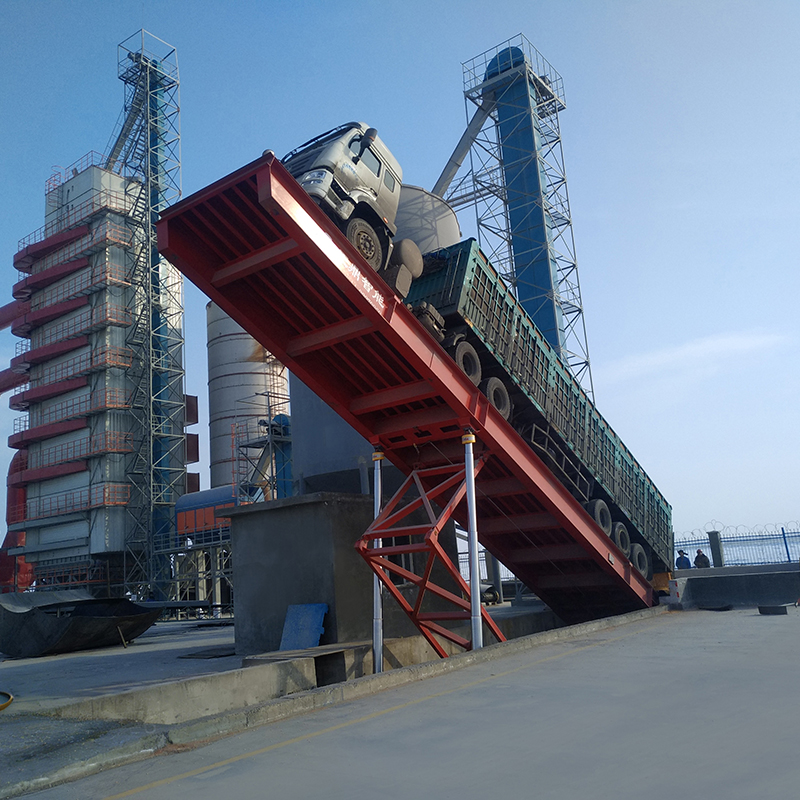
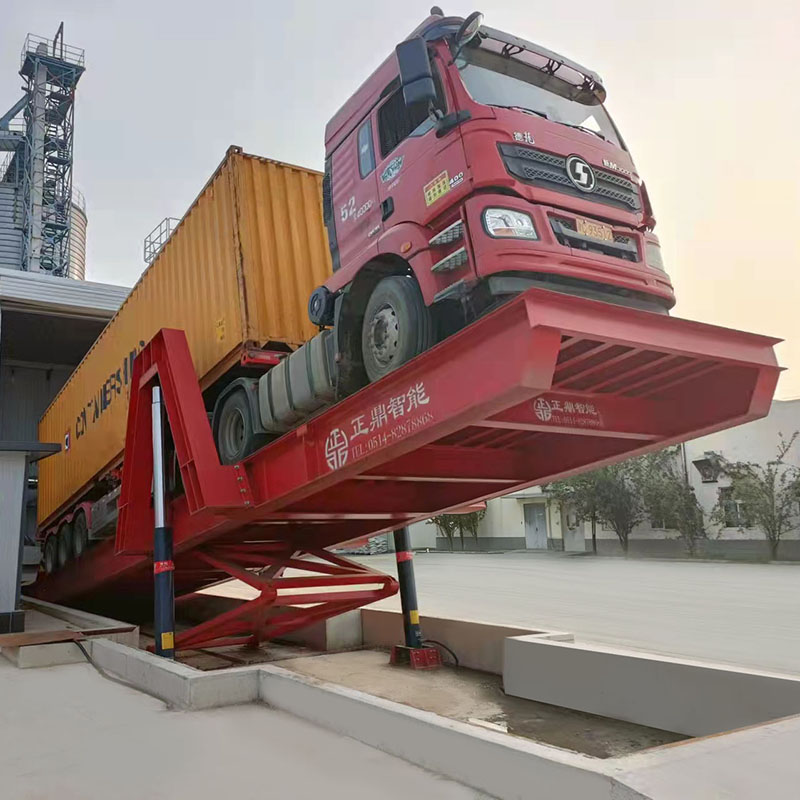
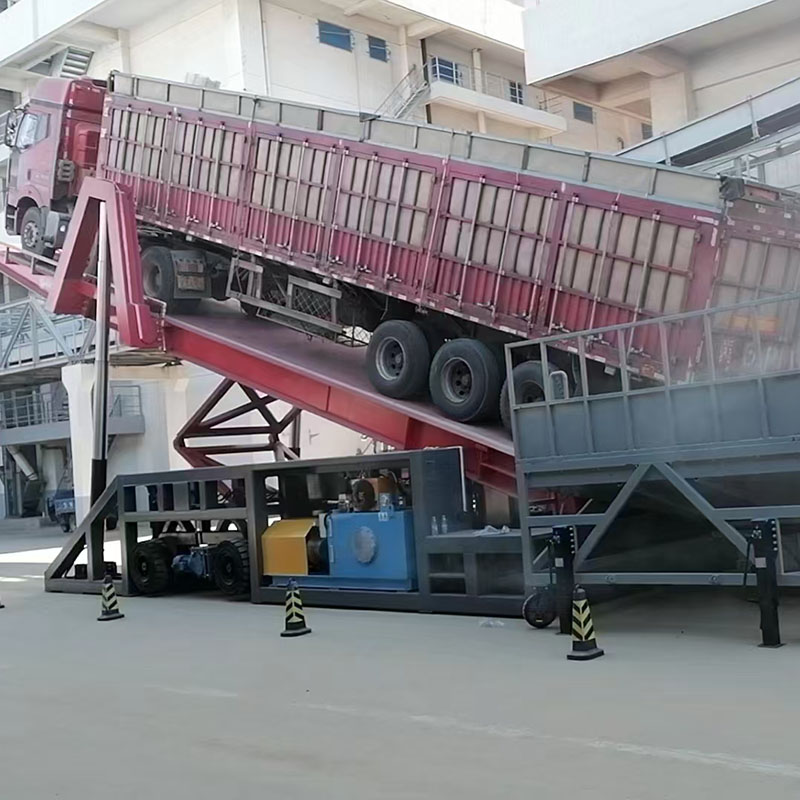
The truck handling equipment category is broader than a single machine design, and most facilities end up choosing between several distinct configurations depending on the vehicles and materials they need to process. A rear-tip truck dumper lifts the front end of a vehicle bed so material slides out through the rear tailgate, and this remains one of the most widely used truck handling equipment configurations for general-purpose bulk unloading. A side-turn truck dumper instead rotates the entire vehicle sideways, which is generally preferred for materials with poor flowability, such as damp coal or fine powders, and for facilities with restricted overhead clearance. Container flipping and tilting equipment extends the same rotating-and-discharging principle to shipping containers rather than vehicles, and is common at ports, grain terminals, and bulk export facilities that receive material in containerized form. A growing share of new installations also pair the dumping mechanism with an integrated weighing system, which records load weight automatically during the unloading cycle rather than requiring a separate weighbridge step.
Rear-Tip Truck DumperLifts the vehicle bed upward for rear discharge. Well suited to general-purpose bulk materials with good flow characteristics. |
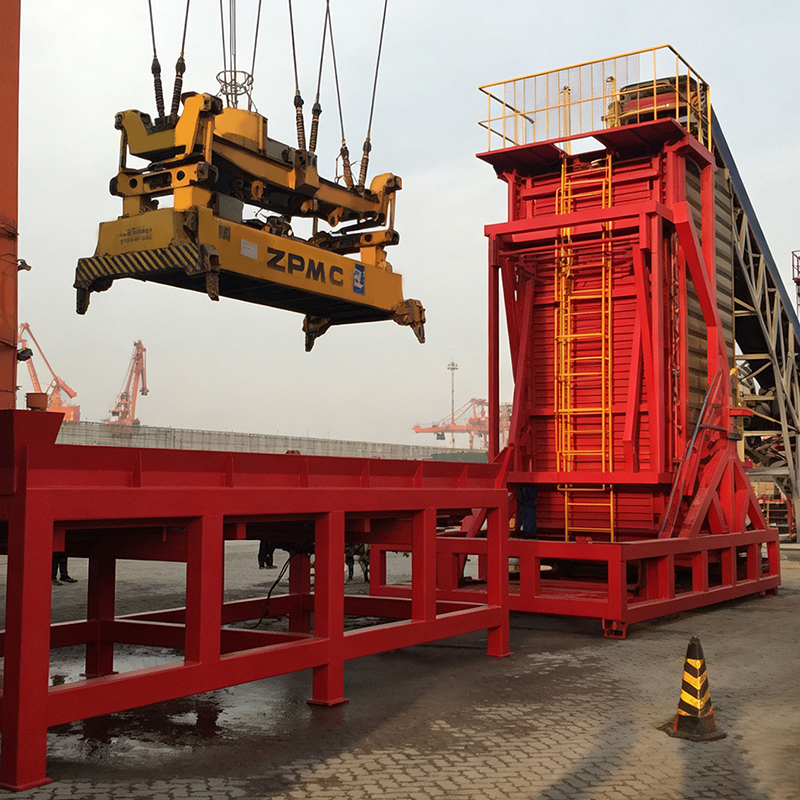
Side-Turn Truck DumperRotates the vehicle sideways for a lower height profile. Preferred for poor-flow materials such as coal or iron ore powder. |
Shallow Foundation Truck DumperDesigned with a reduced pit depth requirement, useful where excavation depth is limited by soil or groundwater conditions. |
Unattended Dumper with WeighingCombines clamping, rotation, and return-to-level with an integrated weighing system for unattended, automated cycles. |
Container Flipping MachineTilts a shipping container to a discharge angle, extending the truck dumper concept to containerized bulk cargo. |
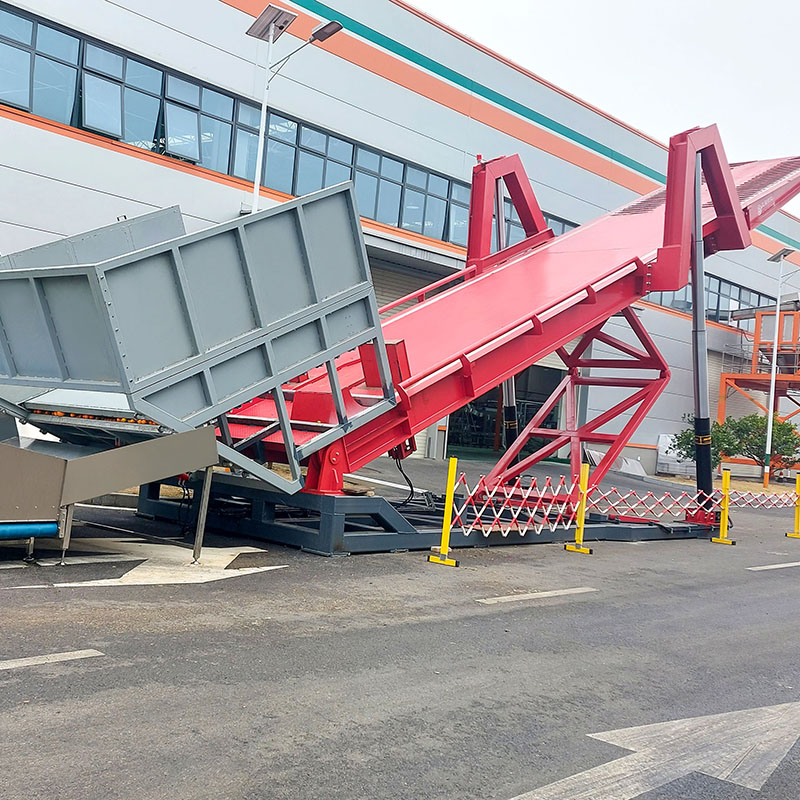
Gantry Container TilterAn overhead gantry-style structure that lifts and tilts a container, suited to sites needing a mobile or repositionable discharge point. |
Beyond the base dumping mechanism, most truck handling equipment is also differentiated by automation level. Fully automatic systems handle clamping, rotation speed, weighing, and return-to-level sequencing without an operator present at each cycle, while semi-automatic units still require manual input at one or more stages. The choice between these levels is closely tied to vehicle throughput: a facility processing a handful of trucks per shift may find a semi-automatic unit sufficient, while a high-volume grain or coal terminal generally benefits more from a fully automatic configuration that keeps the unloading bay moving continuously.
Beyond the fixed installations described above, some sites also specify mobile or skid-mounted truck handling equipment, which can be relocated within a facility as unloading needs shift between different storage or processing areas rather than being permanently anchored to a single pit or foundation. This portable configuration tends to appeal to facilities still finalizing their layout, or to operations that receive bulk material at a rotating set of receiving points depending on the season or the specific commodity being handled. At the processing end of the chain, some manufacturers also offer complementary oat and grain processing equipment designed to work alongside a truck dumper, so that grain unloaded from an incoming vehicle can move directly into cleaning, drying, or storage stages without an intermediate handling step. Whether a facility needs this kind of adjacent processing capability, or simply a standalone dumper, generally comes down to how tightly integrated the unloading and downstream handling processes need to be.
Before adding the pattern behind these choices, five points frame the automation data below. Facilities rarely settle on a single automation level across an entire operation, since throughput needs differ by unloading bay. Lower-volume bays often continue to rely on manual-assisted tipping aids rather than a full dumper installation. As vehicle volume grows, the operational case for semi-automatic and then fully automatic truck handling equipment strengthens. Capital planning teams commonly review this kind of throughput-versus-automation pattern before specifying new equipment. The chart below illustrates one general way this relationship tends to play out across low, medium, and high throughput facilities.
The stacked column chart above breaks each throughput tier into an illustrative share of manual-assisted, semi-automatic, and fully automatic truck handling equipment, reflecting a general adoption pattern commonly observed across bulk unloading facilities rather than a figure tied to one specific report. At the low-throughput end, manual-assisted methods still occupy the largest share of the bar, since the capital cost of a dedicated automated dumper is harder to justify against a small number of vehicles per shift. As throughput rises to the medium tier, the semi-automatic share expands to become the largest segment, since facilities at this stage typically process enough vehicles to benefit from partial automation without requiring a fully unattended cycle. At the high-throughput end, the fully automatic share dominates the bar, which lines up with the operational reality that high-volume terminals cannot sustain long queues without a rapid, repeatable clamp-rotate-discharge cycle. This progression also explains why grain terminals, coal yards, and cement plants with continuous inbound vehicle traffic are among the first facility types to adopt fully automatic truck handling equipment rather than staying with manual or semi-automatic setups. Reading the chart from left to right essentially traces the typical automation upgrade path a growing facility follows as its vehicle volume increases over time. It is also worth noting that a single site often runs more than one tier side by side, such as a fully automatic primary bay paired with a semi-automatic overflow bay for peak periods. Understanding where a facility sits on this curve is one of the more practical starting points for narrowing down which type of truck handling equipment actually fits current and near-term operational needs.
How Truck Handling Equipment Works: Core Structure and Operating Principle
Although the outward form of truck handling equipment varies between rear-tip, side-turn, and container-oriented designs, the underlying operating principle is consistent across most configurations and generally proceeds through three stages: securing, rotating or lifting, and discharging. In the securing stage, the vehicle drives onto a fixed cradle or platform, where clamping arms, wheel chocks, and frame restraints lock it in place to prevent shifting once movement begins. In the rotating or lifting stage, a hydraulic drive system raises or rotates the platform, and by extension the vehicle resting on it, to a controlled angle sufficient for the specific bulk material to flow out under gravity. In the discharging stage, material exits through a side or rear opening into a receiving hopper, conveyor, or pit, after which the platform returns to level and the vehicle exits the bay.
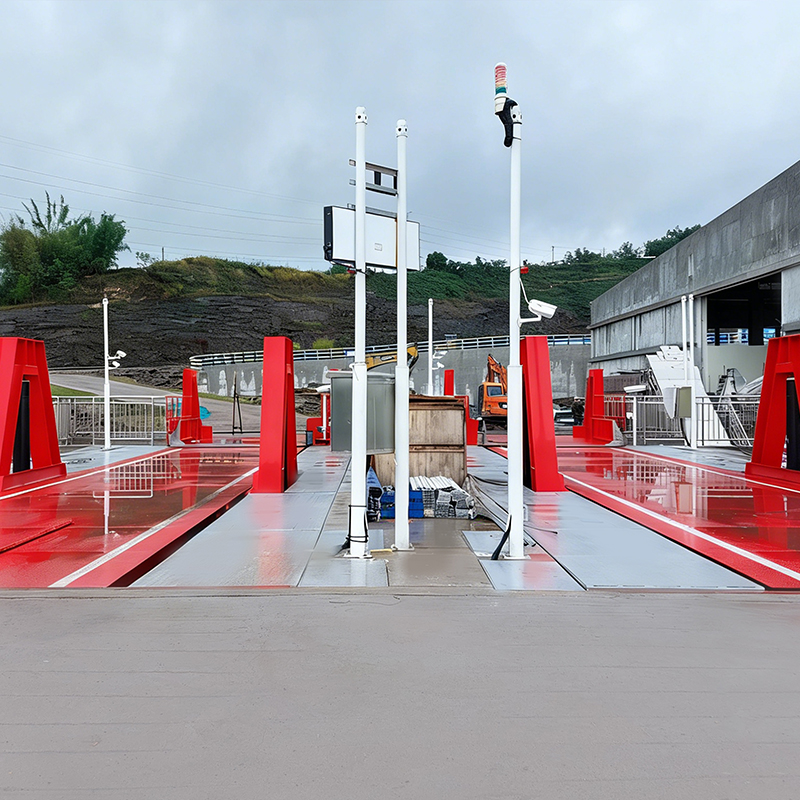
The drive system behind this rotation is typically either hydraulic or mechanical. A hydraulic truck handling system uses cylinders to control tilt speed and angle with fine adjustment, which tends to produce smoother, more controllable discharge for sensitive or fine bulk materials. Mechanical or gear-driven systems can offer a simpler maintenance profile, though generally with less precise control over rotation speed. Many installations also integrate a weighing subsystem directly into the platform or cradle, using load cells positioned beneath the frame to record vehicle weight before and after discharge, which removes the need for a separate weighbridge step and gives operators an automatic net-weight record for each unloading cycle.
The labeled schematic below illustrates the main structural components found in a typical truck handling equipment installation, shown in isometric view since a photograph cannot always capture how the clamping, rotation, and discharge elements relate to one another spatially.
In this schematic, the cradle and clamping arms secure the vehicle before rotation begins, the hydraulic cylinder drives the tilt motion, the weighing sensor records load data during the cycle, and the discharge chute directs material into the receiving hopper below. This structural layout is broadly consistent whether the equipment is configured for rear-tip or side-turn operation, with the main difference being the axis and direction along which the cradle rotates.
Choosing the Right Truck Handling Equipment: Application Scenarios and Selection Criteria
Specifying truck handling equipment for a new or expanding facility generally works best as a step-by-step process rather than a single decision, since material properties, site conditions, and vehicle types all interact with one another. The table below lays out the main selection factors side by side with the practical considerations each one raises.
| Selection Factor | Practical Consideration |
|---|---|
| Material flow behavior | Poor-flow materials such as damp coal or fine powder generally favor a side-turn configuration over a straight rear tip. |
| Building clearance | Facilities with limited overhead height often need a side-turn or shallow-foundation design rather than a tall rear-tip unit. |
| Maximum vehicle and load weight | Determines whether a light-duty, standard-duty, or heavy-duty capacity class is appropriate for the site. |
| Vehicle throughput per shift | Higher throughput generally justifies a fully automatic system over a semi-automatic one. |
| Vehicle or cargo type | Sites receiving both trucks and containers may need a dumper plus a separate container flipping or tilting unit. |
| Weighing requirements | An integrated weighing system removes the need for a separate weighbridge step in the unloading process. |
Industry served is another practical filter worth applying early in the specification process, since different sectors tend to gravitate toward different configurations of truck handling equipment based on the materials they routinely receive. Five points frame the industry breakdown before the chart: grain and food processing facilities generally prioritize gentle, low-impact discharge; steel and metals producers tend to handle heavier, more abrasive material streams; cement and building material plants place a premium on dust containment during discharge; coal and mining operations deal with the poorest-flowing materials on this list; and chemical and bulk powder handlers usually require the most sealed discharge points of any segment. The chart below sets out a general, illustrative distribution of truck handling equipment installations across these end-use industries.
This donut chart presents a general, illustrative pattern of end-use demand for truck handling equipment across common bulk-handling sectors, rather than figures drawn from a single named report. Grain and food processing takes the largest share in this pattern, which aligns with how frequently trucks and railcars move raw grain, meal, and related commodities through receiving stations at mills and terminals. Steel and metals producers form the second-largest segment, reflecting the high vehicle volumes involved in moving ore, scrap, and processed metal stock into and out of production sites. Cement and building materials occupy a solid middle share, driven largely by the dust-containment requirements that shape how this sector specifies discharge equipment. Coal and mining round out a similarly sized segment, and this sector is one of the strongest drivers of demand for side-turn configurations given how often coal and iron ore powder are cited as poor-flow materials. Chemical and bulk powder handling represents a smaller but steady share, generally tied to sealed, contained discharge requirements rather than high vehicle volume. The remaining share captures a mix of other industries, including general logistics and export-oriented bulk terminals that do not fit neatly into the categories above. Taken together, this distribution illustrates why manufacturers of truck handling equipment typically design product lines flexible enough to serve several of these sectors rather than building a single fixed configuration, and it also explains why selection guidance so often starts with the question of what material a facility is actually planning to move.
Many manufacturers that supply this equipment, including companies such as Jiangsu Zhengding Intelligent Equipment Co., Ltd., design their truck handling equipment product lines specifically to serve this kind of cross-industry demand, offering rear dumpers, side dumpers, car loading equipment, and container flippers under one product range rather than a single fixed configuration. This breadth is one reason the company's automatic loading and unloading equipment for cars is reported to hold a leading position in annual sales volume and technical performance within the Chinese market, with export experience extending to Japan, Brazil, Egypt, Pakistan, India, the Middle East, and Southeast Asian countries, and an industrial client base that includes companies such as Budweiser, Heineken, Buhler Group, Wilmar International, Cargill, DuPont, Louis Dreyfus, Charoen Pokphand Group, and Saint-Gobain Group.
Detailed Comparison: Truck Dumpers, Side-Turn Dumpers, and Container Tilting Equipment
Because the truck handling equipment category covers several distinct machine designs, a side-by-side comparison is generally more useful than judging any single configuration in isolation. The table below sets out how rear-tip dumpers, side-turn dumpers, and container tilting equipment compare across the attributes that most often drive a purchasing decision.
| Attribute | Rear-Tip Dumper | Side-Turn Dumper | Container Tilting Equipment |
|---|---|---|---|
| Vertical clearance needed | Higher | Lower | Moderate |
| Best-fit material type | Free-flowing bulk material | Poor-flow, damp, or fine material | Containerized bulk cargo |
| Typical vehicle type | Trucks, railcars | Trucks, railcars | Shipping containers |
| Automation potential | Good | Strong | Good |
| Structural footprint | Moderate | Compact | Larger, gantry-based |
Reading the comparison table alongside the earlier selection factors, a few practical patterns stand out. Facilities that primarily handle free-flowing grain or general aggregate, and that have generous overhead clearance, tend to find a rear-tip dumper the more straightforward fit. Facilities constrained on ceiling height, or that regularly handle coal, iron ore powder, or other poor-flow materials, generally lean toward a side-turn configuration instead. Ports, container yards, and export-oriented terminals that receive containerized bulk cargo alongside truck traffic often end up specifying both a truck dumper and a separate piece of container tilting equipment, such as a container flipping machine or gantry container tilter, rather than trying to force one machine to serve both vehicle types.
When a Rear-Tip Dumper Fits Best
|
When a Side-Turn Dumper Fits Best
|
Market Trends and the Growing Adoption of Automated Truck Handling Equipment
Demand for truck handling equipment sits within the broader bulk material handling equipment market, which has been tracked closely by several industry research firms in recent years. According to a report by Straits Research, the global bulk material handling equipment market was valued at approximately USD 51.19 billion in 2025 and is projected to reach roughly USD 78.15 billion by 2033, reflecting a compound annual growth rate of about 5.47 percent over that period. Separately, Grand View Research has reported that the Asia Pacific region accounted for the largest regional share of the broader material handling equipment market, driven in part by manufacturing growth and rising demand for managing bulk materials more efficiently across the region. These figures point to steady, multi-year growth rather than a short-term spike, which is consistent with how gradually most facilities replace fixed unloading infrastructure such as truck dumpers and container tilting systems.
Five points set up the growth chart that follows. Market growth of this kind tends to compound steadily year over year rather than jumping unevenly. Reports covering this segment generally attribute growth to rising automation adoption, expanding bulk commodity trade, and continued infrastructure investment. Asia Pacific has been repeatedly identified across multiple research firms as the fastest-growing and largest regional contributor to this market. Facility operators planning capital budgets over a multi-year horizon often reference this kind of growth trajectory when justifying new truck handling equipment purchases. The area chart below plots the Straits Research growth trajectory for the global bulk material handling equipment market from 2025 through 2033.
The area chart above traces a compounding growth curve rather than a straight line, and this shape matters because it shows the market accelerating in absolute dollar terms even though the percentage growth rate stays roughly constant year over year. Starting at approximately 51.2 billion dollars in 2025, the market value climbs at a steady pace through 2027 and 2029 before reaching an estimated 78.2 billion dollars by 2033, according to the Straits Research figures cited above. This kind of compounding pattern is typical of established industrial equipment markets that are not tied to a single short-lived technology cycle, since bulk material handling infrastructure, including truck handling equipment, tends to be replaced and expanded gradually as facilities scale up rather than all at once. The consistent upward slope also reflects the wide base of end-use industries drawing on this equipment category, from grain and food processing to cement, coal, and chemical handling, which tends to smooth out demand across economic cycles rather than concentrating growth in a single sector. For manufacturers and facility operators alike, a growth curve shaped this way generally supports continued investment in production capacity and in newer, more automated dumper and container tilting designs rather than signaling a market that is leveling off. It is also worth noting that Asia Pacific has consistently been identified as the largest and fastest-growing region within this broader market, which lines up with the concentration of grain, steel, cement, and chemical processing capacity across the region and helps explain why a meaningful share of truck handling equipment manufacturing capacity, including exporters serving Japan, the Middle East, and Southeast Asia, is based there. Facility planners reviewing a multi-year capital budget can reasonably treat this kind of steady, broad-based growth trajectory as one input among several when deciding whether to expand or upgrade existing truck handling equipment rather than deferring the investment.
Maintenance and Operational Best Practices for Truck Handling Equipment
Routine maintenance is one of the more overlooked factors in the total service life of truck handling equipment, even though the core mechanism, clamping, rotating, and discharging, places repeated mechanical and hydraulic stress on the same components cycle after cycle. A structured maintenance approach generally follows the sequence below, applied on a recurring schedule rather than only after a fault appears.
- Inspect clamping arms and restraint components for wear, misalignment, or loose fasteners before each shift or on a defined daily interval.
- Check hydraulic fluid levels, hose condition, and cylinder seals for leaks or pressure loss on a weekly basis.
- Verify rotation speed and return-to-level accuracy against the manufacturer's specified tolerances during periodic testing.
- Calibrate integrated weighing sensors on a scheduled interval to maintain accurate load readings over time.
- Clean discharge chutes and hoppers regularly to prevent material buildup that can slow or obstruct the discharge stage.
- Review control system logs and safety interlocks periodically to confirm automated sequencing continues to function as designed.
Hydraulic truck handling equipment generally requires closer attention to fluid condition and seal integrity, since fine control over tilt speed depends on consistent hydraulic pressure. Mechanical or gear-driven systems shift more of the maintenance burden toward gear wear, lubrication, and drive-chain or cable inspection, which some operators find simpler to plan around even though it typically comes with less precise rotation control. Regardless of drive type, keeping a documented maintenance log tied to actual cycle counts, rather than calendar time alone, tends to produce more reliable service intervals, since equipment used for high vehicle throughput naturally accumulates wear faster than equipment used only occasionally.
Five points frame the efficiency pattern shown in the gauge below. Facilities generally see the largest efficiency gains in the months immediately following an upgrade from manual or semi-automatic unloading to a fully automatic system. This pattern reflects both the removal of manual coordination steps and the consistency that automated clamping and rotation cycles provide once fully tuned. The scale of the improvement tends to vary by site, material, and prior baseline, so it is best read as a general range rather than a fixed outcome. Reported improvements across automated bulk unloading deployments commonly cluster within a broad reduction range for average unloading cycle time. The gauge below illustrates this typical range rather than a guaranteed result for any individual facility.
The gauge above marks a shaded band spanning roughly forty to sixty percent, representing the general range within which facilities commonly report a reduction in average unloading cycle time after moving from manual or semi-automatic unloading to a fully automatic truck handling system, with the needle pointing toward the middle of that range. This range should be read as a directional pattern rather than a promised outcome, since actual results depend heavily on the specific material, prior baseline process, and how well the new equipment is matched to site conditions. Even so, the general direction is consistent with the earlier discussion of downtime trends, since a shorter cycle time per vehicle directly reduces the total time each truck or railcar spends occupying an unloading bay. Facilities that see gains toward the higher end of this range are typically those moving from a fully manual process, where coordination steps and operator pacing introduce the most variability, while facilities upgrading from an already semi-automatic setup tend to see improvement closer to the lower end of the range. Tracking cycle time before and after an equipment change, rather than relying on a single anecdotal comparison, remains one of the more reliable ways operations teams can verify whether a new piece of truck handling equipment is delivering the expected operational benefit.
Sourcing Truck Handling Equipment from a Manufacturer or Supplier
Once a facility has settled on the type, capacity class, and automation level it needs, the next step is identifying a suitable manufacturer or supplier. Buyers researching a China manufacturer of truck handling equipment generally look for a track record across multiple industries, since a supplier that has engineered rear dumpers, side dumpers, container flippers, and integrated weighing systems for steel, cement, coal, grain, and chemical clients tends to have broader practical experience solving clearance, capacity, and material-flow problems than one focused on a single narrow application. A professional truck handling equipment supplier with export experience is also generally better positioned to support documentation, shipping, and installation coordination for overseas buyers, which matters for facilities located outside the country where the equipment is manufactured.
Jiangsu Zhengding Intelligent Equipment Co., Ltd. is one example of a China truck handling equipment manufacturer that has built its product range specifically around this kind of cross-industry demand. As a national high-tech enterprise focused on the research, development, and manufacturing of intelligent logistics equipment, the company provides systematic solutions for the automatic loading and unloading of cars and containers across a range of customer industries. Its product range includes rear dumpers, side dumpers, car loading equipment, and container flippers, along with more specific configurations such as shallow foundation truck dumpers, unattended dumpers with integrated weighing systems, automatic side-turn truck dumpers, container flipping machines, continuous container handling systems, and gantry container tilters, positioning it as a relatively complete China truck handling equipment factory for buyers who need more than one configuration under a single sourcing relationship. The company's products serve the steel, chemical, cement, coal, grain, oil, and food industries and are exported to Japan, Brazil, Egypt, Pakistan, India, the Middle East, and Southeast Asian countries, with an industrial client base that includes Budweiser, Heineken, Buhler Group, Wilmar International, Cargill, DuPont, Louis Dreyfus, Charoen Pokphand Group, and Saint-Gobain Group.
Facilities comparing suppliers should also weigh whether they need standard, off-the-shelf truck handling equipment or a more adjustable, multifunction configuration built around site-specific clearance, vehicle type, and throughput requirements. Working with an OEM truck handling equipment factory or an ODM truck handling equipment supplier can be a practical path for buyers who need equipment engineered around a non-standard pit depth, an unusual vehicle profile, or a combined dumper-and-weighing configuration that is not available as a catalog item. A reliable China truck handling equipment supplier will generally be able to walk a buyer through material flow behavior, clearance constraints, and duty class before recommending a specific configuration, rather than defaulting to a single standard design regardless of site conditions. For international buyers, working with an established truck handling equipment exporter that already has export documentation experience and prior shipments to a buyer's region can also reduce logistical friction compared to sourcing from a supplier with only domestic sales history.
Working with an experienced, durable truck handling equipment manufacturer that covers multiple configurations under one product range generally simplifies sourcing for facilities that need more than one type of loading and unloading equipment.
Frequently Asked Questions
Q1: What is truck handling equipment used for?Truck handling equipment is used to secure, tilt, and discharge trucks, railcars, or containers so that bulk materials such as grain, coal, ore, or cement can be unloaded without manual shoveling or basic tipping aids. |
Q2: What is the difference between a rear-tip and a side-turn truck dumper?A rear-tip dumper lifts the front of the vehicle bed so material slides out the back, while a side-turn dumper rotates the vehicle sideways. Side-turn designs generally need less vertical clearance and offer more controlled discharge for poor-flow materials. |
Q3: How is the right capacity class of truck handling equipment determined?Capacity class is generally determined by the maximum vehicle and load weight a facility needs to handle, ranging from light-duty units for smaller delivery trucks up to heavy-duty configurations built for fully loaded bulk trucks and rail wagons. |
Q4: Can truck handling equipment be used for both trucks and containers?A truck dumper is generally engineered for trucks and railcars, while containerized cargo typically requires a separate container flipping machine or gantry container tilter. Facilities receiving both vehicle types often specify both configurations. |
Q5: How often does truck handling equipment need maintenance?A structured schedule generally includes daily checks of clamping and restraint components, weekly hydraulic inspections, and periodic calibration of weighing sensors and control system logic, with intervals adjusted based on actual cycle counts. |
Q6: Is hydraulic or mechanical truck handling equipment easier to maintain?Mechanical or gear-driven systems can offer a simpler maintenance profile, while hydraulic systems generally provide finer control over tilt speed and angle at the cost of closer attention to fluid condition and seal integrity. |


