

 English
 русский
 Español
 Français
 Português
 عربى




+86-13588556918
Content
- 1 What Is Material Equipment Handling?
- 2 Truck Dumpers: The Workhorse of Bulk Material Equipment Handling
- 3 Container Loading and Unloading Equipment for Intermodal Logistics
- 4 How to Choose the Right Material Equipment Handling System
- 5 Efficiency Benchmarks for Automated Unloading
- 6 Maintenance, Safety, and Total Cost of Ownership
- 7 Why Work with a Dedicated Material Equipment Handling Manufacturer
- 8 Frequently Asked Questions About Material Equipment Handling
- 8.1 What is the difference between a truck dumper and a container flipping machine?
- 8.2 How fast can a pitless truck dumper be installed?
- 8.3 Can the same machine unload different materials?
- 8.4 What safety features should a hydraulic unloader have?
- 8.5 Is an unattended system with integrated weighing worth the extra cost?
- 8.6 Does the manufacturer support export installation and after-sales service?
- 9 Conclusion
At 7:30 in the morning, a 40-ton bulk truck rolls onto the receiving platform at a grain processing plant. Two hours later, it is still there, surrounded by workers with shovels, while the queue of trucks behind it grows longer. By contrast, a hydraulic truck dumper can lift that same vehicle, discharge the entire load, and have the truck back on the road in roughly ten minutes. That contrast is the most convincing argument for investing in material equipment handling, and it applies just as strongly in cement, coal, chemicals, steel, food, and animal feed production as it does in grain processing.
Material equipment handling, often abbreviated as MHE, is the mechanical equipment used to move, store, control, and protect materials inside a facility or a logistics node. In bulk industries, the handling step that matters most happens at the point where a truck or container meets the plant: the receiving station. If that station is slow, every downstream process waits. If it is fast, safe, and automatic, the whole facility stays on schedule, labor is freed for more valuable work, and demurrage charges disappear from the monthly budget.
Conclusion first: for most bulk operations, the fastest return on investment in material equipment handling is not a new conveyor or a warehouse racking upgrade. It is an automatic truck unloader or a container unloading system. These machines remove dangerous manual work, cut cycle time from hours to minutes, and typically pay for themselves through labor savings and improved throughput within a single operating season. The sections below cover the main equipment categories, compare truck dumper variants, explain container handling technology, and give practical selection and maintenance guidance for plant engineers, procurement managers, and owners of processing facilities.
Key takeaway: automatic unloading equipment, rather than warehouse automation, delivers the most immediate productivity gain for bulk material receiving operations.
What Is Material Equipment Handling?
Material equipment handling divides into six well-established categories that logistics engineers use when designing a facility. Transport equipment moves materials from one point to another. Positioning equipment orients or places materials for processing. Unit load formation equipment groups materials into manageable loads. Storage equipment holds materials between operations. Engineered systems combine several functions into one automated line. Identification and control equipment tracks and regulates the flow. Each category matters in bulk logistics, but their relative importance changes with the business model and the material being handled.
| Category | Function | Typical Equipment | Bulk Logistics Example |
|---|---|---|---|
| Transport equipment | Moves materials between points | Conveyors, cranes, industrial trucks, yard ramps | Belt conveyor feeding a bucket elevator at a grain terminal |
| Positioning equipment | Orients or places materials for processing | Truck dumpers, container tilters, lift tables | Rear-discharge truck dumper emptying a tipper trailer |
| Unit load formation equipment | Groups materials into manageable loads | Palletizers, bagging lines, stretch wrappers | Automated bag palletizing after an integral weighing station |
| Storage equipment | Holds materials between operations | Silos, bins, hoppers, racking | Steel silo storing soybean meal ahead of the mixing line |
| Engineered systems | Combines several MHE functions into one automated solution | Sealed truck unloaders with dust control and weighing | Unattended receiving line with batch reporting |
| Identification and control equipment | Tracks and controls material flow | Scales, PLC controllers, sensors, RFID | Integrated weighing system on a dumper platform |
For a plant receiving raw materials by road and container, the transport and positioning categories deserve the most attention because they determine how fast vehicles leave the site and how much labor is consumed per ton. Conveyors and cranes move material horizontally and vertically after it reaches the plant. Truck dumpers and container tilters do the critical first step: getting the material out of the vehicle. If that first step relies on manual shoveling or unsafe climbing, no amount of downstream automation can recover the lost time.
Positioning equipment is where specialized manufacturers add the most value. A truck dumper positions the entire vehicle at a controlled angle so that gravity, not muscle power, handles the discharge. A container flipping machine does the same for sealed containers. These machines sit between transport and storage equipment, and their performance defines the practical receiving capacity of the site. That is why this guide focuses on them in detail while covering the other categories as context.
A coherent material equipment handling strategy aims for five measurable outcomes: faster flow from receiving to shipping; better use of available space; fewer touches and less wasted motion; improved accuracy and inventory visibility; and safer, more ergonomic working conditions. Every equipment decision in the sections below can be tested against these five goals. If a machine contributes to at least three of them, it is usually a sound investment. If it contributes to only one, it deserves extra scrutiny from the purchasing team.
Key takeaway: transport and positioning equipment, especially truck dumpers and container unloading machines, control the receiving bottleneck and therefore deserve priority in any bulk handling upgrade.
Truck Dumpers: The Workhorse of Bulk Material Equipment Handling
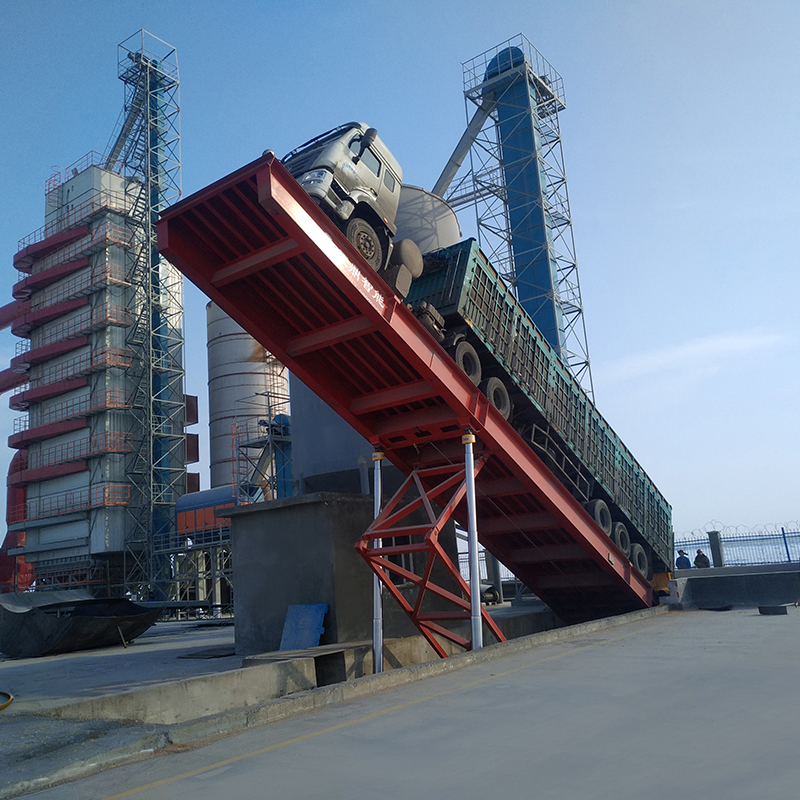
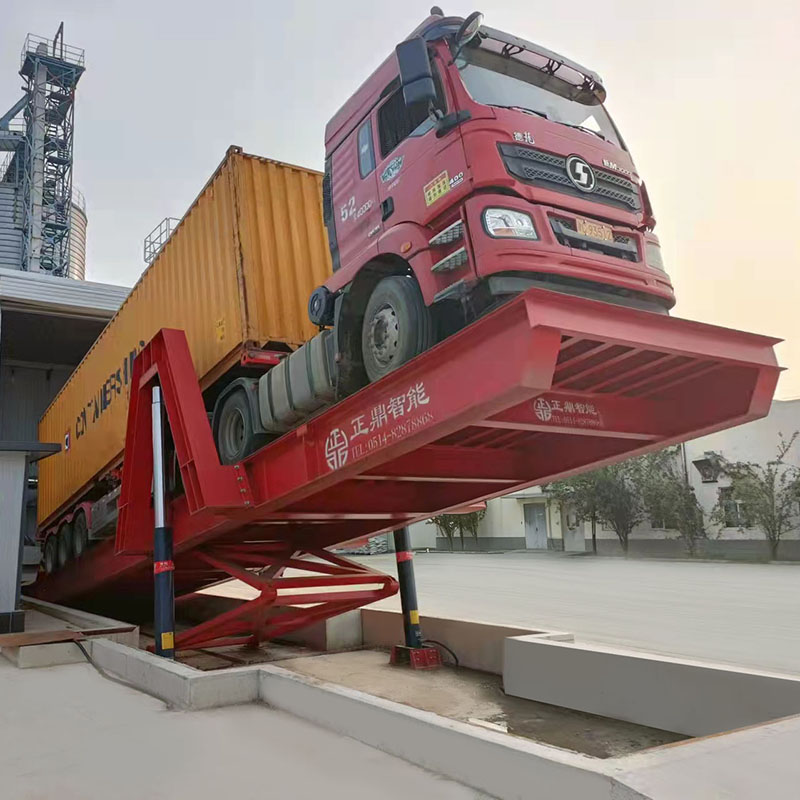
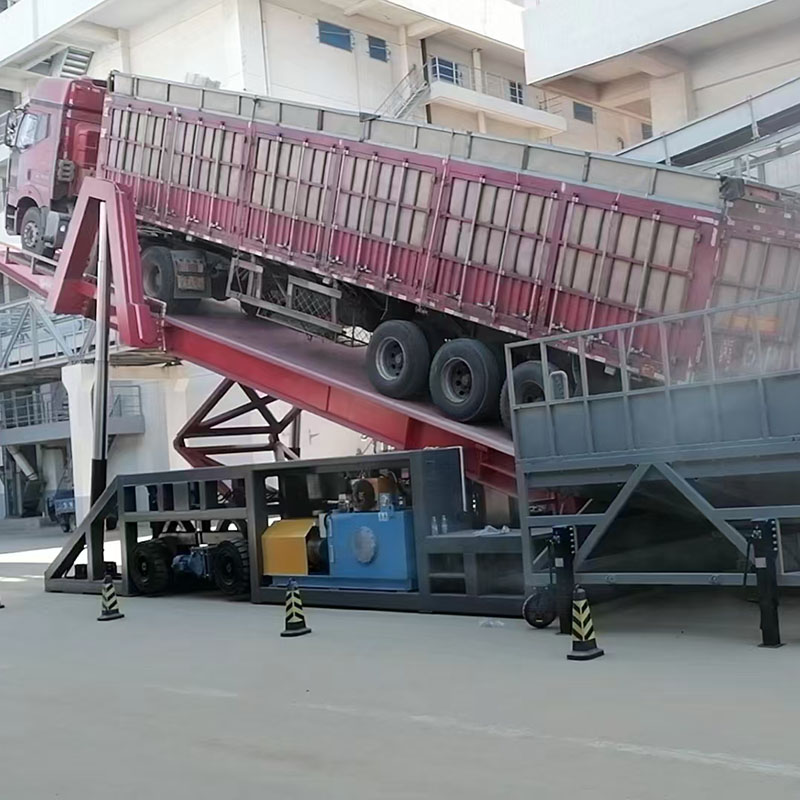
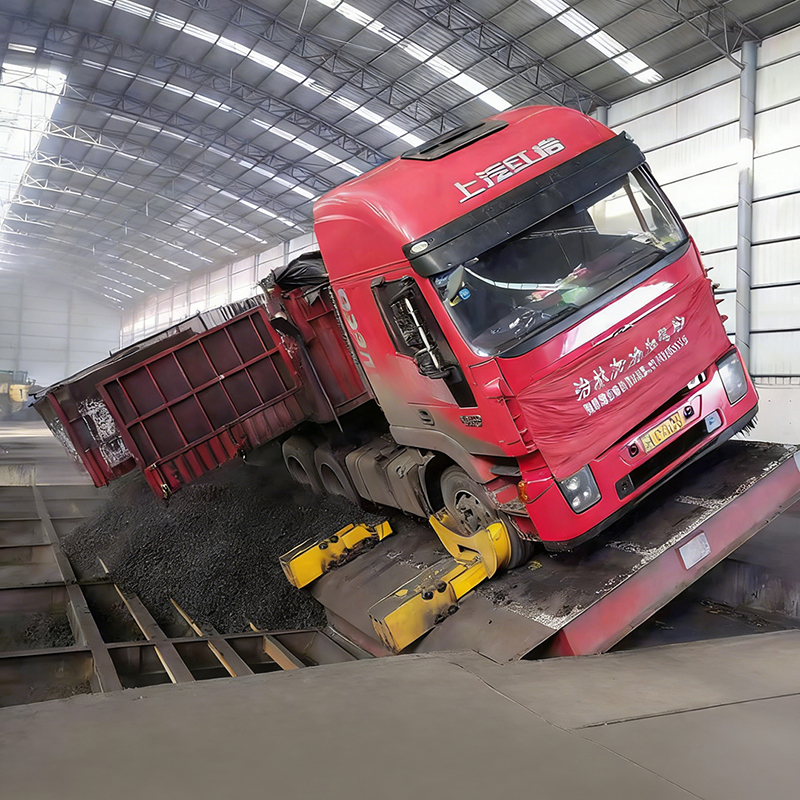
A truck dumper, sometimes called a hydraulic truck unloader or tip unloader, is a platform that raises a truck or trailer at a controlled angle so bulk material flows out by gravity. While the basic idea sounds simple, the engineering behind it has to cope with vehicle weights in excess of 40 tons, uneven load distribution, dust, weather, and strict safety requirements. The type of dumper selected affects installation cost, cycle time, operator headcount, and the overall layout of the receiving area.
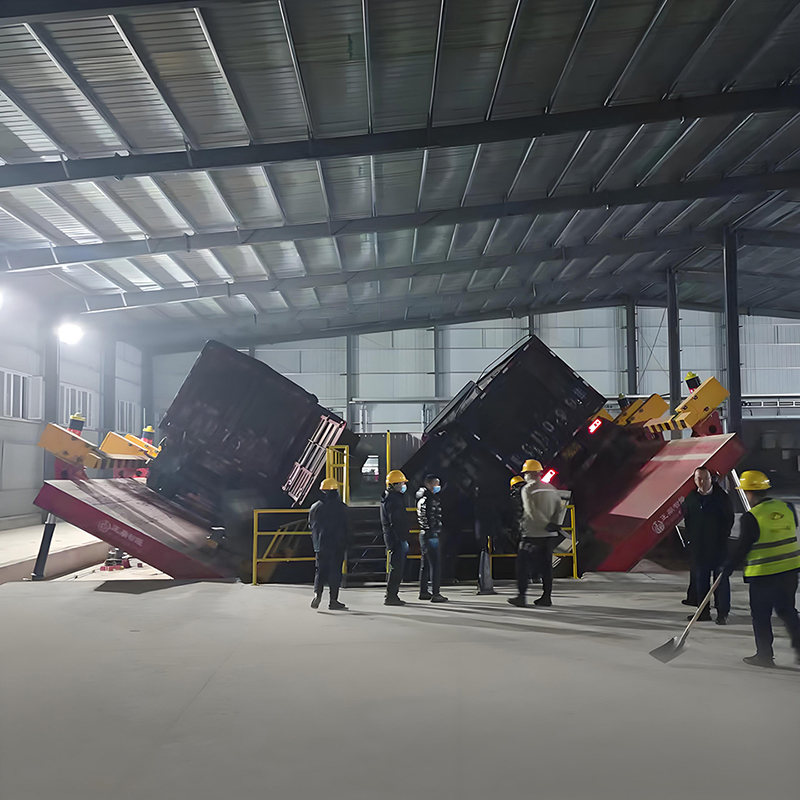
Two kinematic families dominate the market. Rear-discharge dumpers raise the front of the vehicle so material slides out through the rear gate; they suit granular, free-flowing materials and long trailers. Side-turn dumpers tilt the platform to one side, which works well for materials that bridge easily, for trailers with side openings, and for sites where rear discharge is blocked by a wall or another process. Both styles are available in fixed, mobile, and automatic configurations, so the final decision is driven more by site conditions than by the basic operating principle.
| Type | Foundation | Best Fit | Key Advantage | Main Constraint |
|---|---|---|---|---|
| Fixed pit-type dumper | Deep concrete pit | New sites with low groundwater | Lowest loading height, fast cycles | High civil engineering cost |
| Shallow foundation dumper | Reduced-depth pit | Sites with shallow water table or rock | Lower excavation risk | Some models limited to smaller vehicles |
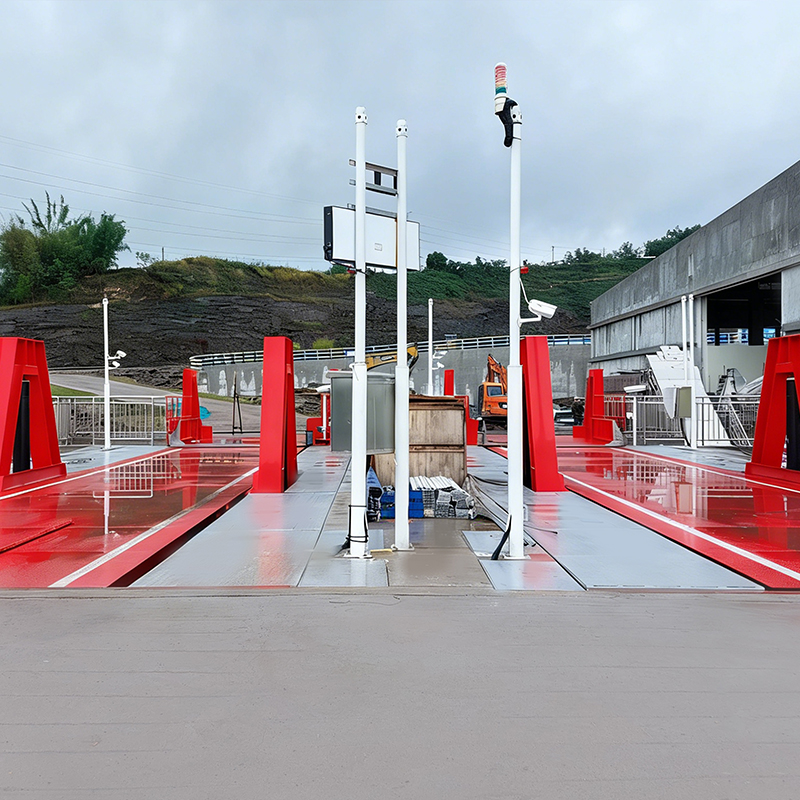
| Pitless truck dumper | No pit, above-ground ramp | Retrofits, rented sites, high water table | No deep excavation, faster installation | Approach ramps require horizontal space |
| Mobile truck dumper | None, moves with the vehicle | Multi-site operations, seasonal peaks | Portability, shared investment | Lower throughput in some designs |
| Enclosed dumper with dust control | Fixed, sealed structure | Cement, coal, lime, dusty grains | Captures dust, protects workers | Higher initial capital cost |
| Unattended dumper with integrated weighing | Fixed, automated | High-volume receiving with batch control | Cuts labor, records weight automatically | Requires control system integration |
The table shows the practical logic behind each variant. Fixed pit-type dumpers offer the lowest loading height and the shortest cycles, but the deep concrete pit adds civil cost and can be impossible where groundwater is high. Pitless models replace the pit with an above-ground ramp structure; they are increasingly popular for retrofits because they avoid excavation and shorten project schedules. Shallow-foundation designs strike a middle ground for geologically difficult sites. Mobile dumpers bring unloading capacity to different locations, which suits contractors, seasonal depots, and agricultural cooperatives that move between crop yards.
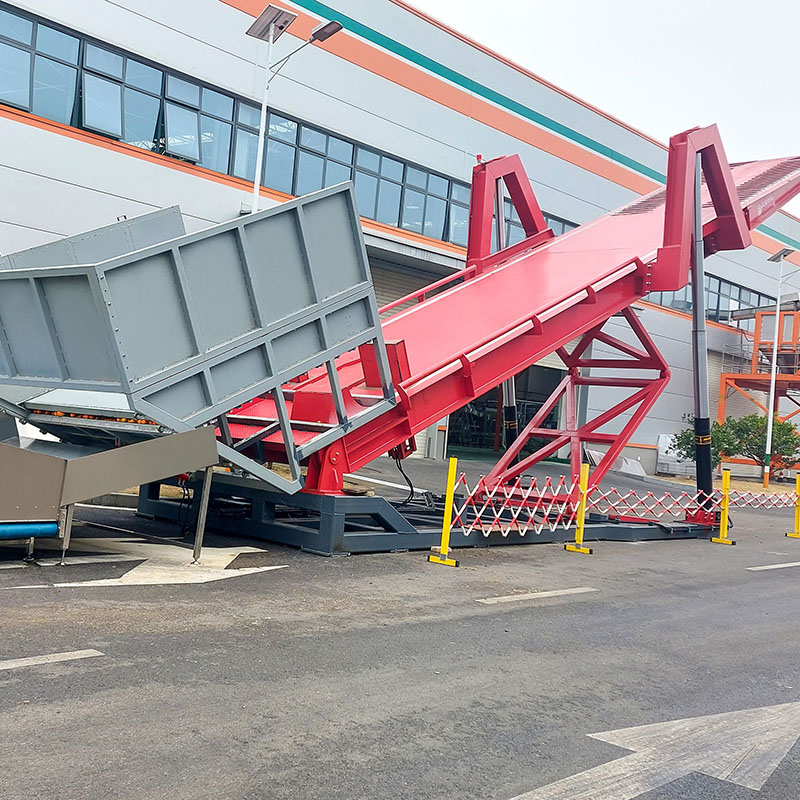 Pitless Truck Dumper for Above-Ground InstallationThis dumper avoids deep excavation, cutting civil costs and shortening project timelines. Its automatic wheel lock and high-precision cylinder system suit dusty retrofits where operators need simple, safe unloading.View Product →
In dusty environments such as cement, coal, lime, or finely milled grains, an enclosed dumper with a dedicated dust control system protects operators and prevents product loss. In high-throughput receiving operations, an unattended dumper with an integrated weighing system turns the unloading cycle into a data capture event: the vehicle is weighed, unloaded, and recorded automatically, with no driver involvement and no manual scale ticket. For buyers who run several plants, standardizing on one dumper platform also reduces spare parts inventory and lets maintenance crews train on a single machine.
When evaluating suppliers of truck dumpers, pay attention to the hydraulic synchronization system. Zhengding, for example, uses an original mechanical cylinder synchronization system that keeps the two lifting cylinders moving in phase; this prevents torsional stress and platform skewing, which are common causes of frame fatigue over a decade of service. Also check the anti-fall system, the rated lifting capacity at full stroke, the steel grade of the platform deck, and the availability of remote diagnostics or local service support. A dumper that runs five years without problems is cheap at any price; one that stops during harvest season is expensive even if it was free.
Key takeaway: choose the truck dumper foundation first, then the features; pitless and enclosed designs solve the two most common problems in bulk receiving, namely groundwater limits and dust exposure.
Container Loading and Unloading Equipment for Intermodal Logistics
Global bulk trade increasingly moves in 20-foot and 40-foot containers. Containers are convenient for shipping but awkward to unload: unlike a tipper trailer, a container has no integrated tipping gear, and its doors open only at the rear. Manual unloading of a 20-foot container filled with grain can occupy two workers for an entire shift. Dedicated container handling equipment solves this problem at the receiving end, and it is becoming a standard part of material equipment handling for importers, port-side mills, and food ingredient plants.
The most common machine is the container flipping machine, also known as a container tilter. It grabs the container, lifts it, and rotates it through a controlled angle so the contents discharge through the rear doors into a receiving hopper or pit. Heavy-duty models handle fully loaded 20-foot and 40-foot containers and incorporate clamps, guide rollers, and safety interlocks so that the container cannot slide or drop during rotation. The flip angle matters: 45 degrees is enough for most grains, while sticky or cohesive materials may need 60 degrees or more.
| Typical Applications Receiving imported grain at a port-side mill Unloading food ingredients for a processing plant Discharging recycled materials at a sorting facility Emptying bulk chemical containers under controlled dust conditions Loading containers with bagged or palletised goods on the export side |
Selection Points Container tare and gross weight range Flip angle requirement: 45 degrees for free-flowing, 60 degrees for sticky loads Foundation and headroom: pit, ground anchor, or gantry configuration Dust control and clean-in-place options Cycle time matched to truck arrival rate at the facility |
Beyond flipping machines, the container equipment family includes container loaders, which pack bagged or unit loads into containers efficiently, and continuous container handling systems, which move containers through multiple process stations such as weighing, opening, flipping, and cleaning in an automated sequence. Gantry container tilters suspend the container from an overhead structure and are useful where floor space is limited or where several containers are handled in one row. Each configuration answers a different operating problem, and the right choice depends on whether the site receives a few containers per day or operates a full intermodal transfer station.
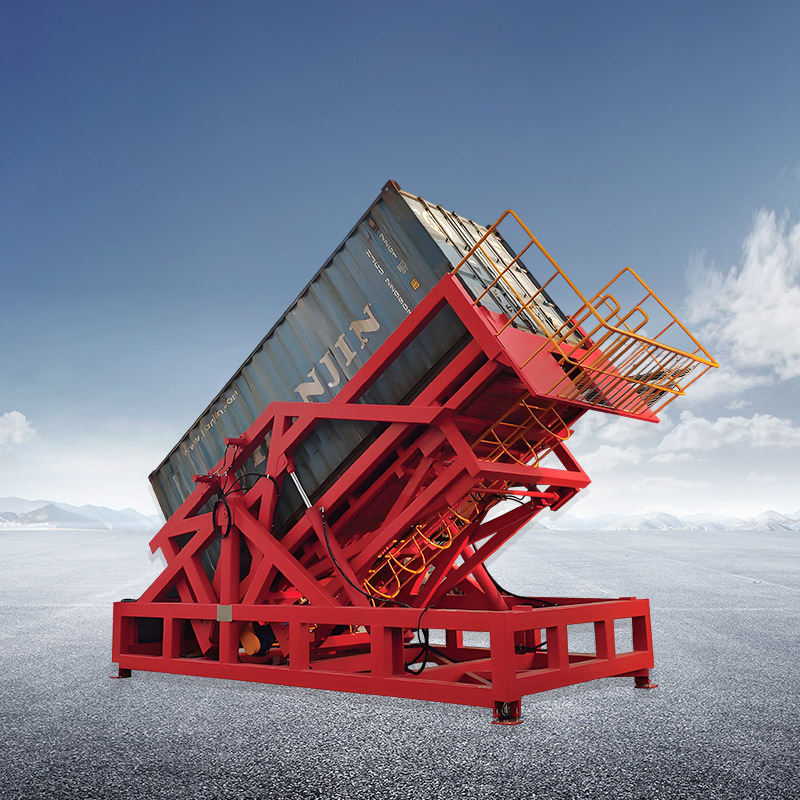 Container Flipping Machine for Bulk Material HandlingThis unit vertically flips containers to speed up loading or unloading using gravity. Optional weighing, mobile chassis, and automatic door control make it practical for intermodal yards and dusty plants.View Product →
For operations that both send and receive containers, matching a container loader on the export side with a flipping machine on the import side creates a balanced intermodal handling line. The two investments reinforce each other because the same labor team manages both functions and the same receiving silos can feed both directions. In practical terms, a plant that imports soybean meal by container and exports finished feed in bags can reduce turnaround time by 80 percent while eliminating the most physically demanding task in the building.
Key takeaway: container flipping machines and container loaders turn a labor-intensive import-export bottleneck into a one-operator automated process, making them essential intermodal additions to a bulk handling line.
How to Choose the Right Material Equipment Handling System
Choosing the right system is a trade-off analysis, not a catalog search. The factors below are the ones experienced plant engineers check first. If your supplier does not ask about them, treat that as a warning sign. A responsible manufacturer will want to know the full operating picture before recommending a machine, because an undersized dumper fails in the first season and an oversized one wastes capital.
- Material characteristics. Bulk density, particle size, moisture, angle of repose, temperature, abrasiveness, and dust generation all influence the discharge angle and hopper design. A free-flowing wheat load behaves completely differently from sticky clay or hot clinker.
- Vehicle and trailer types. Length, width, gross weight, axle configuration, and door layout. If the fleet mixes 20-ton city trucks with 45-ton road trains, the dumper geometry must handle the largest vehicle safely while remaining efficient for the smallest.
- Throughput requirement. Number of trucks per hour and per shift, seasonal peaking, and acceptable queue time. This decides whether a simple dumper, a dumper with weighing, or a fully automated receiving line is justified.
- Site constraints. Groundwater depth, soil bearing capacity, ceiling height, drainage, and distance to silos or process lines. A high groundwater table rules out a deep pit design; limited headroom may rule out a rear-discharge dumper with a steep ramp.
- Environmental controls. Dust, noise, odor, and stormwater runoff. Enclosed dumpers with dust collection and wash-down systems are now standard for food and chemical plants in many export markets.
- Automation and data integration. Weighing accuracy, PLC compatibility, labeling, and links to the ERP warehouse module. Unattended operation requires robust sensors, interlocks, and fail-safe logic.
- Safety and certification. Anti-fall devices, emergency stops, audible alarms, overload protection, and compliance with local machinery directives. Ask for certificates and test reports before confirming the order.
- Total cost of ownership. Not only the equipment price, but civil works, erection, commissioning, energy, lubrication, spare parts, and downtime risk. A cheap machine sitting on an expensive pit can cost more over ten years than a quality machine on a pitless system.
To translate these factors into a shortlist, it helps to visualize the installation type. The following cards summarize the four most common configurations a bulk processor will consider.
Pit-Type Install
Deep foundation with the lowest loading height. Best for greenfield sites where groundwater is not an issue. Requires the longest civil schedule and the largest excavation.
Pitless Install
Above-ground ramps with no deep pit. Ideal for retrofits, rented sites, and high water tables. Faster to commission and easier to relocate than a pit machine.
No foundation at all. Moves between plants or yards. Good for seasonal peaks, contractors, and cooperatives that want one machine serving several sites.
Enclosed / Dust-Tight
Sealed structure with filtration. Required for cement, coal, lime, and chemical powders. Higher capital cost but protects workers, neighbors, and product quality.
Automation deserves its own decision point. An unattended truck dumper with integrated weighing system removes the scale operator and the dumper operator from the process. The vehicle is weighed on the way in, positioned, unloaded, and weighed again on the way out; the PLC assembles a batch record for each supplier, including truck number, material code, gross weight, tare weight, and timestamp. For operations that pay suppliers by weight or need strict inventory control, this configuration pays for itself quickly through reduced staffing and more accurate loss control.
 Unattended Truck Dumper With Integrated Weighing SystemThis configuration combines automatic unloading and weighing, removing manual scale tickets and operators. It suits multi-dumper sites needing strict weight records and reduced staffing, with one-button driver operation.View Product →
Finally, ask the supplier for references in your own industry. A manufacturer that regularly delivers to grain and flour plants will know food-safety requirements; one that specializes in cement and coal will know filtration and abrasion resistance. Industry-specific experience reduces commissioning surprises and lowers the lifetime cost of the installation. It also shortens the approval process for corporate buyers, because the equipment has already passed similar acceptance criteria elsewhere.
Key takeaway: qualify the material, the vehicles, the site, and the automation requirement before comparing prices; a machine selected on total cost of ownership will outperform a machine selected on sticker price.
Efficiency Benchmarks for Automated Unloading
To understand how much material equipment handling can change a receiving operation, compare typical unloading times side by side. The figures below are indicative benchmarks drawn from bulk handling projects and equipment data sheets, not guarantees for any specific installation. They assume a standard 40-ton bulk truck carrying free-flowing material such as grain, pellets, or aggregate. Actual times vary with moisture content, particle size, trailer geometry, and operator experience. Even so, the gap between manual methods and hydraulic dumpers is consistent across industries, which is why plant managers invest in automatic unloading systems.
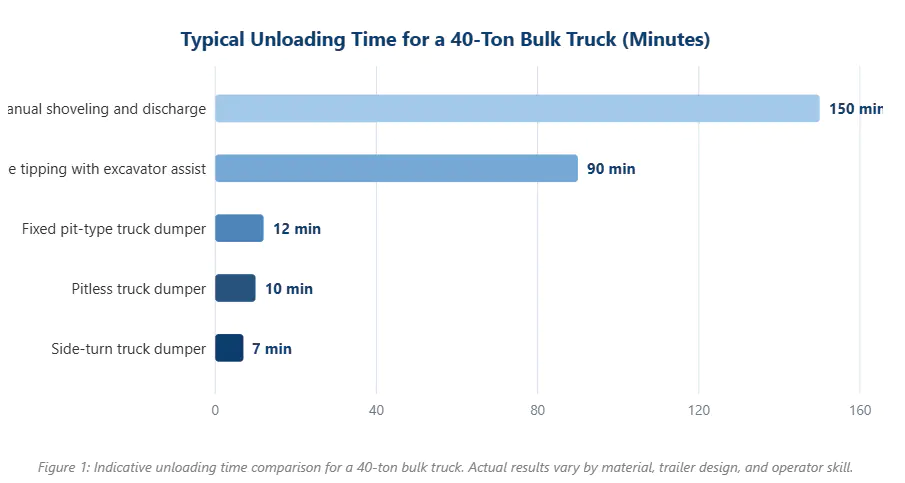
Three conclusions stand out from this comparison. First, the difference between manual and mechanical unloading is measured in hours, not minutes, and that lost time appears directly in labor cost and truck queue length. Second, the cycle-time differences between dumper variants are small compared with the gap between having a dumper and not having one, so the equipment choice should be driven by site conditions, material type, and budget rather than by cycle time alone. Third, the fastest configurations in this comparison are side-turn units, because the lateral tilt lets material exit through large side openings with fewer interruption points than a rear gate.
For a plant receiving 20 trucks per day, reducing unloading time from 150 minutes to 10 minutes changes the entire logistics picture. The receiving team can be reduced from four or five people to one or two, or redeployed to quality sampling and housekeeping. Truck drivers no longer spend half their shift waiting, so freight rates become more stable and carriers are more willing to serve the site. The same trailer can complete two or three round trips per day instead of one, which raises the effective capacity of the fleet without buying new vehicles. In seasonal industries such as grain and sugar, faster unloading also protects product quality by getting material into silos before it heats or picks up moisture.
The benchmark also explains why pitless and mobile dumpers are so popular in retrofit projects. They deliver most of the speed benefit of a fixed pit machine while avoiding the civil cost and schedule risk of deep excavation. For a small or mid-sized plant, the typical payback period for a pitless truck dumper, calculated from labor savings, demurrage avoidance, and reduced truck handling, lands between 12 and 24 months in most published case studies. That number assumes enough truck arrivals to keep the machine busy for at least a few hours per day. If truck arrivals are sparse, a shared mobile dumper can serve several plants with the same capital.
Finally, the comparison highlights the importance of measurement. A plant that does not know its current unloading time cannot justify a capital purchase with confidence. A time study of at least ten trucks, documented in minutes, provides the baseline for the business case and helps the supplier size the equipment correctly. That same baseline becomes the performance target in the acceptance test after installation, giving both buyer and seller a clear, objective definition of success.
Key takeaway: the real competition is not between dumper brands but between automatic unloading and manual labor; once that gap is measured, the business case for mechanical unloading is rarely in doubt.
Maintenance, Safety, and Total Cost of Ownership
A hydraulic unloader is a robust machine, but it runs in a hostile environment of dust, vibration, rain, and heavy loads. A structured maintenance program is the difference between a machine that lasts 15 years and one that fails in the middle of harvest. Most manufacturers recommend daily visual checks, weekly functional tests, monthly lubrication, and scheduled hydraulic oil analysis. The following checklist reflects common practice across the industry and applies to both truck dumpers and container tilters.
- Hydraulic oil: check level and temperature daily; sample annually for water, particles, and viscosity breakdown. Contaminated oil is the leading cause of pump and valve failures.
- Hoses and fittings: inspect monthly for chafing, bulging, and loose couplings; replace high-pressure hoses on a schedule rather than waiting for a leak to develop.
- Cylinder seals: watch for external leakage and for slow drift in the raised position, which indicates internal seal wear.
- Pivot pins and bushings: grease weekly; worn bushings change geometric alignment and accelerate frame cracking.
- Electrical and control system: verify limit switches, emergency stops, and interlock logic before each season; keep a backup copy of the PLC program in a safe place.
- Foundation and anchors: check anchor bolts and weld seams annually, especially on pitless ramps that carry dynamic loads.
Safety must be designed in, not added on. The features to look for include an anti-fall system that mechanically locks the platform if a hose bursts or a pump fails, independent secondary support catch arms, audible and visual warnings during movement, deck markings that tell drivers exactly where to stop, and wheel chocks or restraints so the vehicle cannot roll during tipping. For automated machines, interlocked safety gates and fail-safe PLC logic are non-negotiable because there is usually no operator standing close to the platform.
For container loading and unloading equipment, maintenance follows the same logic plus one extra task: cleaning. Food and feed materials leave residues that attract pests and affect compliance with food safety audits. Wash-down capable machines simplify hygiene programs, but the cleaning process itself must be included in the maintenance schedule so that water does not damage bearings or electrical enclosures. Many European and North American buyers now stipulate stainless steel contacts and IP-rated control panels for exactly this reason.
A practical maintenance guide for container loading and unloading equipment is available in the manufacturer's knowledge center; it lists common faults, inspection intervals, and warning signs that a component needs replacement. Reviewing such a guide before purchase gives a realistic view of the maintenance workload and helps the buyer plan spare parts inventory from day one.
Related resource: How to maintain container loading and unloading equipment effectively
Budgeting note: put aside 2 to 3 percent of the equipment value per year for spare parts and maintenance. For a well-maintained hydraulic dumper, the largest wear items are hoses, seals, proximity sensors, and hydraulic filters. These parts are inexpensive if replaced early and expensive if ignored until failure. A documented maintenance log also strengthens the resale value of the equipment and makes insurance claims easier in the event of an accident.
Key takeaway: planned maintenance on hydraulic oil, seals, and safety interlocks protects both the investment and the operators; an annual maintenance budget of 2 to 3 percent of equipment value is a realistic planning figure.
Why Work with a Dedicated Material Equipment Handling Manufacturer
Zhengding Intelligent Equipment, based in Jiangsu, China, is a national high-technology enterprise that researches, designs, and builds intelligent logistics equipment. The company concentrates on automatic truck unloading and container handling, with a product line that includes rear-discharge truck dumpers, side-turn truck dumpers, container flipping machines, container loaders, gantry container tilters, and continuous container handling systems. It also produces oat processing equipment, which reflects a deeper specialization in agricultural materials and gives the company hands-on knowledge of how grains behave in chutes, hoppers, and rotating drums.
As a manufacturer rather than a trading company, Zhengding designs the mechanical structure, welds the platform frames, assembles the hydraulic system, and runs factory acceptance tests in its own plant. This matters for buyers in practical ways. Configuration changes are discussed directly with engineers instead of being relayed through a middleman. Spare parts and technical documentation come from a single source. Customization such as discharge angle, platform width, dust enclosures, and control interfaces can be engineered to match specific site requirements rather than chosen from a distributor's fixed catalog.
Zhengding equipment is used in steel, chemical, cement, coal, grain, oil, and food industries, and the company's published customer references include multinational groups such as Bühler, Cargill, Wilmar, Louis Dreyfus, DuPont, Heineken, and Saint-Gobain. Export deliveries reach Japan, Brazil, Egypt, Pakistan, India, the Middle East, and Southeast Asia. For wholesale buyers and plant owners looking for a factory-direct supplier, these references shorten the qualification process because the equipment has already passed the acceptance tests of large, demanding purchasers in regulated industries.
The company positions itself as one of China's more complete suppliers of vehicle and container automatic loading and unloading equipment, and it describes the annual sales volume and technical performance of its vehicle automatic loading and unloading equipment as leading in the domestic market. Buyers should verify such claims with normal due diligence: request customer references, ask for installation photos and videos, and, where possible, visit a machine already in operation. A serious manufacturer welcomes these questions because they demonstrate a professional buyer who will also run the equipment properly.
You can review the company's background and facilities on the About page and then contact the sales and engineering team with your site conditions. Because Zhengding supplies both truck-based and container-based solutions, the same engineering team can design an intermodal receiving line that covers both modes of transport, including the pitless dumper for road trucks, the container flipping machine for import containers, and an unattended weighing configuration where the plant needs batch-level data.
Key takeaway: a manufacturer with a broad product line, international customer references, and direct engineering support reduces the two biggest risks in buying material equipment handling systems: mis-specified machinery and weak after-sales service.
Frequently Asked Questions About Material Equipment Handling
What is the difference between a truck dumper and a container flipping machine?
A truck dumper handles the complete vehicle and is used when material arrives loose in a tipper or box trailer. A container flipping machine handles only the container itself, which is loaded on and off a chassis; it lifts and rotates the container while the chassis stays on the ground. The choice depends on the mode of transport: road bulk trucks point to a dumper, while import and export containers point to a flipper. Many modern receiving plants install both, sharing the same receiving pit and conveyor line.
How fast can a pitless truck dumper be installed?
Because it avoids deep excavation, a pitless installation can typically be completed in two to four weeks of civil work, followed by about one week of mechanical erection and commissioning. A fixed pit-type dumper usually needs six to ten weeks of civil work before the equipment even arrives on site. Ground conditions, weather, and local permitting change these numbers, so the supplier should provide a project schedule during the quotation phase and identify the critical path for approval.
Can the same machine unload different materials?
Yes, with the right engineering. The discharge angle, hopper coating, dust enclosure, and discharge conveyor must be selected for the most difficult material the plant will handle. Changing from dry grain to wet, sticky material often requires a steeper flip angle and a smoother liner. The honest answer is that a machine optimized for a single material is cheaper and more reliable; a multi-material machine needs more configuration. Tell the supplier the full list of materials, not just the main product, before requesting a proposal.
What safety features should a hydraulic unloader have?
At minimum, an anti-fall mechanical lock that holds the platform if pressure drops, pressure relief valves, emergency stop buttons, platform edge barriers, audible movement alarms, wheel chocks, and overload protection. For automated or unattended machines, interlocked safety gates and a fail-safe PLC sequence are essential. Buyers should request the risk assessment document and certification list from the manufacturer and check that the machine meets the local machinery directive for the country of installation.
Is an unattended system with integrated weighing worth the extra cost?
For plants that receive more than ten trucks per day, generally yes. It removes the scale operator, eliminates manual recording errors, and builds a digital inbound record for inventory and supplier reconciliation. The payback comes from reduced staffing and more accurate loss control; a batch weighing error of 0.5 percent on high-volume material can easily exceed the maintenance cost of the system over a season. For low-volume plants, a manually operated dumper remains a more rational investment.
Does the manufacturer support export installation and after-sales service?
Zhengding exports routinely, with references in Japan, Brazil, Egypt, Pakistan, India, the Middle East, and Southeast Asia. The delivery scope normally includes technical documentation, installation supervision or remote guidance, and spare parts packages. Buyers should clarify the terms in the quotation: who supplies the foundation design, who commissions the machine, what warranty period applies, and what response time is promised for remote support. These details matter more than the initial price in the long-term relationship with the supplier.
Key takeaway: the right material equipment handling decision depends on transport mode, material mix, site geology, and throughput; a supplier that asks about all four before quoting will always give a more useful proposal.
Conclusion
Material equipment handling is a broad field, but for bulk receiving operations the critical decision is usually simple: how do you get material out of the truck or container efficiently, safely, and accurately? The answer, a truck dumper, a container flipping machine, or a combination of both, shapes every downstream process and a large part of the operating budget. Starting with this receiving bottleneck is the most reliable way to turn a general interest in logistics automation into a specific project with measurable results.
Begin with a time study of your current receiving operation. Calculate the labor and demurrage cost per ton and compare it with the throughput of an automatic installation. Then apply the selection criteria in this guide: material characteristics, vehicle mix, site constraints, dust and environmental controls, automation needs, safety certifications, and total cost of ownership. Finally, qualify the supplier as a genuine manufacturer with relevant industry references, because the machine price is only a small part of the lifetime cost when commissioning delays and spare part availability are taken into account.
The trend in modern plants is toward unattended operation and integrated data capture. Equipment that can weigh, unload, and record automatically will look normal in a few years, just as automatic bagging and palletizing do today. Investing early creates a competitive advantage in labor cost, receiving speed, and inventory accuracy. For a plant manager or owner, there are few investments in the facility with a faster, easier-to-measure return than a well-selected automatic unloading system.
Key takeaway: automatic material equipment handling at the receiving station is the highest-return modernization available to bulk processors; measure the current cycle, choose the right dumper or container system, and work with a manufacturer that can back its claims with references and service.


