

 English
 русский
 Español
 Français
 Português
 عربى




+86-13588556918
Content
- 1 What Exactly Does Dump Trailer Weight Mean?
- 2 Average Dump Trailer Weights by Size and Axle Configuration
- 3 GVWR, Payload, and the Math That Keeps You Legal
- 4 How Much Does the Material Weigh? Volume Versus Weight Limits
- 5 How to Calculate a Safe Load for Your Dump Trailer in Five Steps
- 6 Matching Dump Trailer Weight to Your Tow Vehicle
- 7 Steel vs. Aluminum Dump Trailers: Weight Trade-Offs
- 8 When the Weight Rating Is Not Enough: Industrial Truck Unloading
- 9 Safety and Maintenance Practices That Protect Payload Ratings
- 10 Frequently Asked Questions About Dump Trailer Weight
- 10.1 What is the average dump trailer weight when empty?
- 10.2 What does GVWR mean on a dump trailer, and why is it important?
- 10.3 How much weight can a 7x14 dump trailer haul?
- 10.4 Why do two dump trailers of the same size weigh differently?
- 10.5 Can a half-ton truck pull a heavy dump trailer?
- 10.6 How is dump trailer weight different from dump truck weight?
Two 7x14 tandem-axle dump trailers can look identical on a dealer lot and still have completely different hauling limits. One may weigh 3,800 lb empty; the other may weigh 4,800 lb, even though both carry the same style of hoist and the same bed length. When a builder, landscaper, or farm operator starts asking about dump trailer weight, the real question underneath is simple: how much material can I legally put in the bed without overloading the frame, axles, tires, and tow vehicle? The answer is a straightforward subtraction once you understand the numbers that define the trailer. Dump trailer weight is the difference between the GVWR and the empty weight of the unit, and the material you load may limit you by volume or by weight depending on its density. This guide walks through average empty weights for common sizes, explains GVWR and payload in plain terms, shows how to match a trailer to a tow vehicle, and covers the point where weight ratings push high-volume operations toward industrial truck unloading equipment instead of a heavier trailer.
What Exactly Does Dump Trailer Weight Mean?
Dealers quote four or five different numbers, and mixing them up is where overloaded trailers are born. The two figures that matter most are empty weight and GVWR. Empty weight, also called curb weight, is what the trailer actually weighs as delivered: frame, floor, sides, tailgate, hoist, battery, wiring, fenders, and any options bolted on at the factory. GVWR, or gross vehicle weight rating, is the total loaded weight that the manufacturer certifies for the complete trailer. Subtract empty weight from GVWR and you have the maximum payload you can carry, assuming the load is distributed evenly and no single component is below the rating.
| Term | What it describes | Why it matters |
|---|---|---|
| Empty weight (curb weight) | The trailer's actual weight with no cargo, including the hoist and standard equipment | The baseline you subtract from GVWR to find payload |
| GVWR | The maximum total weight of trailer plus load certified by the manufacturer | The number you must never exceed, because it affects brakes, tires, axles, and registration |
| GAWR | The maximum weight allowed on each axle | Helps you distribute load properly; individual axles cannot be overrated even if total is under GVWR |
| Payload capacity | GVWR minus empty weight | The practical number to compare against the weight of the material you plan to haul |
| Tongue weight | The downward force the coupler exerts on the tow ball | Consumes the tow vehicle's payload; usually 10 to 15 percent of loaded trailer weight for bumper-pull units |
The official figures are printed on a sticker or stamped plate on the left front frame rail of the trailer, and the same numbers appear on the VIN tag. That sticker overrides any brochure, website listing, or salesperson estimate. If the sticker is missing, ask for the build sheet from the dump trailer manufacturer before you sign anything, because the unit may have been assembled with a heavier hoist or reinforced floor that shifts the empty weight upward.
Use the trailer's own tag, not the dealer's ad, when calculating how much you can carry.
Average Dump Trailer Weights by Size and Axle Configuration
There is no single answer to the question "how much does a dump trailer weigh?" because construction material, side height, hoist type, and optional equipment change the result more than bed length alone. Still, average figures are useful for budgeting, for choosing a tow vehicle, and for comparing dealer quotes against each other. The table below lists the range you will typically see for steel-bodied units, which are the most common choice for gravel, dirt, and demolition work.
| Trailer size | Axle configuration | Typical empty weight | Typical GVWR |
|---|---|---|---|
| 5x10 | Single axle | 1,600-2,100 lb | 6,000-7,000 lb |
| 6x10 | Tandem axle | 2,200-2,800 lb | 7,000-9,900 lb |
| 6x12 | Tandem axle | 2,600-3,400 lb | 9,900-12,000 lb |
| 7x12 | Tandem axle | 3,000-3,800 lb | 9,900-12,000 lb |
| 7x14 | Tandem axle | 3,500-5,800 lb | 10,000-14,000 lb |
| 7x16 | Tandem or triple axle | 3,900-5,600 lb | 12,000-16,000 lb |
| 7x18 | Triple axle | 4,500-6,200 lb | 14,000-18,000 lb |
Empty weight climbs steadily as a dump trailer gets longer and picks up a second or third axle. The numbers below are midpoints of the ranges you will see on dealer spec sheets, all for steel-bodied trailers with standard side walls. We have selected configurations most commonly used by landscaping, excavation, and farming operators. This chart is intended for comparison, so keep the exact load you need in mind when you look at the bar lengths. Read left to right, the chart shows how quickly frame structure, hoist size, and axle hardware add up.
Approximate average empty weight by dump trailer size
The first thing to notice is the distance between the 5x10 and the 7x18: the longest unit can weigh close to three times as much before a single pound of material is loaded. Most of that increase comes from the hoist, the heavier frame rails, and an extra axle assembly. A 7x14 sits at roughly 4,200 lb with a steel body, which aligns with the 3,500-to-5,800 lb range manufacturers quote once options are added. Because the 7x14 is the most popular size, this single number matters to the largest group of buyers. Moving from a 7x14 to a 7x16 adds about 500 lb, which may not sound dramatic, but it reduces payload by the same amount, equivalent to roughly one-quarter of a cubic yard of gravel. Aluminum versions of these same units typically weigh 700 to 1,100 lb less, which is why they stay attractive for weight-sensitive jobs. Options change the result dramatically: a tarp system, spread-axle suspension, spare tire carrier, and a heavier telescopic hoist can add 150 to 400 lb. That is why no spec-sheet range can replace a certified scale ticket for the exact trailer you intend to buy. Some states also base registration fees on empty weight, so a difference of several hundred pounds affects the annual cost of ownership. For a business that tows every working day, every 100 lb of frame weight that does not become cargo is lost revenue potential. Read the door sticker on the trailer as delivered, because the standard weight in a brochure is rarely what the unit actually weighs once the factory adds the options the dealer ordered. The practical conclusion is simple: choose the smallest trailer that holds your material within both volume and weight limits, then verify the real empty weight before you register it.
Empty weight grows with length and axle count, so verify the actual scale weight of the specific unit you buy instead of relying on a generic brochure figure.
GVWR, Payload, and the Math That Keeps You Legal
The most important formula in the dump trailer world is short: payload equals GVWR minus empty weight. If a 7x14 trailer has a GVWR of 14,000 lb and an empty weight of 4,200 lb, its maximum payload is 9,800 lb. Every accessory you add after delivery, including a spare tire, a tool box, or a heavier tarp system, reduces that number by the same amount. Many experienced operators recommend keeping a 5 percent reserve so the trailer is never running at the absolute limit on a hot day or a rough haul road.
| Configuration | Empty weight | GVWR | Maximum payload |
|---|---|---|---|
| Steel body, 10K GVWR | 3,800 lb | 10,000 lb | 6,200 lb |
| Steel body, 12K GVWR | 4,000 lb | 12,000 lb | 8,000 lb |
| Steel body, 14K GVWR | 4,400 lb | 14,000 lb | 9,600 lb |
| Aluminum body, 14K GVWR | 3,500 lb | 14,000 lb | 10,500 lb |
The GVWR is not just a recommendation. It is based on the weakest component in the running gear: tires, wheels, axles, springs, and the frame itself. A 14,000 lb GVWR means the combined weight of trailer and load may not exceed that figure, and at the same time no single axle may exceed its own GAWR. For example, a tandem-axle trailer with two axles rated at 7,000 lb each could technically support 14,000 lb, but if the tires are only rated for 3,000 lb each, the tire rating becomes the real limit. When a load sits unevenly, one side or one axle carries more than its share, so older trailers with sagging springs or underinflated tires fail before the math says they should. Weigh the trailer loaded if you are in doubt, especially when hauling dense crushed stone or wet clay. Many commercial scales charge a minor fee or none at all, and the ticket you receive is the most honest proof of dump trailer weight that exists.
Always subtract the trailer's actual empty weight from the published GVWR, and keep a small safety margin because options, moisture, and uneven loading all consume payload.
How Much Does the Material Weigh? Volume Versus Weight Limits
Payload numbers only make sense when you know what you are hauling, because different materials fill the same bed with very different weights. A cubic yard of mulch can weigh less than 800 lb, while a cubic yard of wet dirt can exceed 3,000 lb. This means one trailer can reach its GVWR with less than four yards of one material but carry more than nine yards of another. The column chart below compares the loose densities of materials most often hauled with a dump trailer. Use these figures for initial planning and confirm with local suppliers, since moisture and compaction shift the actual numbers.
| Material | Loose weight per cubic yard | Loading note |
|---|---|---|
| Mulch / compost | 600-800 lb | Almost always volume-limited |
| Topsoil (dry) | 1,900-2,200 lb | Reaches GVWR before bed is full |
| Sand (dry) | 2,500-2,700 lb | Weight-limited |
| Gravel (loose) | 2,700-2,900 lb | Weight-limited; check moisture |
| Crushed stone | 2,500-2,700 lb | Weight-limited |
| Wet dirt / clay | 2,800-3,200 lb | Very weight-sensitive after rain |
| Concrete debris | 2,600-2,800 lb | Use the heavier end when rebar is present |
Loose material weight per cubic yard
Mulch 750 lb
Topsoil 2,150 lb
Sand 2,700 lb
Gravel 2,850 lb
Wet dirt 3,100 lb
Concrete 2,650 lb
The bars fall into three groups: light organics, mid-weight aggregates, and dense wet soils. Mulch and compost come in under 800 lb per cubic yard, so they are almost never the reason a trailer is overweight; instead, mulch loads are limited by the physical volume of the bed, and you can typically load a 7x14 to its full side height without worrying about GVWR. Topsoil is the classic trap: it looks darker and softer than gravel but still weighs about 2,150 lb per yard, so a 9,800 lb payload equals only about 4.5 cubic yards. Sand, gravel, and crushed stone, ranging from 2,500 to 2,900 lb per yard, force a completely different approach: you will reach the GVWR at just under four yards. Wet dirt and wet sand can exceed 3,100 lb per yard; after a heavy rainfall, the same load that was legal on Tuesday can be overweight on Wednesday. Contractors who haul dirt after a storm should reduce the load by roughly 10 percent or run it over a scale, because moisture weight is real weight in the eyes of the GVWR. For aggregate producers, this density explains why dump trucks and dump trailers in quarry work are specified by payload weight rather than bed volume. Landscapers moving mulch, by contrast, can run a taller-sided body without exceeding the weight rating, which is why mulch trailers look different from gravel trailers. When in doubt, weigh the first load: one stop at a commercial scale removes the guesswork and tells you exactly how many yards your trailer can handle at its actual density. The same density logic applies to demolition debris, which is a mix of concrete, wood, and metal, so it is safer to estimate using 2,500 to 2,800 lb per yard. Understanding material density also tells you whether the weight rating or the bed volume is the limiting factor for your trailer. A simple rule works on every job site: if the material is darker, wetter, or mixed with fines, use the heavier end of the range.
For dense materials like gravel and wet dirt, the GVWR is reached before the bed is full; for mulch and compost, the bed fills before the weight matters.
How to Calculate a Safe Load for Your Dump Trailer in Five Steps
Once the numbers are in front of you, the calculation becomes a repeatable checklist. Operators who skip a step usually make the same mistakes: they trust a brochure weight, forget accessories, or ignore moisture. The five steps below turn dump trailer weight math into something you can do on a loading pad without a spreadsheet.
- Find the GVWR on the trailer's VIN tag or door sticker. This is the legal ceiling for the complete trailer.
- Weigh the trailer empty at a certified scale, or use the weight listed on the manufacturer's build sheet if it was weighed at the factory.
- Add the weight of every accessory that will be on the trailer during the trip: spare tire, tarp, chains, and any mounted toolboxes.
- Subtract that total empty weight from the GVWR. The result is your rated payload before any dynamic adjustment.
- Adjust for moisture and load distribution. Wet material can add 5 to 10 percent in weight, and an uneven side load can push one axle over its GAWR even if the total looks acceptable.
Here is a realistic example. A 7x14 steel dump trailer has a 14,000 lb GVWR. The scale ticket shows 4,300 lb empty. The owner adds a tarp system and a spare tire weighing 250 lb, so the effective empty weight becomes 4,550 lb. Rated payload is therefore 9,450 lb. After a rainy week, the gravel supplier warns that the material is running close to 2,850 lb per yard instead of 2,700 lb. Dividing 9,450 lb by 2,850 lb per yard gives 3.3 cubic yards, while the same trailer could carry about 4.4 yards of dry topsoil at 2,150 lb per yard. The bed may hold 7 or 8 cubic yards by volume, so the loading crew must keep the bucket count low for the heavier material. A simple site rule: for gravel and wet dirt, load half to two-thirds of the bed; for mulch, the bed is the limit.
Subtract the empty weight plus all accessories from the GVWR, then divide by the material's actual pounds per cubic yard to get a safe bucket count.
Matching Dump Trailer Weight to Your Tow Vehicle
A dump trailer can have a high GVWR and still be unsafe the moment it is hooked to the wrong truck. The tow vehicle has three separate limits: the receiver hitch rating, the truck's payload capacity, and the gross combined weight rating, or GCWR. The receiver rating, classified in the table below, is only the starting point. The truck's payload capacity includes people, fuel, tools, and tongue weight, so a heavy trailer can max out a light truck even when the towing capacity looks sufficient.
| Hitch class | Maximum trailer weight | Typical use |
|---|---|---|
| Class I | 2,000 lb | Small utility trailers, motorcycles |
| Class II | 3,500 lb | Small landscaping trailers |
| Class III | 5,000-6,500 lb | Medium utility and small dump trailers |
| Class IV | 7,500-10,000 lb | Many 6x12 and 7x12 dump trailers |
| Class V | 12,000 lb and up | Heavy dump trailers, gooseneck and fifth wheel |
A half-ton pickup is a common match for a 7x12 dump trailer with a GVWR around 10,000 lb, but the combined weight can be near the truck's limit. Consider a truck with a GCWR of 13,500 lb, a curb weight of 6,200 lb, two passengers and tools adding 500 lb, and a trailer weighing 7,000 lb loaded. That leaves only 5,800 lb of combined capacity before the truck reaches its limit, which means a heavier trailer or a larger third passenger would push it over. Tongue weight makes the situation tighter: a 7,000 lb trailer with 10 percent tongue weight puts 700 lb onto the truck's suspension, and that 700 lb counts against the truck's payload, not its towing capacity. Trailer brakes are legally required in most jurisdictions once the trailer and load exceed about 3,000 lb, and they should always be connected to an in-cab brake controller on heavier units. A dump trailer that weighs more than the tow vehicle requires slower stopping distances, more careful lane changes, and stronger sway control, so dealers who sell 14,000 lb GVWR trailers correctly recommend a one-ton truck or a gooseneck setup. If the truck's door sticker shows a lower payload than the trailer's tongue weight plus cargo, the trailer is too heavy for safe daily operation, regardless of what the brochure claims.
The truck's payload and GCWR, not just the hitch class, decide whether a dump trailer is safe; add tongue weight to passengers and cargo before making the final call.
Steel vs. Aluminum Dump Trailers: Weight Trade-Offs
After size, the biggest material decision is steel versus aluminum. Steel costs less, welds easily, and absorbs the punishment of shot rock and demolition debris. Aluminum weighs less, resists corrosion, and gives you more payload per trip. The comparison table below captures the trade-offs that matter most when weight is the deciding factor.
| Attribute | Steel dump trailer | Aluminum dump trailer |
|---|---|---|
| Typical empty weight, 7x14 tandem | 4,000-4,400 lb | 3,200-3,700 lb |
| Payload advantage | Baseline | 700-800 lb more per trip |
| Resistance to rock and point loads | Excellent; thick steel floors | Good but more easily gouged |
| Repairability | Any welding shop can repair steel | Requires specialized welding technique |
| Corrosion resistance | Needs paint and touch-up | Naturally better, especially for salt |
| Initial purchase cost | Lower | 15 to 25 percent higher roughly |
| Best use case | Gravel, rock, demolition | Mulch, topsoil, daily towing in wet climates |
The real advantage of an aluminum dump trailer becomes visible when you compare payload as a share of the total GVWR. For a typical 14,000 lb GVWR, 7x14 tandem-axle dump trailer, a steel body weighs about 4,200 lb and leaves roughly 9,800 lb of payload. An aluminum counterpart with similar dimensions usually weighs about 3,400 lb, leaving about 10,600 lb of payload. The two donut charts below express those numbers as a percentage of the GVWR so you can see the effect in one glance. Only the body material changes in this example; tires, brakes, and axles stay the same.
Share of GVWR available as payload, steel vs aluminum
Steel: 9,800 lb payload out of 14,000 lb
Aluminum: 10,600 lb payload out of 14,000 lb
The donut segments show that the steel trailer converts about 70 percent of its total rating into payload, while the aluminum trailer converts about 76 percent. That six-percentage-point difference translates into roughly 800 extra pounds per trip. Across a five-day work week with two loads a day, that is an additional 8,000 lb of moved material, nearly one more full trailer load every week. For owners who are close to the tow vehicle's limit more often than they would like, those pounds also create a buffer when a rainy week brings wet stone. Aluminum does not reduce the GVWR; it reduces the empty weight, so legal capacity grows without asking anything more from tires, brakes, or axles. The trade-off starts with purchase price, and you will usually see a 15 to 25 percent premium for aluminum at the same size. Repair costs can also be higher because aluminum requires the correct welding process and filler metal; not every steel welder can handle it. Steel remains the better choice for operators who frequently load demolition debris or large shot rock that can dent and gouge thinner aluminum floors. Aluminum is competitive on strength per pound for structural elements, but a steel floor remains more forgiving under concentrated point loads such as a bucket dropping boulders. In high-salt environments, aluminum's corrosion resistance often adds years of life, and that directly affects resale value. Whichever material you choose, the empty weight on the scale is what determines the payload, so do not accept a brochure number for a unit you have not weighed. For pure payload per dollar with abrasive materials, steel wins; for payload per pound on a pickup that is close to its payload limit, aluminum wins.
| Choose steel if you haul gravel, crushed rock, broken concrete, or reclaimed asphalt; if your loading method drops material from height; or if you need the lowest upfront investment and easy local welding repairs. | Choose aluminum if your truck is close to its payload ceiling; if you haul lightweight material like mulch and want to return with heavier loads; or if your trailers sit in salty, coastal, or winter-road conditions. |
Aluminum's lower empty weight converts directly into more payload per trip, but steel's durability and lower repair cost still make it the right choice for abrasive materials.
When the Weight Rating Is Not Enough: Industrial Truck Unloading
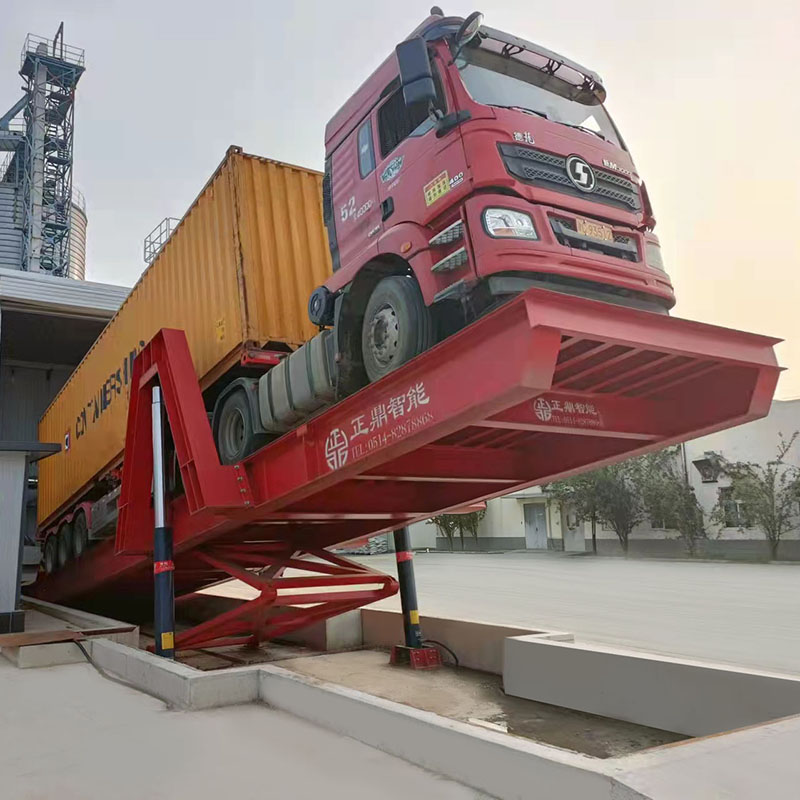
At some point the dump trailer weight conversation changes. A site that receives twenty trucks a day does not care much whether each trailer can carry 9,800 lb or 10,600 lb; it cares about how fast each load leaves the bed and returns to the road. A conventional dump trailer depends on its own hoist, which works well for a construction crew but creates a bottleneck at a grain elevator, concrete plant, or aggregate terminal where every minute of downtime costs money. The alternative is not a larger trailer but a stationary or mobile truck dumper that lifts the entire vehicle to a steep angle so the load slides out by gravity. With this approach, an ordinary truck without a hoist becomes a self-unloading vehicle, and the empty weight of the trailer no longer matters as much as the rated capacity of the dumper.
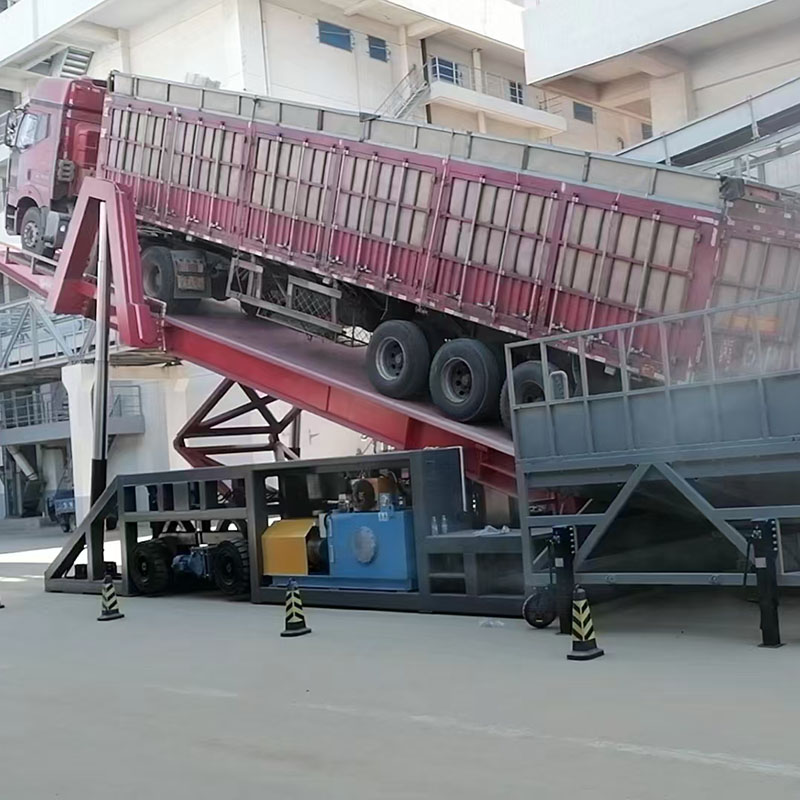
Industrial receiving stations use a truck dumper for the same reason they use weigh stations: repeatability and speed. The truck is secured, the platform tilts, the material flows into a hopper or conveyor, and the vehicle returns to the scale in a fraction of the time a manual hoist cycle requires. Units can be configured with shallow foundations when site geology is difficult, or in a pitless design that avoids deep excavation entirely. A pitless truck dumper is often the preferred choice when a plant is retrofitting an existing yard, because the limited depth keeps underground utilities and groundwater problems out of the project.
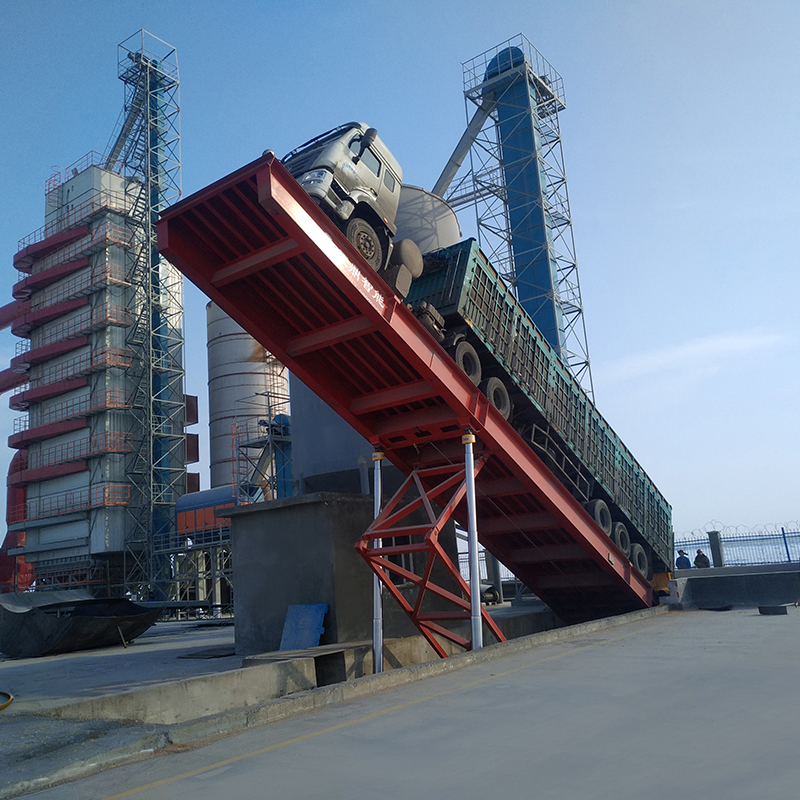
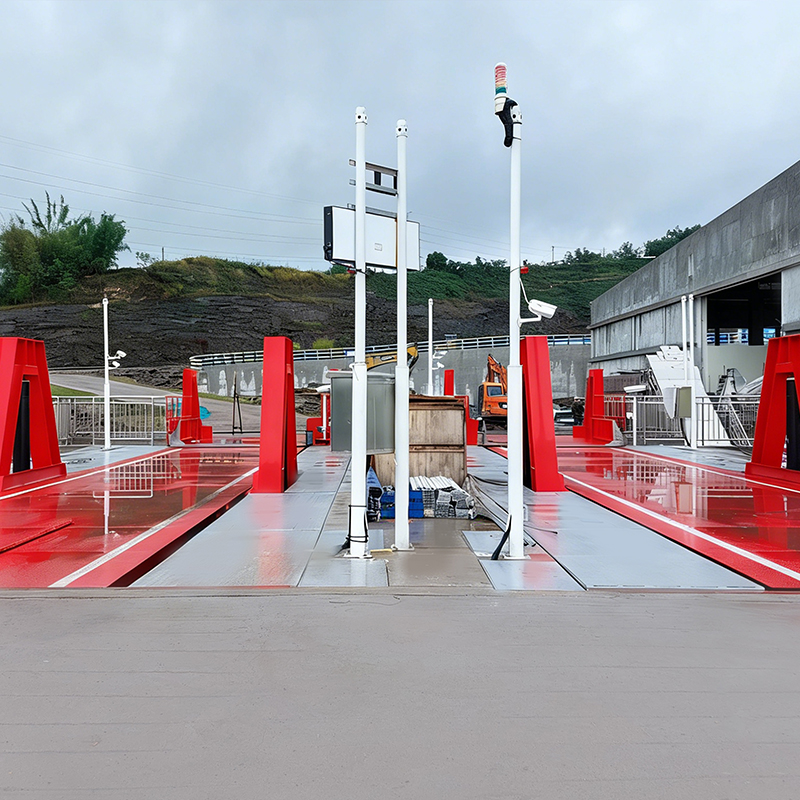
 Pitless Truck Dumper for Low-Excavation RetrofitThis dumper requires no foundation pit, cutting civil engineering costs and enabling same-day installation. Its high-precision cylinders and automatic wheel restraint deliver safe, efficient unloading in existing yards.View Product →
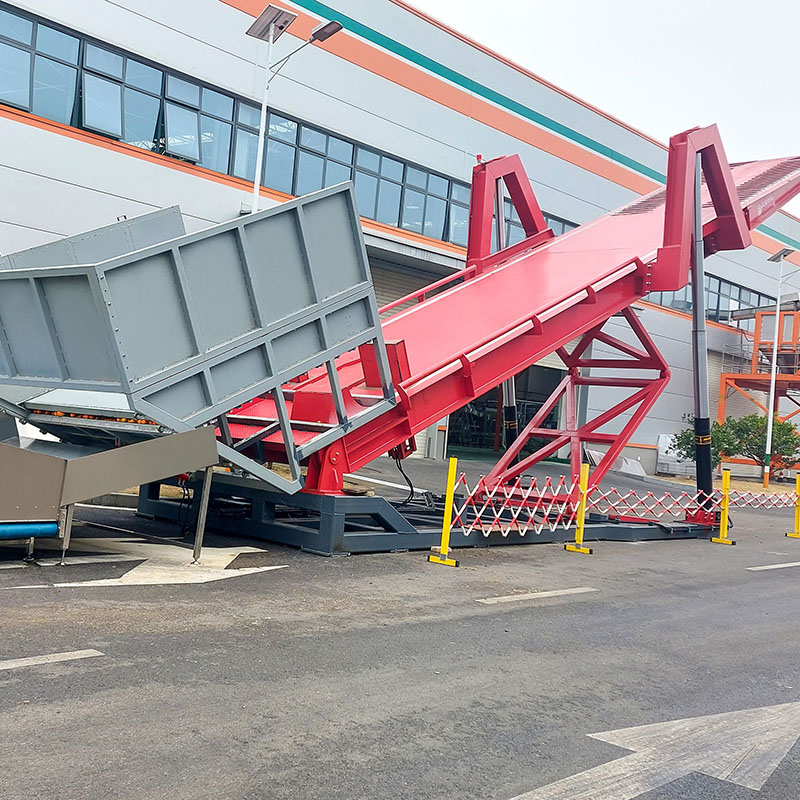
For operations with several receiving points, a mobile truck dumper travels between locations and eliminates the need to build permanent foundations at every silo. Sectors that handle dusty materials such as cement, lime, or fly ash can use an enclosed dumper with a dust control system, and facilities that load and weigh trucks in the same pass can add an integrated weighing system that records the tare and gross weight automatically. As an industrial unloading equipment manufacturer, we build these systems with a focus on high repeatability, safety interlocks, and low maintenance. Our factory also produces automatic side-turn truck dumpers for vehicles sensitive to front-to-back tipping, and container handling equipment for plants that receive bulk material in boxes rather than trucks.
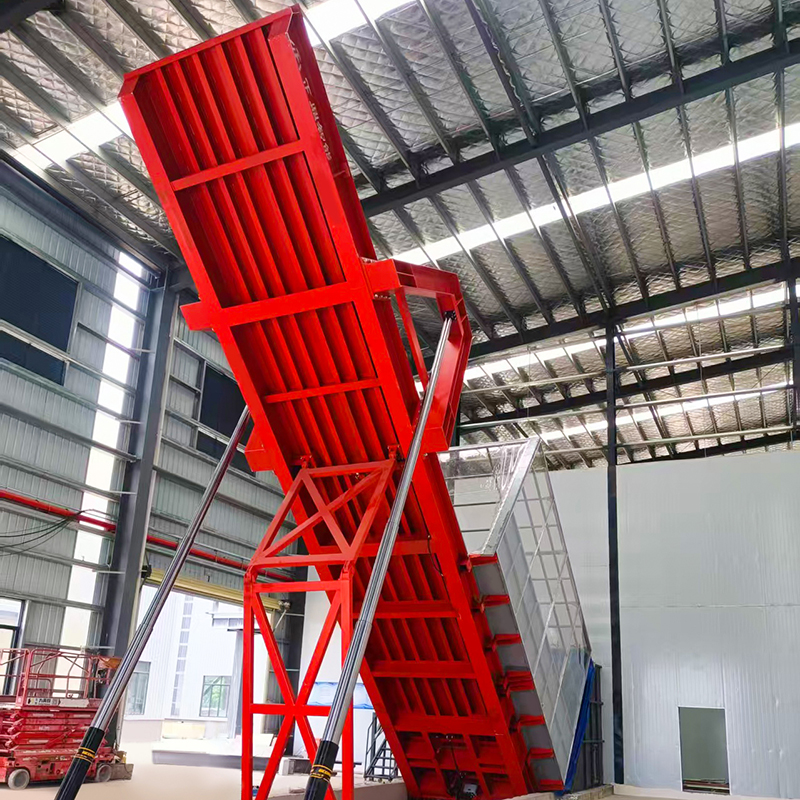
 Mobile Truck Dumper with 360-Degree Self-Propelled MovementBuilt for plants with multiple receiving points, this dumper moves between sites without permanent foundations. Its central drive allows in-place turning, and forklift towing simplifies relocation in dusty or retrofitted yards.View Product →
Container imports add another weight-related decision. When bulk goods arrive in containers, the unloading bottleneck shifts from the trailer bed to the container door, and a container flipping machine rotates the box to empty it quickly into a receiving pit. This equipment is common in feed mills, malt houses, and processing plants that handle grain and oilseeds. The same logic applies as with dump trailers: know the total unit weight, respect the machine's rated capacity, and let the material density guide the cycle time.
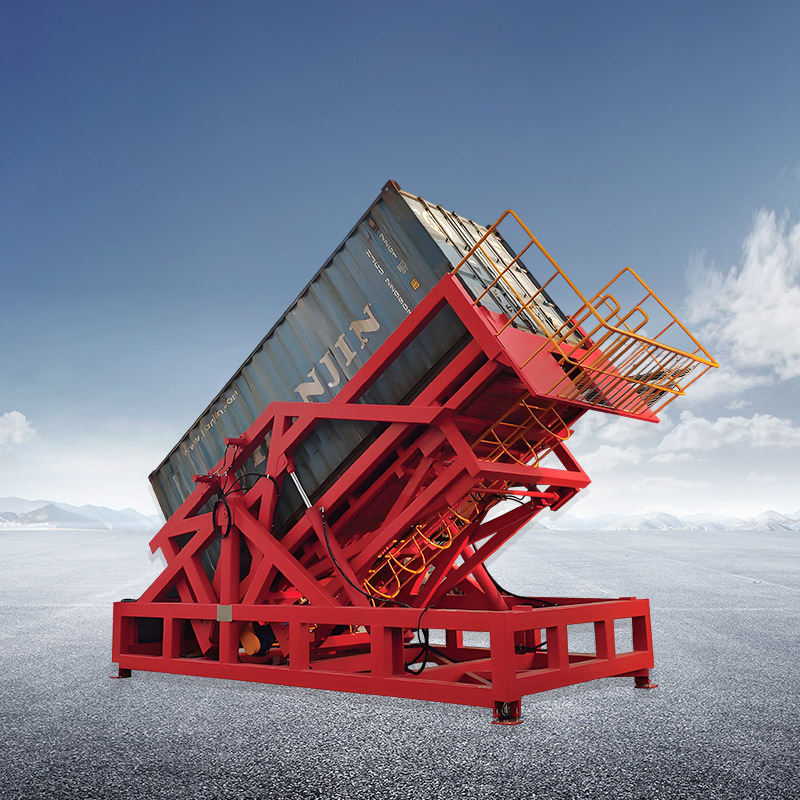 Container Flipping Machine for Rapid Gravity UnloadingThis equipment rotates containers vertically to harness gravity for fast bulk unloading, suited for grain and mining plants. Optional weighing and automatic door controls improve throughput, while hydraulic locks maintain safety during power loss.View Product →
Depending on your site, the main configurations to discuss with a manufacturer are:
Pitless
No deep pit required; suitable for retrofits and high groundwater areas.
Shallow foundation
Reduced excavation depth for sites with rock or utilities near the surface.
Mobile
Towable between plants, with a self-contained power unit.
Enclosed with dust control
For cement, lime, fly ash, and other dusty bulk materials.
Unattended with weighing
Automated cycle with integrated scales for driver-less receiving.
If you are planning a new receiving station, start the conversation with the heaviest vehicle that will enter the facility, the material bulk density, and the required throughput per hour. Those three inputs determine the platform dimensions, tilt angle, and drive system of the dumper. A trailer that performs well on the highway may actually be the slow link in a plant that needs continuous intake; in that case the correct investment is not a higher GVWR but a yard-scale unloading solution that takes the weight constraint off the vehicle itself.
Once volume and cycle time matter more than payload math, a fixed or mobile truck dumper removes the trailer hoist from the critical path and makes ordinary trucks self-unloading.
Safety and Maintenance Practices That Protect Payload Ratings
A dump trailer that is maintained properly keeps its original weight rating and behaves predictably on the road. Neglected tires, rusty frames, and loose suspension parts change the effective capacity even when the GVWR sticker stays the same. Build these habits into your routine before and after every season:
- Check tire pressure on every axle while the tires are cold, and confirm that the load range matches the GVWR of the trailer.
- Test the electric brakes and breakaway switch at the beginning of each towing day, particularly on class IV and V trailers.
- Inspect leaf springs, hangers, and equalizer bushings for cracks, wear, and shifting under load.
- Keep the hydraulic hoist cylinder clean and free of leaks, and use the oil grade recommended by the trailer manufacturer.
- Grease all pivot pins, the tailgate hinge, and the landing gear at least every 20 hours of operation.
- Look for corrosion around the bed floor, especially where the hoist mounts, and weld-probe any suspect area during annual maintenance.
- Verify that side and brake lights work so that commercial and highway inspections cannot stop a loaded run.
- Keep a load ticket for every heavy haul as proof that the trailer was operated within its GVWR.
Suspension and braking components should be checked after winter storage, because salt, moisture, and static loading create hidden damage. If the trailer has been overloaded at any point, even once, the springs may take a set that reduces their capacity permanently. Owners who run a 14,000 lb GVWR trailer at 13,800 lb daily are risking the frame and hub bearings long before a visible failure appears. A scale ticket from a certified weigh station is the cheapest insurance policy in the industry.
Maintenance protects the rating: tires, brakes, and springs must carry the same load the sticker claims, so verify them at least twice a year.
Frequently Asked Questions About Dump Trailer Weight
What is the average dump trailer weight when empty?Most single-axle dump trailers weigh between 1,600 and 2,500 lb, while tandem-axle units from 6x12 to 7x16 typically range from 2,600 to 5,600 lb. A popular 7x14 steel unit usually falls between 3,500 and 5,800 lb depending on the hoist, side wall height, and optional equipment. Aluminum versions of the same size weigh about 700 to 1,100 lb less. Always use the scale weight of the exact trailer you own or plan to buy rather than an average. |
What does GVWR mean on a dump trailer, and why is it important?GVWR stands for gross vehicle weight rating, the maximum total weight of the trailer plus its load that the manufacturer certifies. The rating is determined by the weakest link among the frame, axles, springs, wheels, and tires. Exceeding it can cause tire failure, bent axles, braking problems, and legal liability in an accident. For practical purposes, GVWR minus the trailer's empty weight equals the maximum payload. |
How much weight can a 7x14 dump trailer haul?A 7x14 dump trailer with a 14,000 lb GVWR and a typical steel empty weight around 4,200 lb can haul roughly 9,800 lb of material. With an aluminum body, the same trailer could carry about 10,600 lb. In volume terms, that works out to approximately 3.5 cubic yards of gravel at 2,850 lb per yard, 4.5 cubic yards of dry topsoil, or up to 9 yards of mulch. The bed volume only limits you when the material is light. |
Why do two dump trailers of the same size weigh differently?Manufacturers build the same length with different frame thicknesses, side wall heights, hoist capacities, axle ratings, and floor materials. A 7x14 built for 10,000 lb GVWR uses lighter steel than one built for 14,000 lb GVWR, so the heavier rated unit weighs more empty. Added options such as a tarp, spread axles, and a spare tire also increase curb weight. Always compare the door sticker and the scale ticket rather than the bed size alone. |
Can a half-ton truck pull a heavy dump trailer?A half-ton truck can pull a small single-axle or light tandem dump trailer, but most 7x12 and 7x14 units exceed the truck's payload and combined weight limits. The limiting factors are the truck's GCWR, its door-sticker payload, and the receiver hitch rating. A 10,000 lb GVWR trailer with 700 lb of tongue weight leaves little room for passengers and tools inside a half-ton cab. For 12,000 lb and heavier trailers, dealers usually require a three-quarter-ton or one-ton truck. |
How is dump trailer weight different from dump truck weight?A dump trailer is an unpowered trailer that relies on a tow vehicle and typically weighs between 1,600 and 6,200 lb empty, with payloads from 4,000 to 12,000 lb depending on GVWR. A dump truck is a single powered vehicle that includes the cab, engine, and frame; a medium-duty dump truck can weigh 12,000 to 20,000 lb empty and carry 15,000 to 30,000 lb legally. The trailer costs less and is more flexible, while the truck carries more per trip at a higher purchase and operating cost. |
The bottom line is that dump trailer weight comes down to two pieces of information from the trailer tag: the GVWR and the actual empty weight. Subtract them, compare the result with the density of the material you intend to carry, and stay within the lower of the volume and weight limits. Problems show up slowly at first, with a slightly bulging sidewall, a longer stopping distance, or an overheated hub, and then they appear all at once. Buy from a reputable trailer or equipment supplier that can give you a scale weight, and keep that ticket with the ownership papers. When your operation grows past individual trailer capacity and starts measuring throughput in trucks per hour, the same weight discipline applies to industrial unloading systems, where the rating that matters belongs to the dumper.
A safe dump trailer is one whose empty weight is known, whose GVWR is respected, and whose load is checked against material density on every job.
Useful next steps from this article:


