

 English
 русский
 Español
 Français
 Português
 عربى




+86-13588556918
Content
- 1 Why Batching Plant Material Intake Sets the Pace of Production
- 2 Truck Dumpers in a Batching Plant: Where They Fit and Why They Matter
- 3 Matching Dumper Design to Site Conditions at a Batching Plant
- 4 Dust Control at the Batching Plant Gate: Enclosed Truck Dumpers
- 5 Weighing, Unattended Operation, and Batching Plant Accuracy
- 6 Side-Turn Truck Dumpers for Tight Batching Plant Layouts
- 7 Container Loading and Unloading Equipment for Batching Plant Additives
- 8 Comparing Material Receiving Options for a Batching Plant
- 9 Civil Works, Layout, and Traffic Flow Around a Batching Plant
- 10 Safety and Maintenance Practices for Batching Plant Unloading Zones
- 11 Procurement Checklist for Batching Plant Owners and EPC Contractors
- 12 Common Integration Mistakes in Batching Plant Material Handling
- 13 FAQ About Batching Plant Truck Dumpers and Container Equipment
- 13.1 What is the role of a truck dumper in a batching plant?
- 13.2 How do I choose between a pitless, shallow-foundation, and enclosed dumper?
- 13.3 Can a truck dumper be integrated with the batching plant’s weighing system?
- 13.4 When should a batching plant use container loading and unloading equipment?
- 13.5 What dust control options are available for batching plant unloading?
- 13.6 How can a batching plant reduce maintenance problems at the dumper?
- 14 Next Steps for Your Batching Plant Project
A ready-mix batching plant can have excellent mixers, accurate scales, and a modern control room, yet still lose output at the gate. The bottleneck is often material intake: aggregate trucks queue, cement tankers wait, and loader operators shuttle between stockpiles. For batching plant owners, the fastest return usually comes from rethinking how raw materials enter the site, not from adding another mixer.
The conclusion first: receiving equipment should be selected as part of the batching plant’s production system. A truck dumper, container loader, side-turn dumper, or enclosed unloading station is not a standalone machine. It sets the rhythm for storage, conveying, weighing, dust control, and even the accuracy of the final mix. When intake is unstable, every downstream process inherits that instability.
This article looks at batching plant material handling from the perspective of an industrial loading and unloading equipment manufacturer. It covers aggregate receiving, cement and fly ash unloading, container-based mineral additives, layout planning, procurement questions, and maintenance realities. The aim is practical: help owners, EPC contractors, and plant managers compare options without treating a truck dumper as a simple commodity.
A batching plant’s real capacity is limited by its slowest material intake step, so unloading equipment deserves the same engineering attention as mixing and weighing.
Why Batching Plant Material Intake Sets the Pace of Production
In a concrete batching plant, the mixer cycle is measured in seconds, but a truck entering the yard may wait for minutes. Aggregate delivery usually arrives in 20 to 40 tonne loads, while cement and supplementary cementitious materials arrive by bulk tanker or container. If the receiving area cannot separate these flows, a single delayed truck can block the entire yard. The plant then compensates with larger stockpiles, extra loaders, or longer working hours, all of which add cost without improving mix quality.
Material intake also affects batching accuracy. Aggregate moisture varies by stockpile and weather. If a truck dumper feeds a hopper and conveyor in a steady, controlled way, the plant has a better chance to weigh and compensate consistently. If material is dumped in irregular surges, the belt load fluctuates, the weighing cycle becomes less predictable, and the operator may need to slow production to stay within tolerance. This is why many batching plant upgrades begin with the unloading zone.
The intake area is also the most visible dust source. Cement, fly ash, and fine sand can become airborne during tipping, transfer, and vehicle movement. A batching plant near a residential area, food facility, or industrial park often faces stricter dust requirements. The choice between an open dumper, an enclosed dumper with dust control, or a container-based unloading method can determine whether the plant can operate comfortably across shifts.
Finally, intake equipment influences labor. Manual unloading or repeated loader work depends on drivers, spotters, and machine operators being available at the same time. Automated unloading systems can reduce the number of people in the dusty zone and make the receiving cycle more repeatable. The goal is not to remove people from the plant; it is to place them where they add value, such as quality control, maintenance, and dispatch coordination.
When intake is steady, the batching plant gains more than speed: it gains predictable moisture control, cleaner air, and lower dependence on manual coordination.
Truck Dumpers in a Batching Plant: Where They Fit and Why They Matter
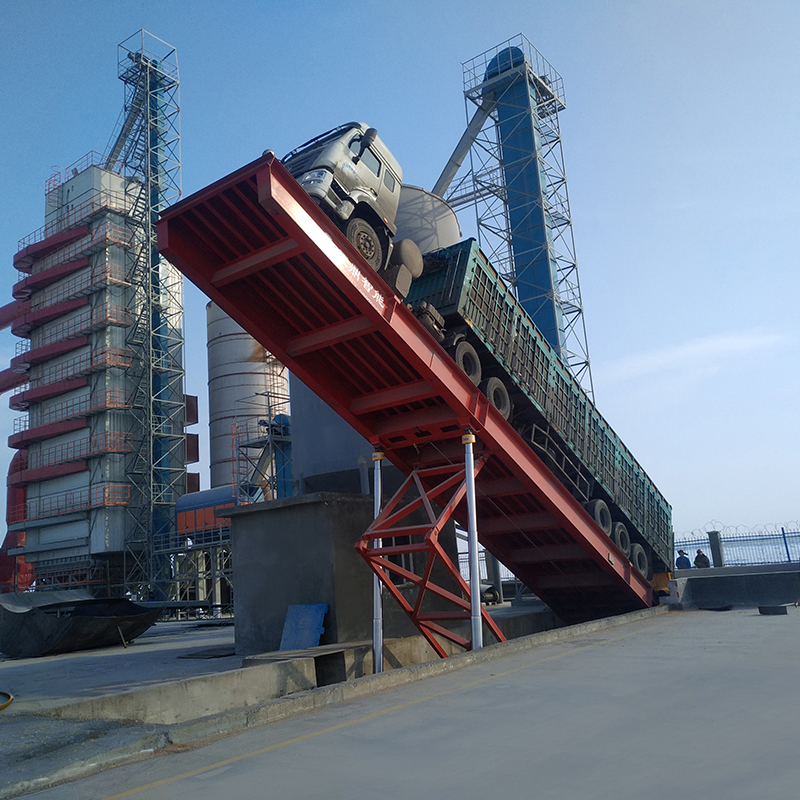
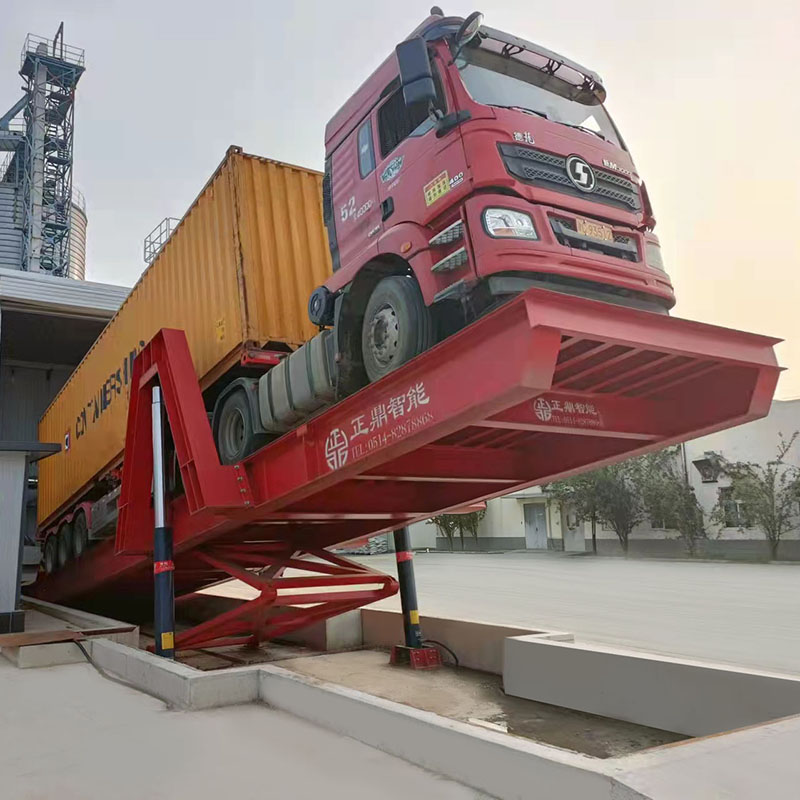
 Truck DumpersWhile traditional truck dumpers synchronize side cylinders by controlling oil flow—a method prone to high failure rates and low precision—our system utilizes a mechani...View Product →
A truck dumper is a platform or ramp system that tilts a whole truck or trailer to discharge bulk material into a receiving hopper. In a batching plant, it typically handles sand, gravel, crushed stone, clinker, or other granular raw materials. Instead of relying on a driver to tip the trailer or a loader to push material into a pit, the dumper controls the discharge angle and feed rate. That control is valuable when the receiving hopper must feed a conveyor, bucket elevator, or storage silo.
For aggregate receiving, the main benefit is cycle time. A well-matched truck dumper can unload a full trailer in a single controlled movement, then release the vehicle for the next delivery. The plant receives material in a repeatable pattern rather than in unpredictable surges. This helps the yard plan truck movements, reduce idle time, and keep the batching plant’s aggregate bins at a stable level. It also reduces the need for loaders to work inside the tipping zone, which improves safety.
However, a truck dumper is not selected by capacity alone. The plant must consider truck type, trailer length, axle configuration, discharge height, and the receiving hopper’s volume. A dumper that is too short may not accept longer trailers, while one that is too steep for certain materials can cause blockages or excessive impact. The material’s angle of repose, moisture content, and particle size all influence the discharge behavior. A supplier with experience in bulk material handling can help match the platform geometry to the actual fleet.
Integration with the batching plant’s layout is equally important. The dumper should be positioned so that trucks can enter, align, tip, and leave without crossing the loader path or the cement tanker area. If the dumper feeds directly into a hopper, the hopper must be sized to buffer the discharge and avoid overflowing the conveyor. If it feeds a stockpile, the plant loses some of the automation benefit unless the material is later reclaimed in a controlled way. In most modern batching plants, direct feeding into a hopper or conveyor is preferred for consistency.
For owners comparing a truck dumper with manual tipping, the decision should be based on annual tonnage, labor cost, safety risk, and product quality. Low-volume plants may not justify a fixed dumper, but high-throughput concrete batching plants often recover the investment through faster turnaround and fewer delays. The key is to treat the dumper as the first stage of batching, not as a separate unloading device.
A truck dumper creates value when it turns truck arrival into a controlled, repeatable feed for the batching plant rather than an unpredictable dump.
Matching Dumper Design to Site Conditions at a Batching Plant
Not every batching plant has the same foundation, space, or traffic pattern. A plant built on a brownfield site may have limited room and existing underground services. A new greenfield plant may prioritize automation from the start. The right truck dumper configuration depends on these conditions, and the difference between a pitless, shallow-foundation, mobile, or enclosed system can affect civil works, dust control, and future expansion.
| Configuration | Site condition | Dust control | Mobility | Common batching plant use |
|---|---|---|---|---|
| Pitless truck dumper | Sites where deep excavation is difficult or costly | Basic to moderate, depending on enclosure | Fixed | Aggregate receiving with reduced civil work |
| Shallow foundation truck dumper | Plants with limited foundation depth or high water table | Moderate; can be enclosed | Fixed | Sand, gravel, and crushed stone intake |
| Mobile truck dumper | Temporary sites, multiple discharge points, or rental fleets | Usually lower unless paired with dust suppression | High | Flexible receiving during plant expansion or peak demand |
| Enclosed truck dumper with dust control | Urban, food-industry, or strict environmental areas | High | Fixed | Cement, fly ash, fine sand, and powder handling |
| Unattended dumper with integrated weighing | High-throughput plants with automated control systems | Moderate to high, depending on enclosure | Fixed | Unloading and material accounting in one cycle |
| Side-turn truck dumper | Narrow yards or plants with limited turning radius | Moderate to high | Fixed | Space-constrained aggregate or mineral receiving |
Civil works are often the hidden cost. A pit-based dumper may require deep excavation, drainage, and reinforced walls, while a pitless or shallow-foundation design can reduce construction time and cost. For an existing batching plant, the ability to install a dumper without interrupting production is a major advantage. Mobile units can be moved as the plant layout changes, but they may need more manual dust control and a stable receiving hopper arrangement.
Climate also matters. In wet regions, a dumper platform needs effective drainage and slip resistance. In cold regions, material can freeze in the hopper or on the platform, so access for cleaning and thawing should be planned. In dusty regions, enclosure and dust collection are not optional extras; they protect nearby equipment and keep the batching plant’s control room and weighbridge area clean.
A manufacturer with a broad product range can usually recommend a configuration based on site constraints rather than forcing a single design. That is especially useful for EPC contractors who need to coordinate the dumper with civil, structural, and electrical packages. The earlier the dumper is included in the layout study, the fewer changes are needed later.
Choose the dumper configuration after studying foundations, traffic flow, climate, and dust rules; the cheapest platform can become expensive if it forces civil changes or slows the batching plant.
Dust Control at the Batching Plant Gate: Enclosed Truck Dumpers
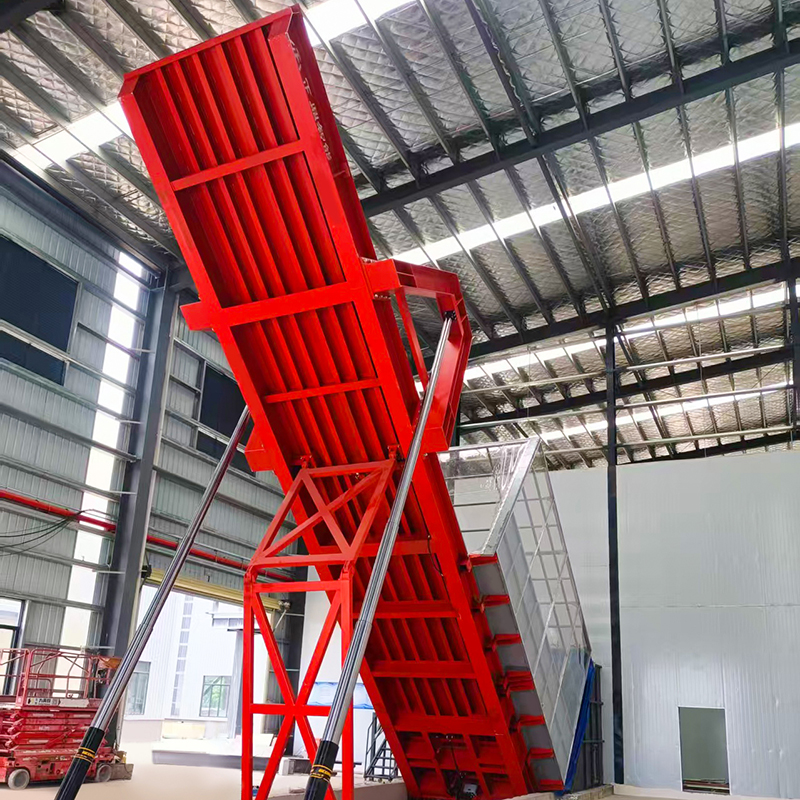 Enclosed Truck Dumper with Dust Control SystemA sealed enclosure is used to prevent dust overflow. The pit enclosure and the truck dumper platform enclosure achieve a combination of dynamic and static sealing, whi...View Product →
Dust is one of the most common complaints around batching plants, and the unloading point is often the source. When a truck tips fine sand, cement, or fly ash, air displacement can carry particles into the yard. An enclosed truck dumper with a dust control system addresses this by containing the tipping zone and extracting airborne dust close to the source. The result is a cleaner receiving area, less material loss, and better working conditions for operators and drivers.
For batching plant owners, dust control is not only an environmental issue. Fine material that escapes the unloading zone settles on conveyors, walkways, electrical panels, and vehicles. Over time, this increases cleaning labor and can affect equipment reliability. In cold or humid conditions, dust mixed with moisture can form sticky deposits on structural steel and handrails. Containing dust at the dumper reduces these secondary problems and helps the plant maintain a more organized intake area.
An enclosed system also supports material accountability. When dust is captured and returned to the process, less raw material is lost to the yard. For cement and supplementary cementitious materials, even a small percentage loss can be significant over a year. The enclosure can be designed with a hopper, conveyor connection, and dust collection ducting that guide material back into the batching plant’s storage or weighing system. This makes the dumper part of the material balance rather than a source of waste.
Selection should consider the material type and the required air volume. Cement and fly ash require different capture velocities than wet sand or gravel. The enclosure must allow trucks to enter and exit safely, with adequate lighting, signage, and clearance. If the plant also handles food-industry materials, such as grains or oilseeds, the design may need easy cleaning and smooth surfaces to avoid cross-contamination. A supplier experienced in bulk material handling can help balance dust capture with vehicle access and maintenance access.
Enclosed dumpers are often paired with negative pressure dust collectors, but the exact configuration depends on local regulations and plant layout. The goal is to capture dust before it spreads, not to rely on water sprays that can add moisture to the material. For batching plants that value consistent moisture content, dry dust capture is often preferable where it is technically suitable.
An enclosed truck dumper with dust control protects the batching plant’s air, reduces material loss, and keeps fine powders out of the wrong places.
Weighing, Unattended Operation, and Batching Plant Accuracy
Material intake and weighing are usually separated by a hopper, conveyor, and storage bin. That separation creates opportunities for error: a truck may be partially unloaded, material may be left in the hopper, or the operator may not know exactly how much arrived. An unattended truck dumper with an integrated weighing system closes part of that gap by measuring material as it is discharged. For batching plants that need tighter inventory control, this can simplify reconciliation between delivery tickets and actual received tonnage.
Integrated weighing does not replace the batching plant’s own aggregate and cement scales. It provides a receiving record and can trigger the next step in the process. For example, the dumper can confirm that a truck has discharged the expected load before the vehicle leaves. If the weight is outside the accepted range, the system can alert the control room or hold the next cycle. This reduces disputes with suppliers and helps the plant identify short loads or material variability early.
Unattended operation goes further by reducing the need for an operator to be present at the dumper for every cycle. Driver instructions, barriers, sensors, and interlocks can guide the truck into position and manage the tipping sequence. The plant benefits from more consistent cycle times and fewer idle periods, especially during peak delivery hours. It also keeps people away from the tipping zone, which is a safety advantage.
That said, unattended does not mean unmonitored. Cameras, alarms, and emergency stops should be part of the design. Maintenance staff still need safe access to the platform, hydraulics, and weighing components. The control system should log events so that the plant can review recurring issues, such as trucks that are too long, uneven loads, or material that sticks in the hopper. These records are useful for continuous improvement.
For a batching plant, the best use of integrated weighing is often at the receiving stage, where it supports inventory, supplier payment, and production planning. When combined with a truck dumper, it turns the unloading cycle into a data point. That data can then be compared with batching records to understand yield, moisture variation, and material consumption. Over time, this helps the plant manager make better decisions about stock levels and supplier performance.
Integrated weighing at the dumper improves material accountability, but it should support the batching plant’s existing quality system rather than replace it.
Side-Turn Truck Dumpers for Tight Batching Plant Layouts
Many batching plants are built on sites that were not originally planned for large truck traffic. The yard may be narrow, the road may curve sharply, or the storage bins may sit close to the property line. In these cases, a conventional rear-tipping dumper may require more space than available. A side-turn truck dumper can tilt the truck to the side, allowing material to discharge into a hopper positioned along the vehicle’s flank. This can reduce the turning radius and shorten the approach lane.
Side-turn dumpers are also useful when the receiving hopper must be placed parallel to a conveyor or storage wall. The truck can align with the platform and discharge without a long straight run. For plants handling multiple aggregate sizes, the side discharge can feed a divided hopper or a movable chute, though the layout must prevent material mixing. The design should include clear guides and stops so that drivers can position the vehicle correctly every time.
Automatic side-turn truck dumpers add another layer of control. The tipping angle, speed, and return position can be managed by the system, reducing the risk of sudden load shifts. This is important for tall trailers or uneven loads. If the material is sticky or heavy, the dumper can use a controlled tipping profile to avoid blocking the hopper. The plant benefits from a more predictable cycle, while the driver spends less time waiting for manual instructions.
Space savings should not come at the cost of safety. The side-turn area needs barriers, wheel guides, and enough clearance for the truck cab and mirrors. Dust control may be more challenging because the discharge point is lateral, but an enclosure or local extraction hood can still be integrated. Maintenance access to the platform hinges and hydraulic cylinders must remain possible without entering the truck path.
For existing batching plants with limited room, a side-turn dumper can be a practical retrofit. It may avoid the need to relocate storage bins or rebuild the access road. However, it requires a careful survey of truck types and site geometry. A supplier who offers both rear-tipping and side-turn designs can compare the options objectively and recommend the one that fits the actual fleet.
Side-turn truck dumpers can unlock constrained batching plant sites, but only when vehicle clearance, hopper position, and dust control are designed together.
Container Loading and Unloading Equipment for Batching Plant Additives
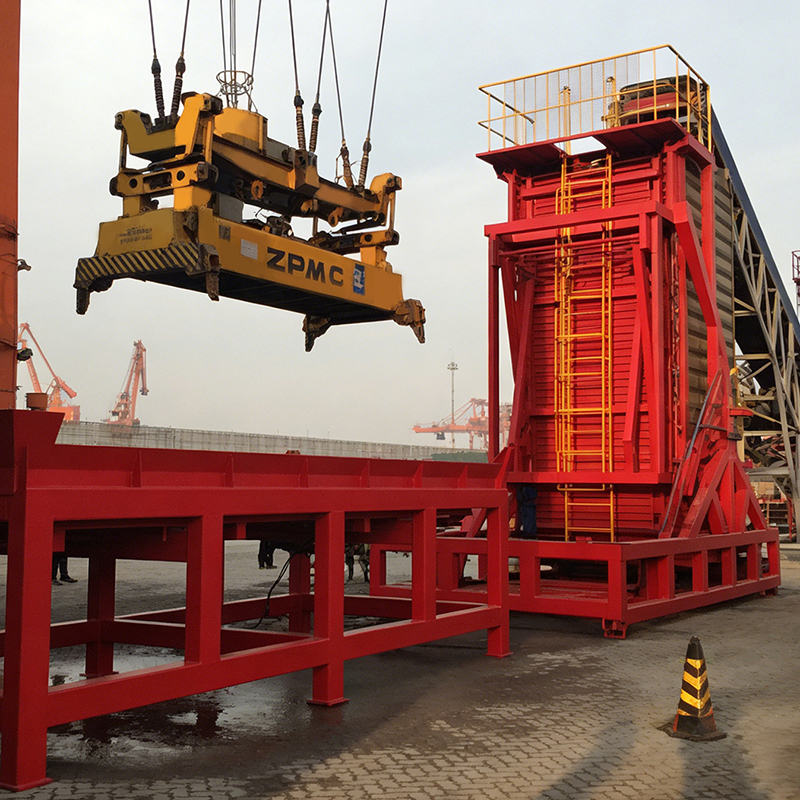
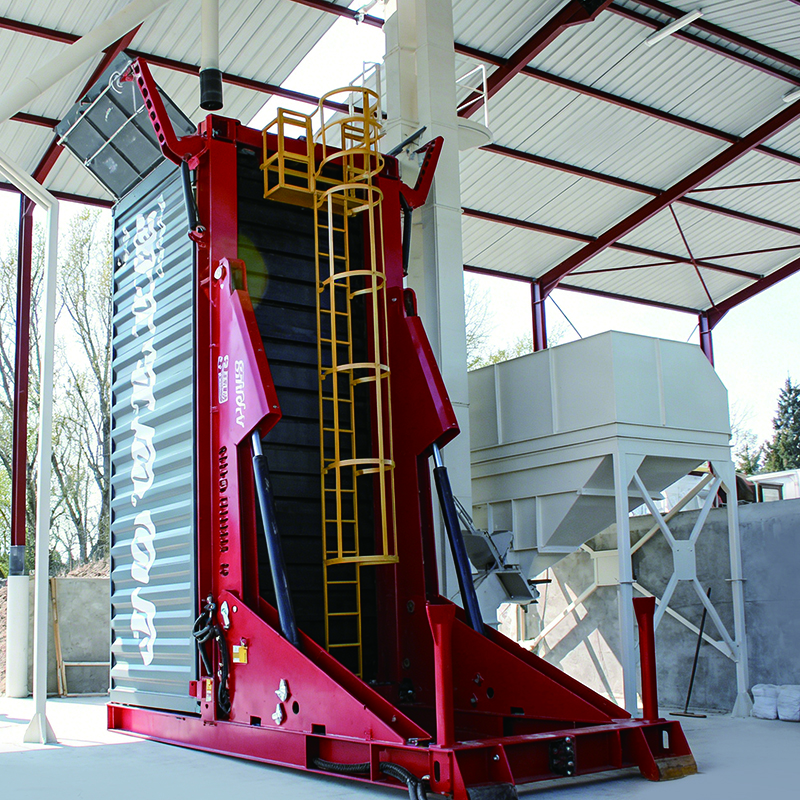
 Container LoadersContainer loaders adopt an integrated design for loading and unloading, capable of handling 20-foot and 40-foot containers. It achieves one-click rapid entry and exit ...View Product →
Not all batching plant raw materials arrive by bulk truck. In some regions, clinker, cement, mineral additives, or special aggregates are delivered in containers. This is common where rail, sea, or intermodal transport is used, or where suppliers prefer sealed containers to protect material from moisture. Handling containers efficiently requires equipment that can load, unload, tilt, or transfer the material without excessive manual labor. Container loaders and container flipping machines are designed for this kind of work.
A container loader can fill or discharge containers at a controlled rate, often connecting to a conveyor or hopper. For a batching plant, this means containerized material can enter the same receiving stream as truck-delivered material. If the plant receives cemented materials or fine powders, the container handling area should include dust control and spill containment. If it receives aggregates, the focus shifts to impact reduction and flow control.
Container flipping machines rotate the container to discharge material by gravity. This can be faster than scooping or manual unloading, and it reduces material left in the corners. For sticky or compacted material, the flipping angle and vibration may need to be adjusted. The equipment should be sized for the container types used in the region, including standard, high-cube, and possibly open-top containers. The discharge hopper must handle the initial surge without overflowing the conveyor.
Continuous container handling systems can move containers through a sequence of loading, weighing, and unloading steps. This is useful for high-volume batching plants that receive a steady flow of containerized additives. The system can be integrated with the plant’s inventory software so that each container is recorded as it is processed. Gantry container tilters offer another option for heavy-duty applications, especially where containers must be lifted and rotated in a fixed bay.
The decision between truck dumping and container handling depends on the supply chain, not just the batching plant. If the material source is close and bulk trucks are available, a truck dumper is often the simpler choice. If the material arrives through ports, rail yards, or sealed containers, container loading and unloading equipment may be necessary. Some plants use both: truck dumpers for local aggregates and container systems for imported additives. The layout should keep these flows separate to avoid contamination and traffic conflicts.
Container handling equipment extends a batching plant’s intake options, but it works best when the material flow and dust control are planned as carefully as a truck receiving lane.
Comparing Material Receiving Options for a Batching Plant
Every batching plant has different priorities: some need maximum throughput, some need dust control, and some need the smallest possible civil footprint. The chart below is an illustrative decision-weight comparison, not a fixed rule. It can help a project team discuss trade-offs before requesting quotations.
Illustrative Decision Weight for Batching Plant Intake Options
Aggregate receiving flexibility
92
Dust containment potential
78
Space saving potential
65
Weighing integration
84
Container handling fit
88
The chart suggests that no single intake method dominates every category. A truck dumper with a flexible hopper arrangement may score well on aggregate receiving, while an enclosed design scores higher on dust containment. A side-turn dumper may help with space, and an integrated weighing system improves material accountability. Container equipment becomes important when the supply chain uses sealed containers or intermodal transport.
For a batching plant manufacturer or supplier, the useful conversation is not which machine is “best” in general. It is which combination matches the site, material, and business model. A plant that receives 80% aggregate by truck and 20% additives by container may need two separate receiving zones. A plant that receives only dry powders may prioritize enclosure and dust collection over mobility. A temporary plant may prefer a mobile dumper that can be relocated later.
During procurement, ask the supplier to explain how each option affects the batching plant’s cycle time, foundation cost, and maintenance plan. If a wholesaler or trading company cannot provide this level of technical support, it may be worth working with a manufacturer that can review the layout and material characteristics. The goal is to avoid buying a machine that looks capable on paper but creates bottlenecks in the actual yard.
Use trade-off comparisons to clarify project priorities, then verify every option against real truck dimensions, material behavior, and batching plant layout.
Civil Works, Layout, and Traffic Flow Around a Batching Plant
The unloading area is a junction between road transport and fixed plant infrastructure. If it is designed as an afterthought, the batching plant may suffer from poor traffic flow, unsafe pedestrian crossings, and expensive retrofits. A good layout separates truck routes from loader routes, keeps the dumper away from the weighbridge queue, and gives drivers a clear path to enter and exit. It also provides space for dust control equipment, maintenance access, and future expansion.
Civil design should start with the truck fleet. The largest and longest vehicle expected at the plant determines the platform length, approach radius, and clearance height. If the plant receives both standard trailers and larger bulk vehicles, the dumper should handle the larger size without blocking the smaller ones. The platform surface must support the concentrated load of a loaded truck, and the foundation must resist the tipping forces. A shallow-foundation or pitless design can reduce excavation, but it still requires proper structural design.
Drainage is another practical detail. Rainwater, wash water, and material runoff should not collect in the hopper or on the platform. In dusty operations, dry material should be contained, not washed into drains where it can cause blockages. If water sprays are used for dust suppression, the added moisture must be considered in the batching plant’s mix design. In many cases, dry capture and enclosure are preferred for cement and fly ash because they avoid changing the material’s moisture content.
Traffic flow affects cycle time more than many owners expect. A dumper that takes two minutes to tip but ten minutes to access will not improve throughput. The approach lane should allow trucks to queue without blocking public roads or the plant entrance. The exit route should be separate from the entry route where possible. Signage, mirrors, and wheel guides help drivers align correctly, especially when reversing into an enclosed structure.
For existing batching plants, a phased approach can reduce disruption. The new dumper can be installed while the old receiving area remains in use, then switched over during a planned shutdown. Mobile or modular equipment may help during this transition. The important point is to coordinate civil, mechanical, and electrical work so that the new intake system is commissioned as a complete unit.
Layout and civil works determine whether a truck dumper becomes a fast, safe receiving asset or a daily bottleneck for the batching plant.
Safety and Maintenance Practices for Batching Plant Unloading Zones
Unloading zones combine heavy vehicles, hydraulic equipment, dust, and moving material. Safety must be designed into the system, not added as a warning sign after installation. Barriers should keep pedestrians away from the tipping area. Emergency stops should be reachable from the operator position and, where relevant, from the driver’s cab. The tipping sequence should include interlocks that prevent operation if the truck is not correctly positioned or if a maintenance gate is open.
Maintenance access is often overlooked. Hydraulic cylinders, hoses, pins, and weighing load cells need periodic inspection. If the dumper is enclosed, access panels should allow service without removing the entire structure. Lighting should be adequate for night deliveries and inspections. Wash-down points should be available, but they must not create slip hazards or introduce water into electrical enclosures. A planned maintenance schedule should include checking hydraulic fluid, filter condition, structural bolts, and safety sensors.
Dust control equipment also needs maintenance. Filters, ducting, and collection hoppers can accumulate material and lose efficiency. If the dust collector is undersized or poorly maintained, the enclosure may develop positive pressure and release dust. The batching plant’s maintenance team should be trained on the specific system and have spare filters or parts available. Simple checks, such as verifying airflow and inspecting seals, can prevent larger problems.
Operator training matters as much as hardware. Drivers should know the correct approach speed, alignment marks, and emergency procedures. Control room staff should understand how the dumper status affects the batching sequence. If the dumper is unattended, the training should cover what to do when the system alarms or rejects a truck. A short daily check can catch loose material, hydraulic leaks, or sensor faults before they stop production.
For plants handling multiple materials, cleaning between product changes helps prevent contamination. A dumper that receives both aggregate and mineral additives should have a cleaning procedure for the hopper and discharge chute. In food-related applications, such as grain or oilseed handling, hygiene requirements may be stricter. The equipment design should allow access for cleaning and inspection without creating new safety risks.
Safe, maintainable unloading equipment protects the batching plant’s people and uptime; access, training, and spare parts are part of the investment.
Procurement Checklist for Batching Plant Owners and EPC Contractors
When requesting quotations for a truck dumper or container handling system, a detailed checklist reduces the risk of mismatch. The supplier should understand the batching plant’s material types, truck fleet, throughput target, and local regulations. A low price may hide missing dust control, undersized hydraulics, or limited service support. The following checklist can be used as a starting point.
- List all materials to be unloaded, including bulk density, moisture range, particle size, and temperature.
- Provide truck and trailer dimensions, maximum gross weight, axle configuration, and discharge height.
- Define the required peak throughput and average daily tonnage for the batching plant.
- Specify the receiving hopper volume and the conveyor or feeder capacity that follows the dumper.
- Confirm the foundation type, soil conditions, water table, and available civil works budget.
- State dust control requirements, including enclosure, extraction, and emission limits.
- Decide whether integrated weighing, unattended operation, or data logging is required.
- Check the control interface with the batching plant’s existing PLC or supervisory system.
- Review safety features: barriers, interlocks, emergency stops, lighting, and signage.
- Ask for maintenance access details, spare parts list, and recommended service intervals.
- Verify the supplier’s experience with similar materials and plant capacities.
- Request references or case examples from comparable batching plant projects.
- Clarify installation, commissioning, training, and warranty terms.
- Plan for future expansion, such as additional storage bins or a second receiving lane.
EPC contractors should also coordinate interfaces. The dumper supplier needs civil drawings, electrical supply details, and control system information. The batching plant control room needs to know how the dumper status will be displayed and interlocked. If these interfaces are unclear, commissioning can be delayed. A manufacturer that provides system solutions, not just a single machine, can help close these gaps.
Finally, compare total cost of ownership, not only purchase price. Energy consumption, dust control media, hydraulic maintenance, and downtime all contribute to the real cost. A robust dumper that matches the batching plant’s duty cycle may cost more initially but deliver lower cost per tonne over its service life. For high-volume plants, this difference can be substantial.
A thorough procurement checklist turns a vague equipment inquiry into a clear specification that supports the batching plant’s throughput, safety, and maintenance goals.
Common Integration Mistakes in Batching Plant Material Handling
One common mistake is sizing the dumper for the average truck but not the largest one. If a larger trailer arrives occasionally, it may not fit the platform or may overhang the hopper. This forces the plant to reject the load or unload it manually, creating an immediate bottleneck. Always design for the maximum vehicle size expected over the equipment’s life, including future fleet changes.
Another mistake is ignoring the receiving hopper. The dumper’s cycle time is only part of the equation; the hopper and conveyor must be able to take the discharge without overflowing. If the hopper is too small, the driver must wait while the conveyor clears material. If the conveyor is too slow, the hopper may back up and cause spillage. The hopper, feeder, and dumper should be engineered as one system, with buffer capacity matched to truck size and plant demand.
Dust control is often added late. Retrofitting an enclosure around an existing dumper can be difficult and expensive. It is better to decide early whether the plant needs an open, semi-enclosed, or fully enclosed system. The same applies to water sprays: they may help with dust, but they can add moisture to the material and affect batching accuracy. For cement and fly ash, dry collection is usually more controllable.
Neglecting maintenance access is another frequent issue. A compact design may save space, but if technicians cannot reach the hydraulic cylinders or load cells safely, maintenance will be delayed. This leads to unplanned downtime and higher repair costs. Access platforms, guards, and lifting points should be included in the design review. The batching plant’s maintenance team should review the proposed layout before final approval.
Finally, some projects treat the dumper as a standalone purchase and do not integrate it with the plant’s control system. Without proper signals, the control room may not know when a truck is tipping, when the hopper is full, or when a fault occurs. Simple interlocks and status indicators can prevent accidents and improve coordination. If the plant uses an automated batching system, the dumper should communicate with it through a defined interface.
Most integration failures come from treating the dumper, hopper, conveyor, dust control, and controls as separate purchases instead of one intake system.
FAQ About Batching Plant Truck Dumpers and Container Equipment
What is the role of a truck dumper in a batching plant?
A truck dumper unloads bulk material from trucks or trailers into a receiving hopper, conveyor, or storage area. In a batching plant, it mainly handles aggregates, sand, gravel, and sometimes minerals. Its role is to turn truck delivery into a controlled feed that supports stable production. When selected correctly, it reduces unloading time, labor, and dust compared with manual tipping or loader-based unloading.
How do I choose between a pitless, shallow-foundation, and enclosed dumper?
The choice depends on civil conditions, dust rules, and material type. A pitless or shallow-foundation dumper reduces excavation and can suit existing plants. An enclosed dumper with dust control is better for fine powders, urban sites, or strict environmental areas. A mobile dumper may fit temporary or changing operations. The best approach is to compare foundation cost, dust control, throughput, and future expansion before selecting.
Can a truck dumper be integrated with the batching plant’s weighing system?
Yes. Some dumper designs include integrated weighing or can send signals to the plant’s control system. This helps record incoming material and can support supplier reconciliation. It does not replace the batching plant’s own aggregate and cement scales, but it adds a useful receiving data point. The interface should be discussed during procurement so that the control logic is clear.
When should a batching plant use container loading and unloading equipment?
Container equipment is useful when raw materials arrive in sealed containers, through ports, or by intermodal transport. It can also protect moisture-sensitive additives. If the plant receives most material by bulk truck, a truck dumper may be the primary choice. Some plants use both systems for different supply chains. Layout separation is important to avoid traffic conflicts and material contamination.
What dust control options are available for batching plant unloading?
Options include enclosure with local extraction, negative pressure dust collection, covered hoppers, and controlled water sprays where suitable. For cement and fly ash, dry collection is often preferred because it avoids adding moisture. For aggregates, enclosure and proper hopper design may be enough. The selection should consider local emission rules, material characteristics, and maintenance capability.
How can a batching plant reduce maintenance problems at the dumper?
Choose a design with safe access to hydraulics, sensors, and structural joints. Follow the manufacturer’s inspection schedule, keep dust control filters clean, and train operators to report unusual noises or slow cycles. Spare parts for critical components should be stocked. A simple daily check can often prevent a small issue from becoming a production stop.
The batching plant FAQ usually comes down to one question: will the selected unloading equipment make material intake faster, cleaner, and more predictable for this specific site?
Next Steps for Your Batching Plant Project
Improving batching plant material handling is a system project. Start with a material and traffic study, then compare dumper configurations against dust rules, civil constraints, and throughput targets. Involve the batching plant control team early so that weighing, interlocks, and data logging are considered. If containers are part of the supply chain, plan a separate handling zone with its own equipment and dust control. This approach avoids the common mistake of buying a machine that solves one problem while creating another.
For owners working with an EPC contractor, ask for a layout review that includes truck paths, hopper sizing, and maintenance access. For plant managers, measure the current receiving cycle: arrival, alignment, tipping, exit, and cleaning. Those numbers show where the real bottleneck is. For procurement teams, compare total cost of ownership, not just the initial quotation. A reliable manufacturer or supplier should be able to explain the trade-offs clearly and provide references from comparable bulk material applications.
Explore more about the equipment manufacturer and how to discuss your batching plant intake project:
A batching plant that receives material quickly, cleanly, and accurately gives its operators more time to focus on mix quality and dispatch. The unloading area may not be the most visible part of the plant, but it often decides whether the day runs smoothly. Reviewing it with the same rigor as the mixer and scales is a practical step toward better performance.
Treat batching plant intake as an engineered system, and the truck dumper, container loader, hopper, and control logic will work together instead of competing for attention.
The most effective batching plant upgrades often begin at the gate. When trucks unload in a controlled way, when dust is contained, and when received material is recorded, the entire plant becomes easier to manage. The equipment does not need to be complicated, but it does need to match the site, the fleet, and the materials. That is the difference between a dumper that simply tips a truck and a receiving system that supports the batching plant every day.
Start with the material flow, choose equipment that fits the real site conditions, and the batching plant will gain capacity without adding unnecessary complexity.


