

 English
 русский
 Español
 Français
 Português
 عربى
عربى



+86-13588556918
Content
- 1 What Is a Side-Turn Truck Dumper and How Does It Work
- 2 Common Types of Truck Dumpers and Their Structural Features
- 3 Working Principle and Mechanical Structure of Side-Turn Truck Dumpers
- 4 Application Scenarios and Key Selection Criteria
- 5 Side-Turn vs Rear-Turn vs Container Flipper: A Detailed Comparison
- 6 Maintenance Guidance for Long-Term Reliable Operation
- 7 Frequently Asked Questions About Side-Turn Truck Dumpers
- 7.1 Q1: What is the main difference between a side-turn truck dumper and a rear/end truck dumper?
- 7.2 Q2: What size or type of truck can a side-turn truck dumper typically accommodate?
- 7.3 Q3: Can a side-turn truck dumper be enclosed for dust control?
- 7.4 Q4: Do manufacturers offer OEM or ODM customization for truck dumper platforms?
What Is a Side-Turn Truck Dumper and How Does It Work
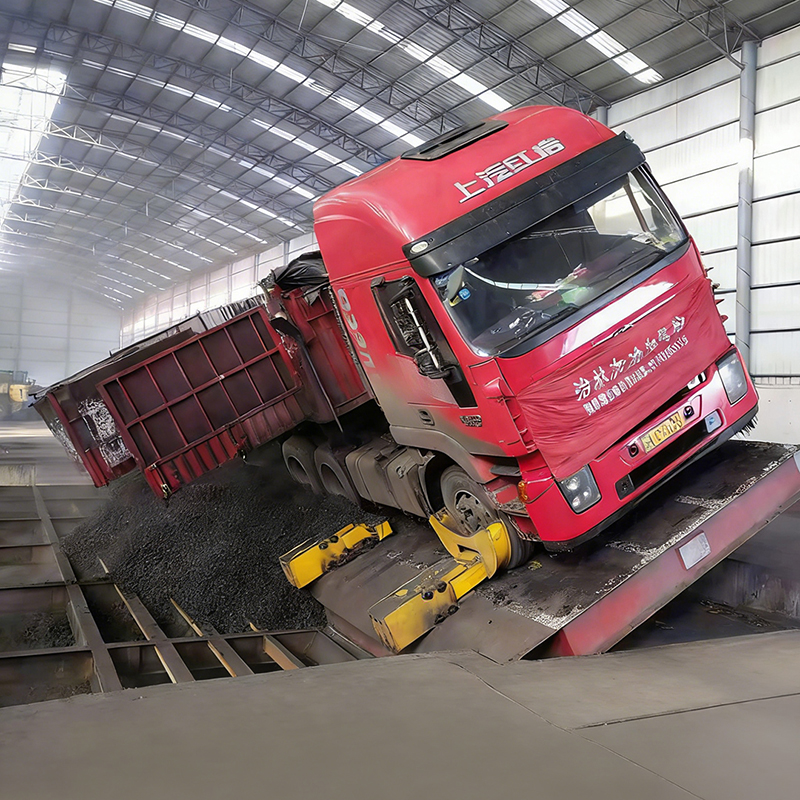
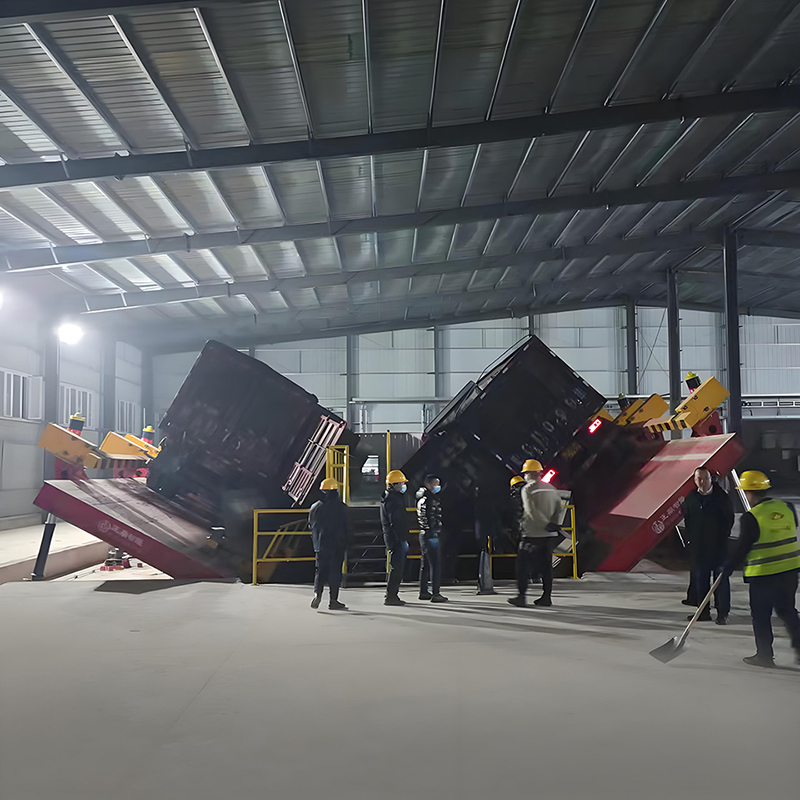
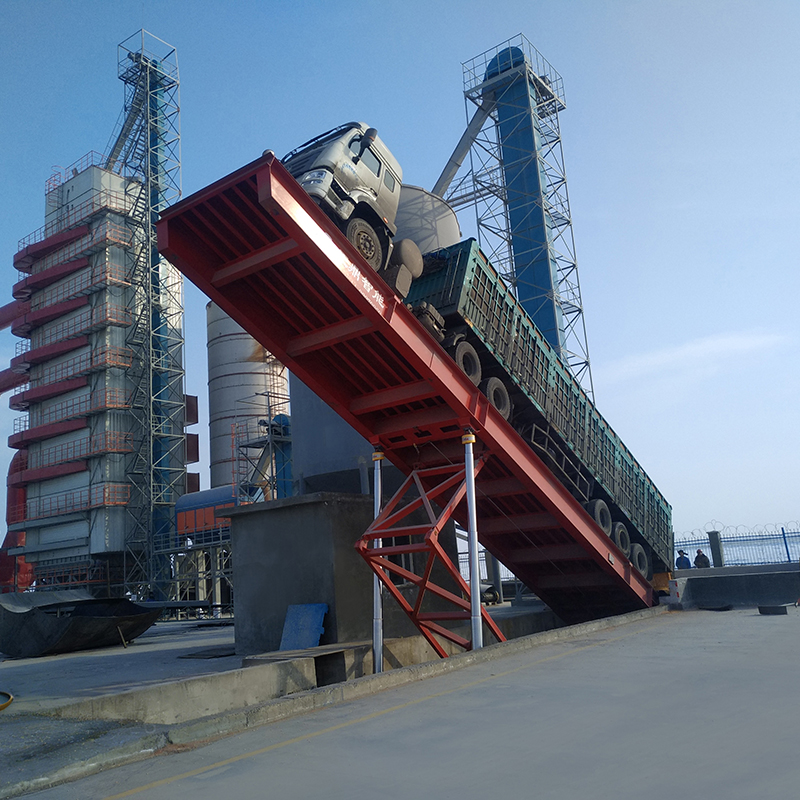
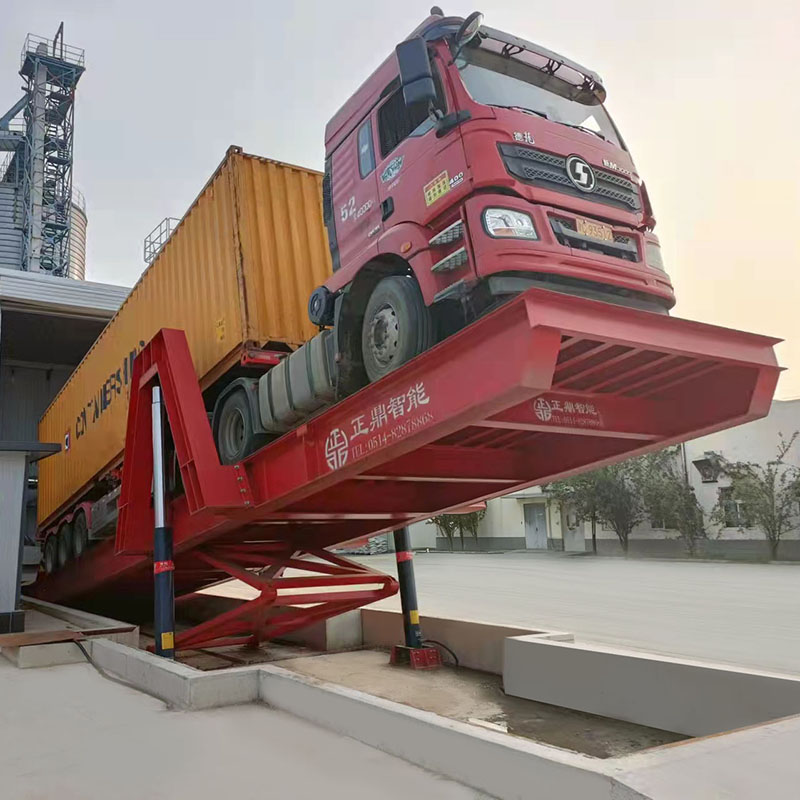
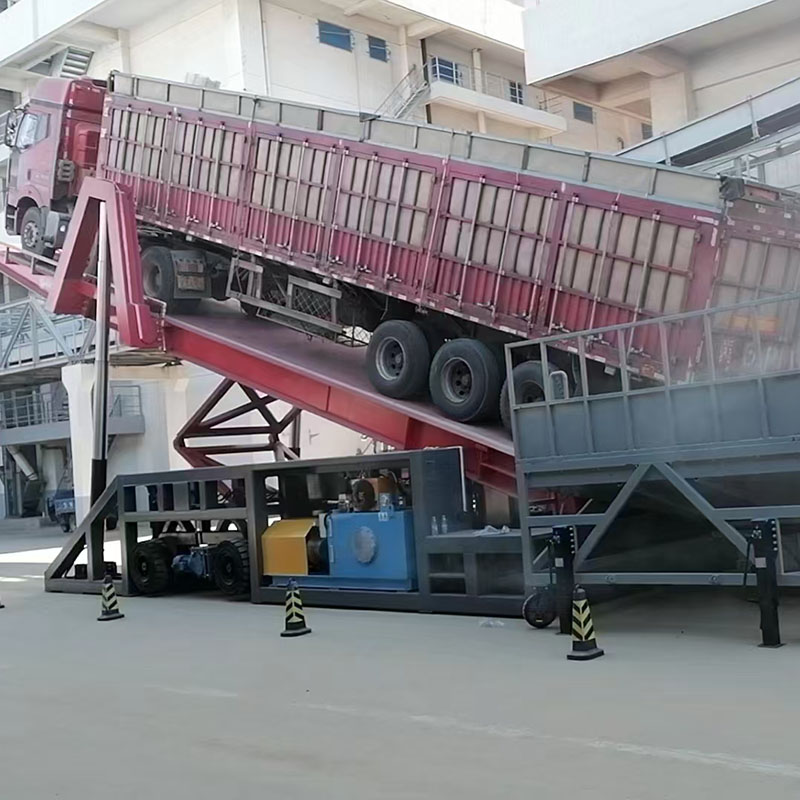
A side-turn truck dumper is a stationary, hydraulically driven platform that lifts an entire truck and tilts it sideways to a controlled angle so that bulk material inside the cargo box slides out through gravity, and this design is generally chosen by operations that need fast, repeatable unloading cycles at a fixed station such as a port terminal, processing plant, warehouse dock, or raw-material receiving yard. Unlike a mobile side dump truck, which carries its own tipping mechanism as part of the vehicle, a side-turn truck dumper is fixed infrastructure: the truck simply drives onto the platform, is secured, and the platform itself does the tilting work. This distinction matters for buyers because it changes the purchasing decision from "which truck do we buy" to "which stationary unloading system fits our site and our existing truck fleet."
In a typical cycle, the loaded truck is driven onto the platform and positioned against wheel stops or restraint arms, safety locks engage to hold the vehicle in place, and hydraulic cylinders raise one side of the platform while the opposite side remains anchored near a pivot line. As the platform rotates past the point where the material's angle of repose is exceeded, the load begins to discharge through the open or rear side of the truck body, and once discharge is complete the operator reverses the hydraulic cycle to return the truck to a level position for departure. Many side-turn platforms are engineered to tilt within a range of roughly 30 to 45 degrees, with the exact angle, cylinder speed, and hold time adjustable according to the truck bed geometry and the flow characteristics of the material being handled, whether that is granular grain, lump coal, powdered chemical feedstock, or aggregate. Because the truck does not need to back into a fixed hopper or align precisely with a rear discharge chute, a side-turn truck dumper is frequently selected where site layout, traffic flow, or material stickiness make rear-end discharge less practical.
For buyers researching Truck Dumpers for the first time, it helps to separate the equipment into two broad discharge concepts: end/rear-turn systems, which lift the front of the truck so material exits from the back, and side-turn systems, which tilt the truck laterally so material exits from the side. Both concepts are covered in more depth in the sections below, along with structural design, comparative performance data, application guidance, and maintenance practices intended to help engineering and procurement teams evaluate options from a China manufacturer or any other supplier with a clearer, more technical frame of reference.
A side-turn truck dumper is best understood as fixed, site-installed tilting infrastructure — not a vehicle accessory — and its main advantage is enabling fast, gravity-based unloading without requiring the truck itself to have any tipping capability.
Common Types of Truck Dumpers and Their Structural Features
Industrial truck dumpers are generally grouped by discharge direction and by mobility. On discharge direction, the two dominant categories are end/rear-turn dumpers, which raise the front of the truck so the load exits through the rear tailgate, and side-turn dumpers, which tilt the whole vehicle laterally so the load exits from an open or hinged side panel. A related but distinct category is the container flipper, or container tippler, which is built to rotate intermodal shipping containers rather than truck bodies, and is typically used where containerized rather than vehicle-mounted bulk cargo needs to be emptied. On mobility, dumper platforms are either permanently fixed to a concrete foundation at a processing site, or built as portable, skid-mounted units that can be relocated between yards, seasonal collection points, or temporary project sites.
Each configuration trades off differently between footprint, cycle speed, and the range of vehicles it can accommodate. An end/rear-turn dumper tends to occupy a compact footprint and integrates well with an in-ground receiving hopper directly behind the platform, which makes it a common choice at cement plants, grain elevators, and power stations where trucks arrive in a steady queue. A side-turn dumper generally requires more lateral clearance beside the platform to allow the tilted body to clear the ground and discharge cleanly, but it avoids the need for the truck to reverse into a precise position, which can shorten positioning time in busy yards. A container flipper, by contrast, is sized around standard container dimensions rather than a truck chassis, and is more often paired with a crane, forklift, or conveyor feed rather than a drive-on ramp.
| Configuration | Discharge Direction | Typical Footprint | Common Use Case |
|---|---|---|---|
| End / Rear-Turn Dumper | Rear of truck body | Compact | Grain terminals, cement plants, power stations |
| Side-Turn Truck Dumper | Side of truck body | Moderate, needs lateral clearance | Steel, chemical, coal yards with tight approach lanes |
| Container Flipper | Container end or side | Sized to container dimensions | Port terminals, intermodal transfer yards |
| Portable / Skid-Mounted Dumper | End or side, model-dependent | Relocatable | Seasonal agriculture, temporary project sites |
Configuration Variants Offered by Manufacturers
Beyond the base categories above, a professional truck dumper manufacturer or factory will typically offer several structural variants so the platform can be matched to a specific site layout, throughput target, and material type. The horizontally scrollable set of cards below summarizes several configuration types commonly available from an OEM or ODM manufacturer serving bulk-handling industries.
Single-Lane Fixed Platform
A single-truck platform anchored to a concrete foundation, suited to steady but moderate daily truck volume.
Tandem Dual-Lane Platform
Two platforms operating in parallel to reduce queue time at higher-volume receiving yards.
Dust-Enclosed Platform
An enclosed housing with dust suppression, more common for chemical, coal, or grain dust control needs.
Weighing-Integrated Platform
Built-in weighing sensors that record load mass before or during the tilt cycle for inventory tracking.
Portable Skid-Mounted Unit
A relocatable, adjustable platform for operations that shift between multiple sites seasonally.
Comparing Typical Unloading Cycle Times
Cycle time is one of the clearest ways to compare unloading methods because it directly affects how many trucks a site can process per shift. Before automated dumper platforms became common at industrial receiving yards, many operations relied on manual unloading, where workers used shovels or hand tools to clear material that would not fall freely from a static truck bed, a method noted in industry equipment literature as slow, labor-intensive, and physically demanding for workers. Container flippers, rear/end truck dumpers, and side-turn truck dumpers each shorten this process considerably by using gravity and a controlled tilt rather than manual clearing. The chart below presents commonly cited approximate cycle-time ranges for these methods, expressed as typical minutes required to fully unload one truck under normal operating conditions. These figures are illustrative operational ranges rather than results from a single controlled study, since actual cycle time depends heavily on truck size, material flow characteristics, and platform automation level.
The gap shown between manual unloading and any mechanized dumper is the most significant pattern in this chart, since manual clearing of a fully loaded truck can take on the order of twenty minutes or more depending on material stickiness and crew size, while a well-maintained mechanized platform typically completes the same task in a small fraction of that time. Side-turn and rear/end truck dumpers cluster close together at the fast end of the scale, generally completing a full cycle in roughly two to three minutes once the truck is positioned, which reflects how little active operator effort a properly automated hydraulic cycle actually requires. Container flippers sit slightly higher on cycle time in this comparison because handling a full shipping container generally involves additional securing steps compared with a truck bed. The exact numbers will vary by site, truck size, and how experienced the operating crew is, so these figures should be read as general planning references rather than guaranteed throughput. For procurement teams sizing a receiving yard, cycle time directly multiplies into daily truck capacity, so even a difference of one minute per cycle can add up to a meaningful number of extra trucks handled across a full shift. This is one reason many industrial buyers evaluating a truck dumper from a wholesale supplier or China factory ask specifically about cycle time under load rather than relying only on the platform's rated tilt speed in isolation, since positioning time, safety-lock engagement, and return-to-level time all factor into the real-world number. Faster cycle times generally also reduce queuing at the gate, which can lower idle truck time and improve overall yard throughput without requiring additional platforms. Sites with highly variable material types, such as mixed grain and fertilizer receiving points, may see cycle times drift toward the higher end of a given range because operators may reduce tilt speed for more difficult-to-flow materials. Overall, the chart illustrates why mechanized truck dumpers, including side-turn configurations, remain a central investment for high-volume bulk material receiving operations.
Across common configurations, side-turn and rear/end truck dumpers generally offer the shortest cycle times, while manual unloading remains, by a wide margin, the slowest method for clearing a fully loaded truck.
Working Principle and Mechanical Structure of Side-Turn Truck Dumpers
The core mechanism of a side-turn truck dumper is a hydraulically actuated tilting frame, and understanding its main components helps buyers evaluate structural quality across different suppliers. The primary structural elements are a base frame anchored to a concrete foundation, a tilting carrier platform on which the truck rests, a pivot or hinge line along one edge of the platform, one or more hydraulic cylinders positioned to lift the opposite edge, and a set of restraint arms or wheel chocks that keep the truck from sliding once the platform begins to tilt. A hydraulic power unit supplies pressurized oil to the cylinders, while a control cabinet houses the electrical components, angle sensors, and safety interlocks that govern the tilt sequence.
Figure: simplified schematic of a side-turn truck dumper, dashed outline showing level position and solid outline showing the platform mid-tilt. 1 = base frame anchored to foundation; 2 = pivot hinge assembly; 3 = truck cargo box (material discharge side); 4 = hydraulic cylinder assembly; 5 = tilting carrier platform.
Structural steel quality and welding standards affect how a platform performs under repeated cyclic loading, since a side-turn dumper is not a one-time-use structure but a piece of equipment expected to complete many tilt cycles per day across years of service. Reinforced pivot bearings, thick-wall hydraulic cylinders, and a base frame with adequate anchor points are generally associated with more durable, lower-maintenance long-term operation, which is why engineering teams evaluating a professional and reliable supplier often ask for structural load ratings and cylinder specifications rather than relying only on general marketing claims. Control systems have also evolved considerably; many modern platforms now use programmable logic controller, or PLC, automation rather than purely manual hydraulic valve operation, and the table below compares the two approaches at a general level.
Manual Hydraulic ControlOperator manually controls valve levers or push-buttons to raise and lower the platform, offering direct control that some operators prefer for irregular or unusually shaped loads, though repeatable precision depends more heavily on operator experience. |
PLC Automated ControlA programmed sequence manages tilt angle, speed, and hold time automatically, generally producing more consistent cycle times, integrated safety interlocks, and easier data logging for weighing or throughput tracking across shifts. |
Automation adoption across the broader bulk material handling equipment sector has been increasing steadily as facilities look for more consistent throughput and reduced dependence on manual operator judgment. According to a 2025 industry report by Global Market Insights, the global bulk material handling equipment market, which includes tilting and tipping platforms such as truck dumpers, was estimated at roughly USD 50.4 billion in 2025 and is projected to grow at a compound annual rate of about five percent through 2035, driven in part by the continuing shift toward more automated handling systems. Before viewing the growth trend below, it is worth noting that this projection reflects aggregate demand across the wider bulk handling equipment category, not truck dumpers specifically, since dedicated market data at the single-product level is not consistently published. Even so, the direction of the trend is broadly relevant to buyers, since suppliers of tilting and tipping equipment tend to benefit from the same automation and infrastructure investment cycles as the rest of the sector. The chart below projects approximate market size using the reported growth rate as a general reference point for how steadily this category has been expanding. It should be read as an illustrative trend line rather than a year-by-year forecast guarantee.
The area chart above shows a steady upward slope rather than a sudden jump, which reflects a gradual, compounding growth pattern typical of industrial equipment categories rather than a short-term spike tied to a single event. Starting from an estimated USD 50.4 billion base in 2025, the projected value climbs to roughly USD 81.4 billion by 2035 at the reported compound annual growth rate, meaning the market is expected to grow by more than half over the coming decade. This sustained growth trajectory is consistent with continuing infrastructure investment in mining, ports, cement, and grain handling, sectors that all rely on tilting and tipping equipment somewhere in their material flow. A gradually widening gap between each plotted point toward the later years illustrates how compound growth accelerates in absolute dollar terms even at a constant percentage rate. For a facility manager considering whether to invest in a side-turn truck dumper now or later, this type of sector-wide trend suggests that demand for efficient, automated unloading equipment is unlikely to shrink in the near term. It also suggests that suppliers investing in PLC automation, weighing integration, and dust control features are responding to a real and continuing shift in buyer expectations rather than a temporary trend. None of this data is specific to any single manufacturer's sales, and it should not be read as a guarantee of results for any individual project. Instead, it functions as background context that helps explain why automated tilting platforms, including side-turn truck dumpers, continue to appear as a standard line item in bulk material handling capital planning. Buyers comparing options from a China supplier or elsewhere can use this broader context alongside site-specific throughput calculations when building a business case for equipment upgrades.
A side-turn truck dumper relies on a small set of core structural components — base frame, pivot, tilting platform, and hydraulic cylinders — and the shift toward PLC-based automated control mirrors a broader, multi-year growth trend across the bulk material handling equipment sector.
Application Scenarios and Key Selection Criteria
Side-turn and other truck dumper configurations are used across a wide range of heavy industries wherever bulk material arrives by truck and needs to be unloaded quickly and consistently. Common sectors include steel and metallurgy, chemical processing, cement production, coal and power generation, and grain, oil, and food processing, each of which handles materials with different flow behavior, moisture sensitivity, and dust characteristics. Choosing between a side-turn platform, a rear/end platform, or a container flipper depends less on industry label and more on truck geometry, discharge direction preferences at the receiving point, and site space constraints, which is why experienced buyers typically work through a structured selection checklist rather than picking equipment based on habit alone.
Typical Application Scenarios
|
Key Selection Criteria
|
Before viewing the distribution chart below, it is useful to understand that truck dumper demand is not evenly spread across industries; some sectors process far more incoming truck traffic than others and therefore invest more heavily in fixed unloading infrastructure. Steel, coal, and cement operations tend to run high truck volumes on a near-continuous basis, while chemical and grain or food processing sites often have more variable, seasonal, or batch-driven receiving patterns. The chart below presents an illustrative distribution of where truck dumper equipment is commonly applied across these industries, based on general patterns observed across the sectors this equipment category typically serves. This is intended as a representative guide rather than a precise market share figure for any single supplier. Understanding this distribution can help a facility benchmark its own truck-receiving volume against comparable operations in its sector.
Steel & Metallurgy — 22%
Coal & Power — 20%
Chemical — 18%
Cement — 16%
Grain, Oil & Food — 14%
Other Industries — 10%
Steel and metallurgy together with coal and power make up the two largest segments in this illustrative mix, together accounting for roughly 42% of typical application volume, which is consistent with how continuously these sectors receive bulk raw material by truck around the clock. Chemical processing follows closely, reflecting the frequent need for enclosed, dust-controlled unloading stations when handling powders or granular feedstock that cannot be exposed to open air for extended periods. Cement production also represents a meaningful share, since cement plants typically receive both raw material inputs and finished product by truck on a near-continuous schedule. Grain, oil, and food processing make up a somewhat smaller but still significant portion, often concentrated around harvest seasons or specific processing windows rather than spread evenly across the year. The remaining "other industries" category captures a range of smaller-volume applications, including general logistics hubs, recycling facilities, and specialty material handling sites that do not fit neatly into the five main categories. This distribution is a useful planning reference for a facility engineer trying to understand how their own truck-receiving needs compare with typical usage patterns in similar industries. It also explains why manufacturers offering a multifunction and adjustable platform design, capable of serving more than one material type, tend to appeal to a broader base of industrial buyers. Facilities that handle more than one material category, such as combined coal and cement operations, may find that a single well-specified side-turn truck dumper can serve multiple receiving needs rather than requiring separate dedicated equipment for each material.
Selecting the right supplier is as important as selecting the right equipment type. Jiangsu Zhengding Intelligent Equipment Co., Ltd. is a national high-tech enterprise focused on the research, development, and manufacturing of intelligent logistics equipment, offering systematic solutions for the automatic loading and unloading of trucks and containers across a range of industries. As a China-based manufacturer and factory, the company provides a relatively complete range of automatic loading and unloading equipment, including rear dumpers, side dumpers, car loading equipment, and container flippers, which allows industrial buyers to source multiple related pieces of unloading equipment from a single, familiar technical partner. Its products are used across the steel, chemical, cement, coal, grain, oil, and food industries, and the company has supplied equipment to markets including Japan, Brazil, Egypt, Pakistan, India, the Middle East, and Southeast Asia, with international users spanning consumer goods, agribusiness, and industrial materials sectors. For buyers comparing an OEM manufacturer or ODM supplier, working with a company that manufactures a full family of related dumper and loading equipment can simplify long-term maintenance planning, since spare parts, technical documentation, and service expectations are more likely to be consistent across the equipment fleet.
Selecting the right truck dumper configuration depends primarily on truck geometry, required tilt characteristics, dust and environmental exposure, and control system preference, and working with a manufacturer offering a full family of related equipment can simplify long-term sourcing and maintenance.
Side-Turn vs Rear-Turn vs Container Flipper: A Detailed Comparison
Choosing between a side-turn truck dumper, a rear/end truck dumper, and a container flipper generally comes down to five practical dimensions: how efficiently the equipment uses available site footprint, how quickly it completes a discharge cycle, how versatile it is across different vehicle or container types, how simple it is to maintain over time, and how efficiently it uses invested capital relative to throughput delivered. No single configuration scores highest across every dimension, which is precisely why industrial buyers need a structured comparison rather than a single "best" recommendation. The radar chart below plots general, illustrative scores on a zero-to-ten scale across these five dimensions for the three configurations discussed throughout this article. These scores reflect typical engineering trade-offs rather than results from a formal benchmarking study, and actual performance will vary by specific model, site conditions, and maintenance quality. Reviewing the shape of each plotted line, rather than any single number, is usually the most useful way to interpret this type of comparison.
Side-Turn Truck Dumper Rear / End Truck Dumper Container Flipper
The side-turn truck dumper's plotted line extends furthest along the cycle speed axis, reflecting the fast discharge times discussed earlier in this article, while it holds moderate scores across footprint efficiency, versatility, and maintenance ease. The rear/end truck dumper's line is comparatively strongest on footprint efficiency and maintenance ease, which aligns with its simpler compact structure and generally more established maintenance procedures at long-running facilities such as grain elevators. The container flipper stands out most clearly on the versatility axis, since it is purpose-built to accommodate different container sizes and is often integrated with cranes or conveyors, giving it flexibility beyond truck-only unloading, though this comes at some cost to footprint efficiency because containers and their handling equipment generally require more surrounding clearance. None of the three shapes fully covers the pentagon, which visually reinforces that no configuration dominates on every dimension simultaneously; the right choice depends on which dimension matters most for a given site. A facility prioritizing throughput above all else, such as a busy steel mill receiving yard, may weight cycle speed and capital efficiency more heavily and lean toward a side-turn or rear/end configuration. A facility that regularly receives both containerized and truck-delivered material may instead value the flexibility captured in the container flipper's stronger versatility score. Maintenance ease also matters over the long run, since a platform that is simpler to service generally experiences less unplanned downtime, and this dimension should be weighed alongside upfront capital cost rather than considered separately from it. The comparison table below adds further descriptive detail to these five scored dimensions.
| Dimension | Side-Turn Truck Dumper | Rear / End Truck Dumper | Container Flipper |
|---|---|---|---|
| Positioning Requirement | Straight drive-on, no reversing needed | May require precise reversing into hopper zone | Container lifted or driven into cradle |
| Material Suitability | Broad range including sticky or coarse material | Free-flowing granular and powdered material | Palletized or bulk containerized cargo |
| Typical Installation | Fixed platform with lateral clearance | Fixed platform above in-ground hopper | Port or intermodal yard cradle structure |
| Best Fit | High-frequency yards with tight approach lanes | Continuous receiving with fixed hopper infrastructure | Mixed truck and container receiving points |
No single configuration wins across every comparison dimension, so matching equipment choice to a site's dominant priority — speed, footprint, versatility, or maintenance simplicity — generally leads to a better long-term outcome than choosing based on one factor alone.
Maintenance Guidance for Long-Term Reliable Operation
A side-turn truck dumper is a piece of heavy-duty, cyclically loaded equipment, and consistent maintenance is generally the most important factor in keeping cycle times fast and downtime low over years of operation. Most maintenance needs fall into a small number of recurring categories: hydraulic system checks, structural and pivot inspection, safety system testing, and general cleaning to prevent material buildup from interfering with moving parts. Establishing a simple, repeatable maintenance schedule tends to be more effective than reactive repairs after a problem appears, since many of the most common failure modes, such as seal wear or bearing wear, develop gradually and are far cheaper to address early. The list below organizes common maintenance tasks by recommended frequency as a general starting reference; actual intervals should be adjusted based on a specific supplier's technical manual and the platform's daily cycle count.
- Daily: Visual check of hydraulic hoses and fittings for leaks, confirmation that safety restraint arms engage and release correctly, and clearing of any material buildup on the platform surface.
- Weekly: Inspection of hydraulic fluid level and condition, lubrication of pivot hinge points and moving linkages, and functional testing of emergency stop controls.
- Monthly: Torque check on structural anchor bolts, inspection of welds around the pivot and cylinder mounting points for early signs of fatigue, and cleaning of electrical control cabinet components.
- Quarterly: Full hydraulic filter replacement, calibration check of angle and position sensors, and a supervised full-cycle load test under typical operating weight.
- Annually: Comprehensive structural inspection by qualified personnel, replacement of hydraulic seals showing wear, and a full review of the PLC control program and safety interlock logic where applicable.
Dust and residue management deserves particular attention for facilities handling coal, cement, or chemical powders, since accumulated material around the pivot hinge or cylinder mounts can accelerate wear and interfere with sensor accuracy over time. Facilities operating in coastal, high-humidity, or corrosive chemical environments should also pay close attention to protective coatings on structural steel, since corrosion left unaddressed can weaken load-bearing joints well before scheduled structural inspection intervals. Choosing a durable platform built with appropriate protective coatings and reliable hydraulic components from the outset tends to reduce the burden of this ongoing maintenance considerably, which is one reason experienced buyers weigh build quality alongside price when comparing offers from an OEM factory or ODM factory. Keeping a maintenance log that records inspection dates, findings, and part replacements also makes it easier to plan capital budgets around eventual major component replacement rather than being caught by an unplanned failure. Overall, a disciplined maintenance routine is what turns a well-built side-turn truck dumper into a genuinely long-lived piece of industrial infrastructure rather than equipment that underperforms its potential service life.
Routine daily, weekly, and monthly maintenance — particularly hydraulic system checks and pivot lubrication — is generally the most cost-effective way to protect cycle time performance and extend the service life of a truck dumper platform.
Frequently Asked Questions About Side-Turn Truck Dumpers
Q1: What is the main difference between a side-turn truck dumper and a rear/end truck dumper?A side-turn truck dumper tilts the entire truck laterally so material discharges from the side of the cargo box, while a rear/end truck dumper lifts the front of the truck so material discharges from the rear tailgate. The choice generally depends on site layout, available lateral clearance, and how the receiving hopper or stockpile is positioned relative to the platform. |
Q2: What size or type of truck can a side-turn truck dumper typically accommodate?Platforms are generally designed and configured around a target wheelbase range and maximum load capacity specified during equipment selection, and an adjustable restraint system helps accommodate more than one truck size within that designed range. Buyers with a mixed truck fleet should confirm the platform's rated dimensional range against their own vehicle specifications before ordering. |
Q3: Can a side-turn truck dumper be enclosed for dust control?Yes, dust-enclosed platform variants are commonly available for materials such as coal, cement, or chemical powders where airborne dust needs to be controlled at the unloading point. This is typically specified during initial equipment selection along with any related suppression or containment requirements at the site. |
Q4: Do manufacturers offer OEM or ODM customization for truck dumper platforms?Many established manufacturers offer OEM and ODM options, allowing platform dimensions, control systems, weighing integration, and dust enclosure features to be adapted to a buyer's specific truck fleet and site requirements. Working directly with the manufacturer during the technical specification stage generally produces a better long-term fit than selecting a fixed, non-adjustable standard model. |


