

 English
 русский
 Español
 Français
 Português
 عربى
عربى



+86-13588556918
Content
- 1 What Is A Side Dump Truck
- 2 How A Side Dump Truck Works
- 3 Side Dump Versus Rear Dump: Comparing Unloading Performance
- 4 Fully Automatic Versus Ordinary Side-Turn Truck Dumpers
- 5 Unloading Cycle Time Trends Across Truck Dumper Types
- 6 Material Suitability For Side-Turning Unloading Systems
- 7 Comparing Truck Dumpers Against Other Industrial Unloading Equipment
- 8 How To Choose A Truck Dumper For A Bulk Handling Operation
- 9 Manufacturer Background And Industrial Application
- 10 Frequently Asked Questions
What Is A Side Dump Truck
A side dump truck is a vehicle or trailer that empties its load through the side rather than the rear, using hydraulic rams that tilt the body to one side so material slides out by gravity. The defining advantage of this design is stability during unloading, since the cargo exits low and to one side instead of being lifted high into the air the way a rear dump body is raised. Because the center of gravity stays lower throughout the cycle, side dump units are considered one of the more stable unloading configurations available, especially on soft or uneven ground. This stability is also why side-turn truck dumpers and side-turning unloading stations have become a practical fixed-point alternative for facilities that need to empty trucks repeatedly without lifting the entire vehicle into the air. In the sections below, this article looks at how a side dump truck works, how it compares with rear dump and other unloading systems, where it fits in bulk material handling, and how a fixed industrial truck dumper applies the same side-turning logic at a stationary unloading station rather than inside a single trailer.
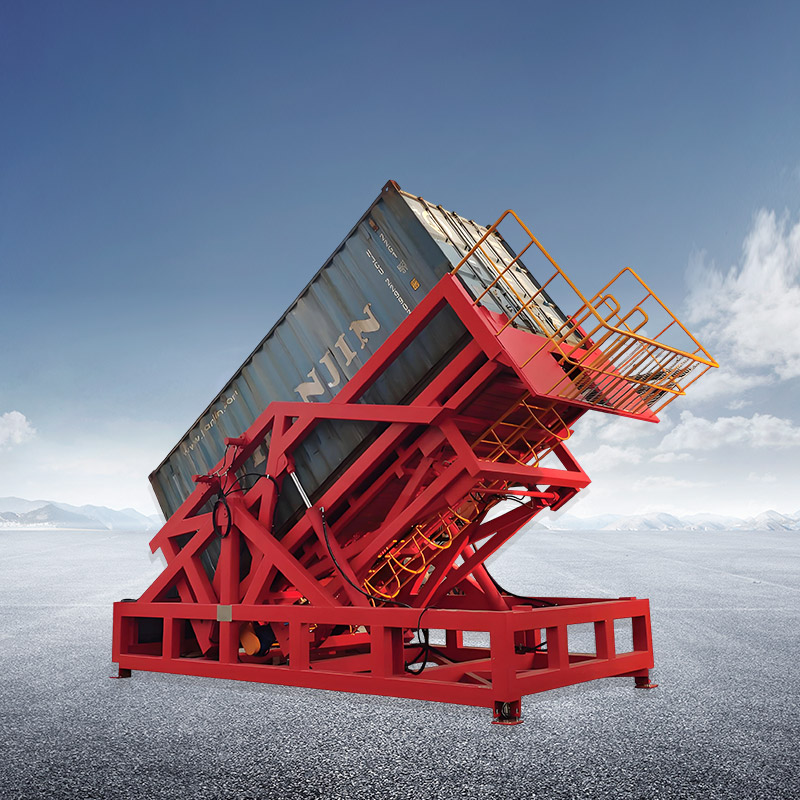
It is worth separating two related ideas that are often discussed together. A side dump truck or side dump trailer is a mobile vehicle that carries its own tipping mechanism wherever it travels. A side-turn truck dumper, sometimes called a side-turning unloading machine, is a stationary tipper system installed at a warehouse, port, mill, or plant; the truck drives onto the platform and the platform itself tilts the truck sideways to release the cargo. Both rely on the same core principle of controlled side-tilting, but they solve different problems: one is about transporting and dumping along a route, the other is about high-frequency unloading of incoming trucks at a single fixed location.
How A Side Dump Truck Works
The working principle of a side dump truck is mechanically simple even though the engineering behind the hydraulics is precise. A side dump trailer functions like a tub mounted on pivots inside a supporting frame, and hydraulic cylinders lift one side of that tub while the opposite side stays anchored to the frame. As the tub rotates past a certain angle, gravity takes over and the bulk material slides out to the chosen side, after which the operator reverses the hydraulic cycle to lower the body back to a level travel position. Drivers do not need to back the vehicle into position or find perfectly level ground before starting the cycle, which is one reason this unloading system is favored for repetitive bulk material handling tasks. A full dump cycle on a well-maintained side dump unit can be completed in well under a minute, and some configurations are reported to dump in as little as ten seconds once positioned, which keeps a hydraulic truck dumper or trailer moving through a job site quickly.
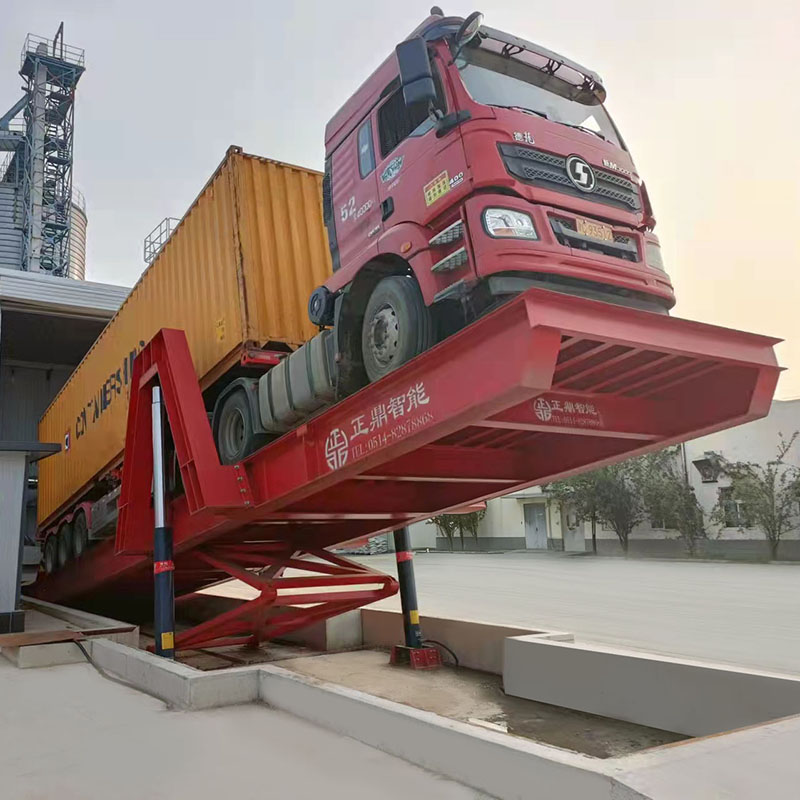
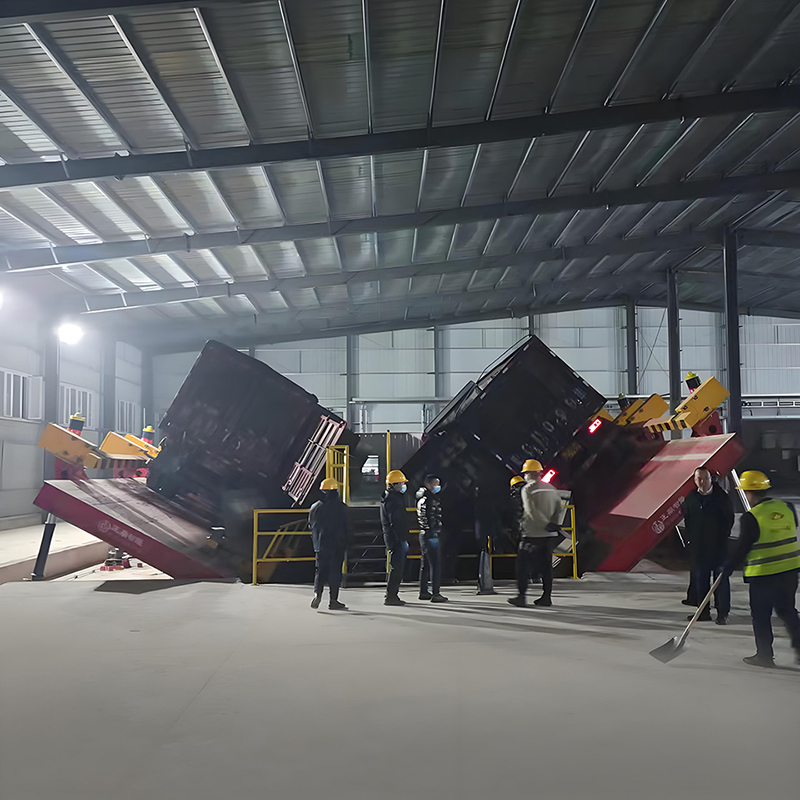
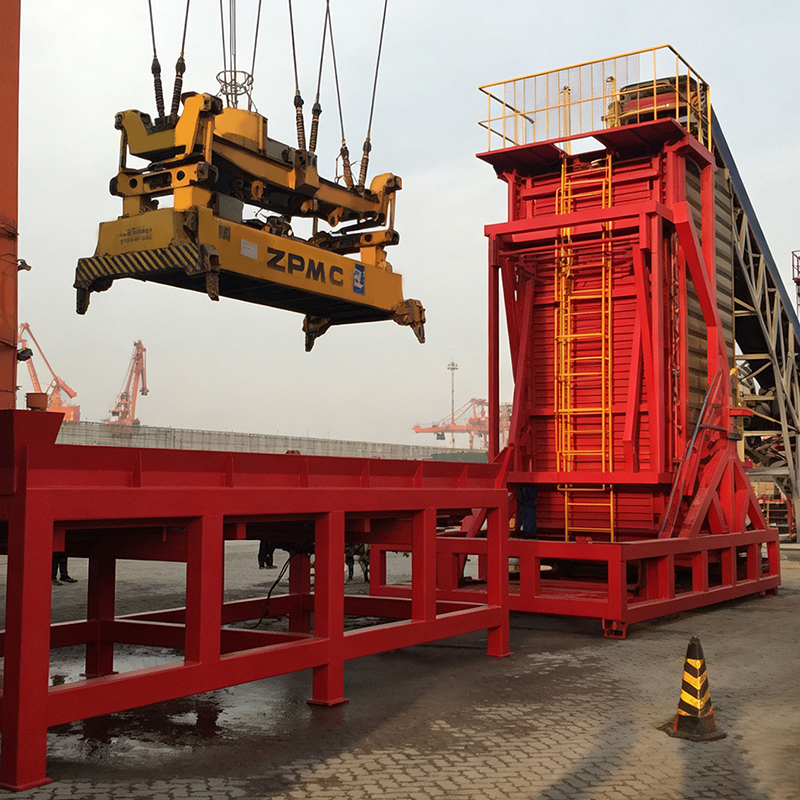
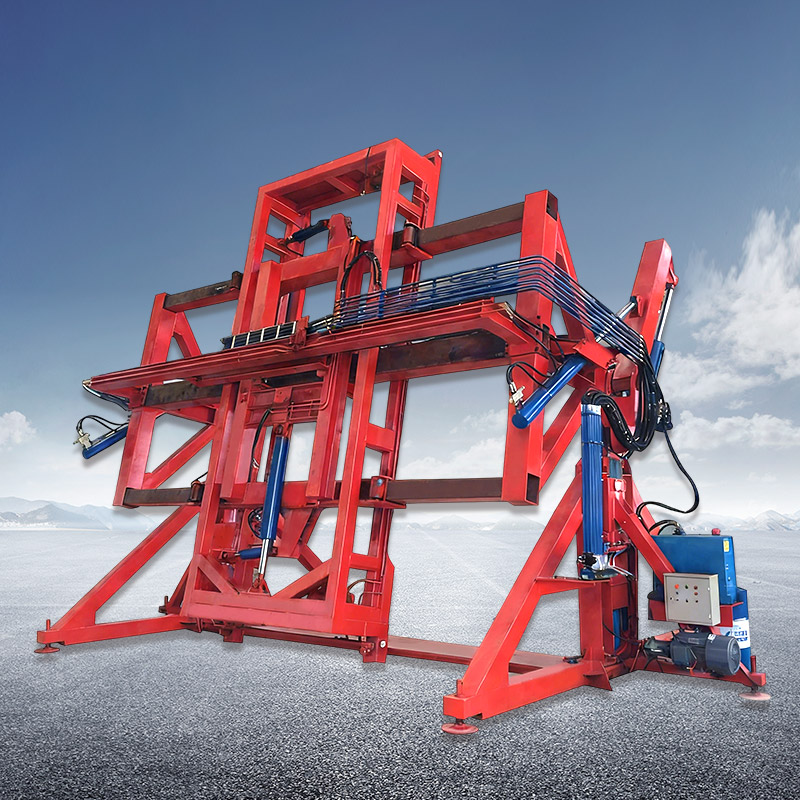
The same side-turning principle scales up into stationary equipment. In a fixed side-turn truck dumper or industrial dumping station, the loaded truck drives onto a platform secured by clamps or guide rails, and the entire platform tilts the truck to one side using large hydraulic cylinders rather than tilting just a cargo box. This is particularly useful for unloading materials with poor flowability, such as coal, iron ore powder, or soybean meal, where a steep, controlled side tilt produces a cleaner discharge than relying on gravity alone from a rear gate. Facilities with limited overhead clearance also benefit, because a side-turning unloading machine does not require the same vertical lift height that a rear-tipping dumper needs to fully empty a truck bed.
| Unloading System | Direction Of Discharge | Typical Stability | Ground Requirement |
|---|---|---|---|
| Side dump truck or trailer | Left or right side | High | Tolerates uneven ground |
| Rear end dump truck | Rear | Lower, high center of gravity when raised | Needs level, firm ground |
| Fixed side-turn truck dumper | Side, at a stationary station | High, platform controlled | Engineered foundation, fixed location |
| Container or car body flipper | Side or angled, at a stationary station | High, platform controlled | Engineered foundation, fixed location |
Side Dump Versus Rear Dump: Comparing Unloading Performance
Choosing between a side dump configuration and a rear dump configuration usually comes down to four practical factors: stability while tipping, cycle speed, ground and clearance requirements, and the type of bulk material being handled. A rear dump body must be lifted high into the air to clear the tailgate, which raises the center of gravity and makes the vehicle more prone to tipping if the load shifts unevenly or the ground is soft on one side. A side dump body, by contrast, rotates around a lower pivot point, so the load exits before the structure ever reaches the same height, which is a major reason side units are described as more resistant to upset during dumping. The chart below summarizes how these two approaches typically compare across the factors that matter most to a bulk handler choosing equipment for a steel, grain, chemical, cement, or coal operation.
This horizontal bar chart compares relative performance scores rather than fixed industry-standard numbers, and it is intended to illustrate directional differences rather than exact measurements. Dumping stability and tolerance for uneven ground favor the side dump approach because the tilting tub keeps a lower center of gravity throughout the cycle, while a rear dump body must rise much higher before the gate releases material. Unloading cycle speed also favors side dump configurations in many operating reports, since the driver can position the vehicle and begin the cycle without backing up or leveling the site first. Rear dump units retain an edge in handling very bulky, oversized debris because their boxes are often built with taller sides for high-volume, rough-material loads. Reading the chart together, a bulk handler moving flowable or moderately fine material such as grain, coal, or powder will generally lean toward a side-turning system, while an operation centered on construction debris or oversized aggregate may still favor a traditional rear dump body.
Fully Automatic Versus Ordinary Side-Turn Truck Dumpers
Stationary side-turning truck dumpers are generally grouped into two categories based on their degree of automation: a fully automatic side-turning unloading machine and an ordinary back-turning unloading machine. The fully automatic version is designed to minimize manual steps, often including automated clamping, programmed tilt angles, and sensor-based positioning that reduces the time an operator spends adjusting the truck before each cycle. The ordinary or semi-manual version still relies on hydraulic tilting but generally requires more operator involvement to position the vehicle, engage the locking mechanism, and monitor the unloading angle throughout the cycle. Facilities running a high volume of trucks per shift, such as grain terminals, feed mills, or steel plant receiving docks, tend to prioritize the fully automatic configuration because it shortens turnaround time per vehicle and reduces variability between operators.
The choice between a side-turning unloading machine and a traditional rear-turning unloading machine is also shaped by building constraints. A side-turn dumper does not need the same overhead clearance that a rear-tipping system requires to lift a truck bed to a steep angle, which makes it a practical industrial dumping station for warehouses or covered receiving areas with limited roof height. For materials that resist flowing freely, including coal, iron ore powder, and soybean meal, a side-turning truck dumper tends to produce a cleaner, more complete discharge because the tilt angle and motion path can be tuned specifically for low-flowability bulk material, which is a meaningfully different unloading challenge than emptying free-flowing grain.
Unloading Cycle Time Trends Across Truck Dumper Types
Cycle time, meaning the total time from a truck arriving at the unloading point to it departing empty, is one of the most closely tracked metrics in bulk material handling because it determines how many trucks a single dumper station can process per shift. The line chart below illustrates a general trend across four truck dumper categories as automation level increases, moving from manual rear-tip stations through ordinary side-turn dumpers to fully automatic side-turn systems and finally to integrated automatic truck dumper lines that combine positioning, clamping, and tilting into one controlled sequence.
The downward trend across this line chart shows a consistent pattern: as a truck unloading system moves from manual rear-tip operation toward an integrated automatic truck dumper line, average cycle time per vehicle drops noticeably. Manual rear-tip stations tend to run longer because the operator must position the truck precisely, lift the body slowly to avoid tipping, then wait for the body to settle before releasing the vehicle. Ordinary side-turn dumpers shorten this somewhat because the tilt angle is more predictable and the truck does not need to back into position. Fully automatic side-turn systems compress cycle time further by automating the clamping, tilt, and release sequence, which removes much of the variability that comes from manual operator judgment. The shortest cycle times appear in integrated dumper lines that combine positioning aids, hydraulic side-turning, and automatic release into a single coordinated process, which is the direction many high-throughput bulk handler operations are moving toward.
Material Suitability For Side-Turning Unloading Systems
Not every bulk material behaves the same way once a truck body begins to tilt, and the suitability of a side-turn truck dumper depends heavily on how a given material flows. Materials with poor flowability, such as coal, iron ore powder, and soybean meal, often resist sliding out of a rear gate cleanly and benefit from the steeper, more controlled tilt angle that a side-turning unloading machine can apply. Free-flowing grain, by contrast, tends to discharge well from either a rear dump or a side-turn configuration because gravity alone is usually sufficient once the body reaches even a moderate angle. The bar chart below presents a general suitability comparison across several common bulk materials handled in steel, chemical, cement, coal, grain, oil, and food industry operations.
This column chart ranks suitability scores from highest to lowest, and the pattern follows directly from each material's flow characteristics. Coal and iron ore powder score highest because they tend to compact and cling to the surfaces of a truck body, so a steep, sustained side tilt is more effective at fully clearing the load than a brief rear-gate release. Soybean meal sits close behind for similar reasons, since meal can bridge or clump inside a truck bed and benefit from the sideways shaking motion that occurs as the body rotates. Cement powder scores moderately, reflecting that while it can clump, many cement handling operations also use pneumatic or screw-conveyor unloading rather than tipping. Grain and edible oil seed score lowest in this comparison only because they already flow well under simple gravity, meaning a side-turn dumper still works effectively for them but the relative advantage over a standard rear dump is smaller than it is for sticky or compacted bulk material.
Comparing Truck Dumpers Against Other Industrial Unloading Equipment
A side-turn truck dumper is one of several pieces of equipment used for automatic loading and unloading of cars and containers, alongside rear dumpers, car loading equipment, and container flippers. Each of these machines is built around a similar hydraulic logic but optimized for a different physical task, so comparing them side by side on a few shared criteria helps clarify where a side-turning system fits within a broader bulk material handling plan. The radar chart below compares four common pieces of automatic loading and unloading equipment across five operational dimensions: stability, cycle speed, suitability for low-flowability material, clearance footprint, and versatility across cargo types.
The radar chart illustrates that a side-turn truck dumper generally scores higher across stability, low-flow material fit, and clearance efficiency, since the lower tilt profile and side-discharge motion are particularly well suited to materials like coal and iron ore powder while also fitting into buildings with restricted ceiling height. A rear dumper station can still hold its own on versatility and cycle speed in some applications, particularly where the bulk material is free-flowing and the facility already has the overhead clearance to lift a truck body to a steep angle. Container flippers and car loading equipment, while not directly charted here, generally follow a similar pattern to the side-turn dumper because they also rely on controlled tilting rather than vertical lifting. The overall takeaway from this comparison is that no single unloading system is universally best, and the right choice depends on the specific combination of material flowability, building clearance, and required throughput at a given facility.
How To Choose A Truck Dumper For A Bulk Handling Operation
Selecting the right truck unloading system starts with identifying the material being handled, since flowability is the single biggest factor separating a good fit from a poor one. A facility moving coal, iron ore powder, or soybean meal will typically get more complete discharge from a side-turning unloading machine, while an operation moving free-flowing grain or liquid bulk may find either a rear dumper or a side dumper workable. Building clearance is the second major factor, because a rear-tipping dumper needs enough vertical space above the platform to lift a fully loaded truck bed to a steep angle, whereas a side-turn truck dumper rotates within a lower overall profile. Throughput requirements matter as well: an operation receiving a high volume of trucks per day benefits from an automatic truck dumper with programmed clamping and tilt sequences, since this reduces operator variability and shortens the time each vehicle spends on the platform.
- Identify the bulk material's flow characteristics, including whether it tends to compact, bridge, or cling inside a truck bed.
- Measure available overhead clearance at the receiving point before specifying a rear-tip versus a side-turn dumper.
- Estimate daily truck volume to decide between an ordinary side-turn dumper and a fully automatic configuration.
- Confirm the dumper's rated platform capacity matches the gross weight of the trucks that will be unloaded.
- Review the hydraulic system's maintenance access and safety locking mechanisms before finalizing equipment selection.
Industries that commonly rely on this kind of equipment include steel, chemical, cement, coal, grain, oil, and food processing, each of which has its own bulk material handling demands. A grain unloading system, for example, prioritizes speed and dust control, while a mining truck dumper or industrial dumping station built for ore and coal prioritizes raw stability and the ability to fully clear sticky, compacted material. Warehouse unloading equipment serving packaged or palletized goods has different requirements again, often favoring car loading equipment over a tipping dumper altogether. Matching the dumper type to the specific material and throughput profile is the most reliable way to get consistent unloading performance over the equipment's working life.
Manufacturer Background And Industrial Application
Jiangsu Zhengding Intelligent Equipment Co., Ltd is a national high-tech enterprise focused on the research, development, and manufacturing of intelligent logistics equipment, with a particular emphasis on systematic solutions for the automatic loading and unloading of cars and containers. The company's product range includes rear dumpers, side dumpers, car loading equipment, and container flippers, positioning it as one of the more complete suppliers of automatic loading and unloading equipment for cars and containers within China. These products serve customers across the steel, chemical, cement, coal, grain, oil, and food industries, and are exported to markets including Japan, Brazil, Egypt, Pakistan, India, the Middle East, and Southeast Asian countries.
Within this product range, the company's automatic loading and unloading equipment for cars has reported leading annual sales volume and technical performance within the domestic market. Typical international users of this category of equipment span the food and beverage, agricultural commodity, and industrial materials sectors, including organizations such as Budweiser, Heineken, Buhler Group, Wilmar International, Cargill, DuPont, Louis Dreyfus, Charoen Pokphand Group, and Saint-Gobain Group. This breadth of industry use reflects how widely applicable a well-engineered side-turn truck dumper or hydraulic truck dumper can be once it is matched correctly to the material and throughput needs of a given facility.
Frequently Asked Questions
Q1: What is the main difference between a side dump truck and a rear dump truck?
A side dump truck tilts its body to one side using hydraulic rams, releasing material at a lower height and with greater stability, while a rear dump truck lifts the entire body upward to release material through the back, which raises the center of gravity during the cycle.
Q2: When should a facility choose a side-turn truck dumper over a rear-turning unloading machine?
A side-turn truck dumper is generally a stronger fit when the building has limited overhead clearance, when the material has poor flowability such as coal or iron ore powder, or when a stable, repeatable unloading cycle is a priority.
Q3: What is the difference between a fully automatic side-turning unloading machine and an ordinary one?
A fully automatic version reduces manual steps through programmed clamping, positioning, and tilt sequences, while an ordinary side-turning unloading machine still relies on hydraulic tilting but requires more direct operator involvement during each cycle.
Q4: Which materials are best suited to a side-turning unloading system?
Materials with poor flowability, including coal, iron ore powder, and soybean meal, tend to benefit most from a side-turning unloading system, since the controlled tilt angle helps clear compacted or clinging material more completely than gravity-only rear discharge.
Q5: What industries commonly use automatic truck loading and unloading equipment?
This type of equipment is widely used across the steel, chemical, cement, coal, grain, oil, and food industries, with applications ranging from raw material receiving stations to finished product loading at processing and export facilities.


