

 English
 русский
 Español
 Français
 Português
 عربى
عربى



+86-13588556918
Content
- 1 How a Shallow Foundation Truck Dumper Works: The Core Operating Principle
- 2 Civil Engineering Cost Advantage: Why Shallow Foundation Changes the Economics
- 3 Hydraulic Engineering: Synchronization, Imported Components, and Extended Service Life
- 4 Industry Applications: Which Sectors Use Shallow Foundation Truck Dumpers
- 5 Safety Architecture: Automatic Wheel Lock, Unmanned Control, and Structural Integrity
- 6 Throughput Performance: Capacity Metrics and Operational Efficiency Data
- 7 About Jiangsu Zhengding Intelligent Equipment Co., Ltd.
- 8 Frequently Asked Questions
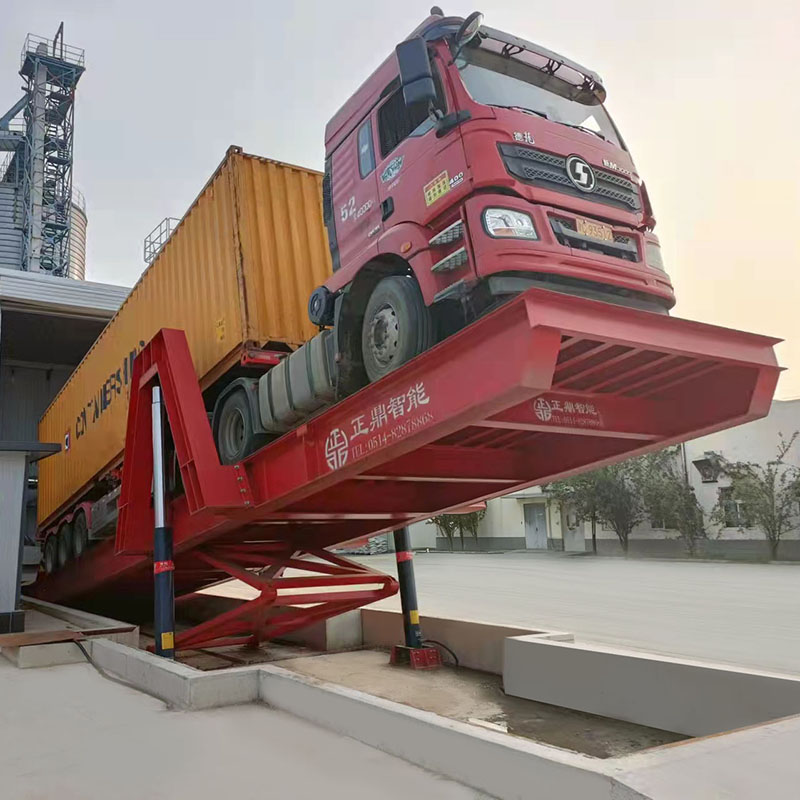
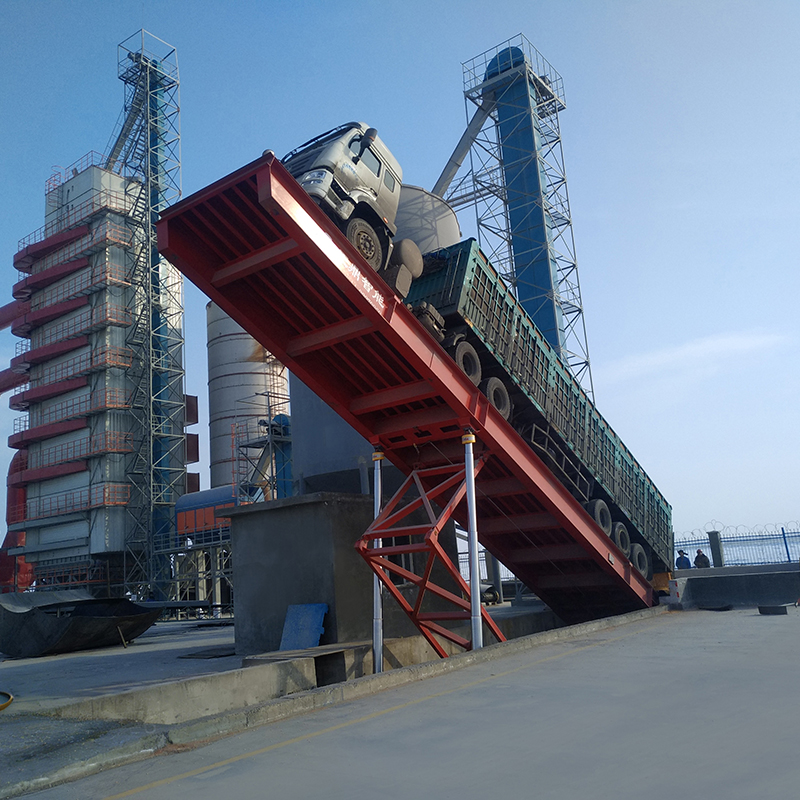
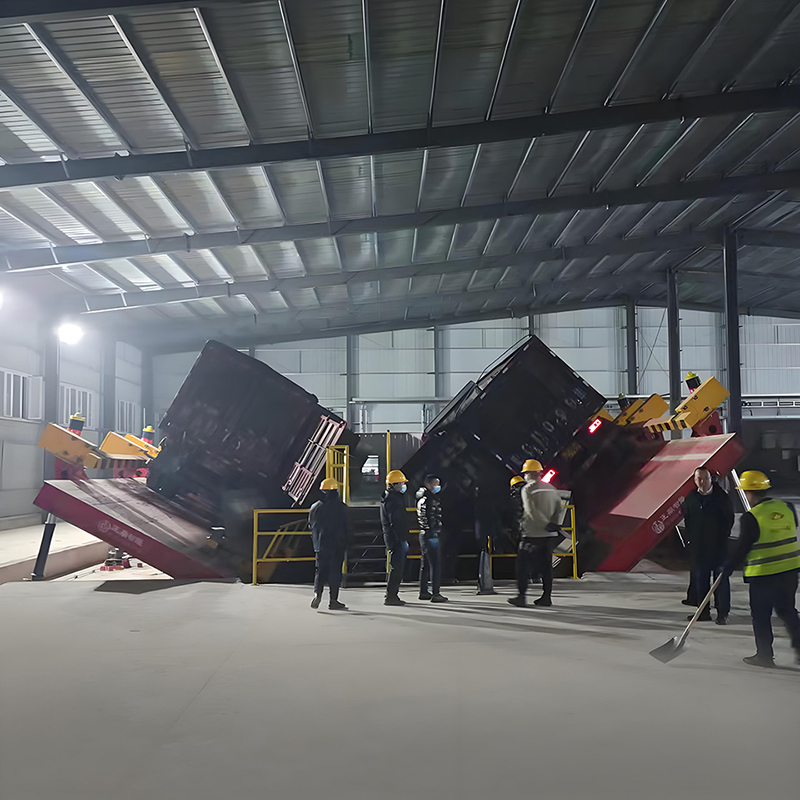
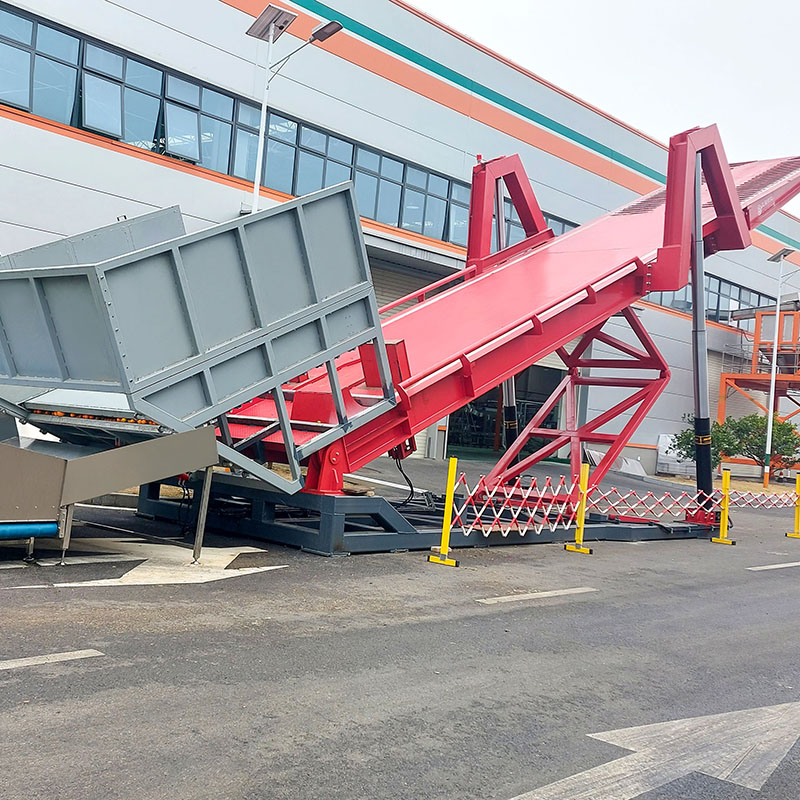
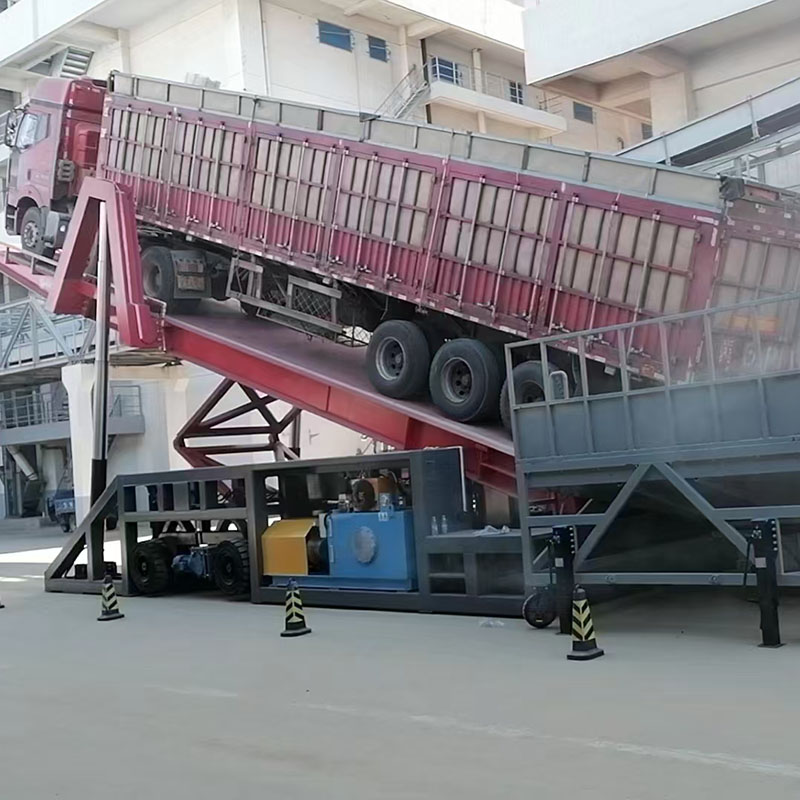
A shallow foundation truck dumper is a hydraulic bulk material unloading system engineered to tilt a fully loaded truck to a steep angle — typically between 45 and 60 degrees — so that cargo flows freely into a receiving hopper below, without requiring the truck itself to have a tipping mechanism. Unlike conventional rear dumpers that demand deep concrete pits and extensive civil construction, the shallow foundation design requires excavation only to the thickness of the platform itself, reducing civil construction costs by up to 70% compared to traditional systems. This fundamental structural advantage, combined with full automation and high-precision hydraulic synchronization, makes the shallow foundation truck dumper the preferred unloading solution for coal terminals, grain facilities, cement plants, chemical warehouses, and aggregate handling operations worldwide.
This article explains the operating principles of a hydraulic truck dumping system, details the engineering features that define performance and safety, presents comparative data against conventional systems, and provides procurement teams and facility engineers with a structured framework for evaluating heavy duty truck dumper solutions for their specific industry applications.
How a Shallow Foundation Truck Dumper Works: The Core Operating Principle
The operating cycle of a truck unloading system built on shallow foundation principles begins when the loaded vehicle drives onto the tipping platform under its own power. Once positioned, a full automatic retaining wheel fixing device secures the truck's wheels without requiring an operator to manually approach the vehicle — a critical safety advantage in dusty, high-throughput environments such as coal terminals or aggregate yards. The driver can then initiate the tipping sequence independently using a cab-accessible remote control, eliminating the need for a dedicated platform operator.
The platform is raised by a set of high-precision oil cylinder synchronous stability systems — the proprietary hydraulic architecture developed by Jiangsu Zhengding Intelligent Equipment Co., Ltd. These cylinders operate in strict synchronization, maintaining even load distribution across the tipping platform throughout the full arc of the tilt. This synchronization prevents lateral rocking, reduces vibration transmitted to the cylinder walls, and significantly extends cylinder service life compared to unsynchronized designs. The bulk material — whether coal, grain, cement clinker, chemical powder, or aggregate — flows by gravity into the receiving hopper below. Once the platform is returned to horizontal, the wheel restraint releases and the empty vehicle exits under its own power, completing one full cycle in as little as three to five minutes depending on material flow characteristics.
The unmanned control capability means that no professional operators are required to staff the dumper during routine operation. This directly reduces labor costs, eliminates human exposure to dusty or hazardous material environments, and enables continuous around-the-clock operation with minimal supervision — a decisive operational advantage in industries where throughput consistency is directly tied to revenue.
The eight-step operating cycle diagram above illustrates the complete sequence from truck arrival to platform reset. The automation of steps two through seven eliminates nearly all manual intervention, allowing the driver to remain in or near the cab throughout the process. The total cycle duration of three to five minutes per vehicle is significantly faster than alternative unloading methods such as manual shoveling or front-loader-assisted emptying, which can take twenty minutes or more per vehicle. For high-volume facilities processing hundreds of trucks per day — such as a coal truck dumper terminal or a grain intake station — the throughput difference translates directly into facility capacity and profitability. The circular nature of the process also minimizes truck queuing time, improving yard logistics efficiency across the entire intake operation.
Civil Engineering Cost Advantage: Why Shallow Foundation Changes the Economics
The most immediately compelling financial argument for the shallow foundation truck dumper lies in its dramatically reduced civil construction requirements. Conventional truck tippler installations require deep concrete pits — often two to four meters below grade — to accommodate the tilting mechanism, the receiving hopper, and the structural supports that absorb the enormous dynamic loads generated during tipping. These pits require extensive excavation, reinforced concrete formwork, waterproofing, drainage systems, and structural engineering review that can consume months of pre-installation lead time and represent a substantial fraction of total project cost.
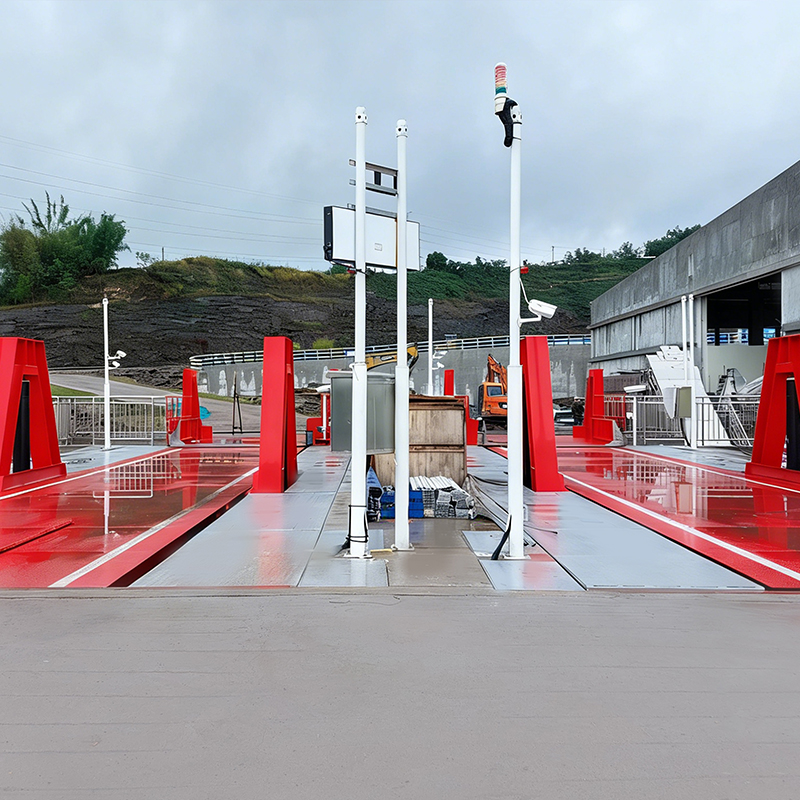
The shallow foundation design requires excavation only to the depth of the platform thickness — typically less than one meter. This single design decision reduces civil engineering costs by over 60% compared to conventional systems, with some site-specific comparisons showing savings of up to 70% on civil works alone. For a mid-scale installation serving a cement plant or chemical terminal, this represents a saving of hundreds of thousands of dollars before a single hydraulic component is purchased. The shallower foundation also means faster installation timelines, reduced disruption to existing yard operations during construction, and lower long-term maintenance requirements for the pit structure itself.
The paired horizontal bar chart above quantifies the civil engineering advantage across four critical dimensions: excavation depth, concrete volume required, overall civil cost index, and installation timeline. In every category, the shallow foundation system requires substantially fewer resources and less time than conventional deep pit installations. The excavation depth comparison is particularly striking — the shallow system requires approximately one meter versus three to four meters for conventional designs, which means less groundwater management risk, fewer soil stabilization requirements, and simpler backfill procedures after installation. Concrete volume is reduced to approximately 30% of the conventional baseline, reflecting not just the shallower pit but also the elimination of the deep lateral wall structures and reinforced floor slabs required to resist hydrostatic and soil pressure loads in deep excavations. Total civil cost index values consistently fall between 30 and 40% of conventional costs across documented project comparisons. Installation timelines of four to six weeks versus twelve to twenty weeks for conventional systems mean that a facility can be operational months earlier, capturing revenue from earlier throughput capacity. For any operator evaluating a truck unloading system for bulk materials, these civil engineering savings fundamentally change the return-on-investment calculation.
Hydraulic Engineering: Synchronization, Imported Components, and Extended Service Life
The hydraulic system at the heart of the hydraulic truck dumping system is not a commodity assembly — it is a precision-engineered mechanism where component quality and control architecture directly determine reliability, maintenance intervals, and total lifecycle cost. Jiangsu Zhengding Intelligent Equipment's proprietary high-precision oil cylinder synchronous stability system addresses one of the fundamental engineering challenges in heavy dumper design: maintaining perfectly synchronized extension across multiple cylinders while lifting a payload that may be unevenly distributed.
When a fully loaded heavy duty truck dumper begins its tilt cycle, the combined weight of the vehicle and its cargo — often exceeding 50 tonnes — creates asymmetric forces on the platform if the cylinders do not extend in perfect coordination. Even small deviations in synchronization introduce lateral stress into the platform structure, increase side-loading on cylinder rod seals, and generate the vibration and impact forces that cause premature cylinder failure in conventional systems. The proprietary synchronization system monitors and corrects cylinder extension in real time, maintaining force balance throughout the full tilt arc. The result is small vibration during operation, minimal impact load on the cylinders, and a measured extension of oil cylinder service life compared to unsynchronized alternatives.
All oil cylinders and hydraulic pumps used in the system are sourced from imported brands with established track records in industrial hydraulic applications. This procurement philosophy prioritizes long-term reliability over short-term unit cost, recognizing that a hydraulic dumper operating in a coal terminal or grain facility runs thousands of cycles per year and must maintain performance without unplanned downtime that disrupts the facility's entire intake chain.
The line chart above models the divergence in cylinder vibration index between a synchronized hydraulic dumping system and a conventional unsynchronized design over 20,000 operating cycles — roughly two to three years of intensive operation at a busy terminal. The synchronized system maintains a nearly flat vibration profile, with the index rising only marginally from approximately 3.0 at commissioning to 3.5 at 20,000 cycles, reflecting normal mechanical wear rather than systemic degradation. The conventional unsynchronized design shows a distinctly upward trajectory, climbing from the same baseline to approximately 5.8 by 10,000 cycles and reaching close to 7.0 at 20,000 cycles — a vibration level that correlates strongly with accelerated seal wear, increased hydraulic fluid contamination, and rising maintenance intervention frequency. This divergence quantifies why the synchronization architecture is a lifecycle investment rather than a premium feature: the avoided maintenance costs and extended component service life more than offset the engineering complexity of real-time synchronization control. For operators running a coal truck dumper or aggregate truck dumping system at high daily throughput, this reliability margin is operationally critical.
Industry Applications: Which Sectors Use Shallow Foundation Truck Dumpers
The bulk material unloading equipment category spans a wide range of industries, but not all require the same performance characteristics from a truck unloading system. The shallow foundation truck dumper has found particularly strong adoption in sectors where high daily truck throughput, abrasive or dusty cargo, and continuous operation combine to make manual unloading impractical and deep-pit conventional dumpers economically unjustifiable.
- Coal and Mining: The truck dumper for mining industry application demands extreme structural robustness. Coal terminals processing several hundred loaded trucks per day rely on the shallow foundation design to maintain throughput while managing the high abrasiveness and dustiness of coal cargo.
- Grain and Agriculture: Grain intake facilities require gentle tipping angles and low vibration to avoid damaging grain kernels during the unloading process. The synchronized hydraulic system's low-vibration operation is directly beneficial here.
- Cement and Building Materials: Powdered materials such as cement clinker and fly ash require enclosed receiving hoppers and dust suppression systems that integrate well with the shallow foundation platform design.
- Chemicals: The ability to realize unmanned operation is particularly valuable in chemical plants where minimizing human exposure to hazardous cargo is a safety and regulatory priority.
- Aggregate and Construction: The aggregate truck dumping system application benefits from the system's ability to handle irregular, heavy loads without platform damage.
- Food and Oil Processing: Companies such as Wilmar International, Cargill, and Louis Dreyfus have deployed Zhengding intelligent unloading systems in their supply chains, underscoring the system's acceptance in food-grade and edible oil logistics environments.
The radar chart illustrates the consistently high suitability of the shallow foundation truck dumper across all six major application sectors. Coal and mining score at the outer boundary of the chart, reflecting this sector's extremely high demand for durable, high-throughput unloading infrastructure where the system's heavy-duty construction and unmanned operation deliver maximum value. Grain and agriculture also score near the outer edge, driven by throughput requirements during harvest season when intake facilities must process continuous truck convoys over extended daily windows. Chemicals and food processing score strongly on the basis of the system's unmanned control capability and contamination avoidance. Steel and cement sectors, while lower in relative ranking simply because their specific logistical profiles may include alternative handling methods, still represent substantial application markets for the heavy duty truck dumper product family. The absence of any significantly low-scoring sector confirms that the shallow foundation truck dumper platform is genuinely versatile across bulk material handling industries rather than being optimized narrowly for a single application context.
Safety Architecture: Automatic Wheel Lock, Unmanned Control, and Structural Integrity
Safety in a truck tipper environment encompasses both the protection of the vehicle and its occupants during the tipping cycle and the protection of site personnel from the hazards of moving heavy machinery in dusty, high-noise environments. The shallow foundation truck dumper addresses both dimensions through a layered safety architecture that reduces human exposure while maintaining rigorous mechanical control throughout every phase of the cycle.
The full automatic retaining wheel fixing device is perhaps the most visible safety innovation in the system. Conventional dumper designs require a ground-level operator to manually place and remove wheel chocks or engage mechanical restraints before and after each tipping cycle — a task that exposes the operator to moving vehicle hazards, falling material, and the chronic respiratory effects of dust inhalation in environments such as coal truck dumper terminals. The automatic wheel lock engages and releases under electronic control, verified by position sensors before the hydraulic lift initiates. The system will not begin tipping if the wheel lock confirmation is not received, creating a hard interlock that prevents the most common catastrophic failure mode in conventional dumper operations: a vehicle rolling or sliding off the platform during the lift cycle.
The unmanned control architecture extends this safety logic to the full operating cycle. Because the driver can initiate and monitor the tipping sequence from within or directly adjacent to the cab, no worker is required to be in the danger zone adjacent to the tilting platform during operation. This design philosophy aligns with modern industrial safety standards that seek to remove personnel from proximity to high-energy machinery wherever automation allows, and it substantially reduces site incident risk in industries — such as coal handling — where regulatory scrutiny of worker safety is increasing globally.
| Safety Feature | Shallow Foundation System | Conventional Deep-Pit System |
|---|---|---|
| Wheel Restraint | Fully automatic, sensor-verified interlock | Manual chocks or semi-automatic |
| Operator Exposure | Driver self-service, no ground operator required | Dedicated operator in danger zone |
| Dust Exposure | Minimal — no personnel on platform | High — operator at tipping point |
| Cylinder Interlock | Real-time synchronization with hard stops | Limited or absent |
| Vibration Level | Low — synchronized lift | Moderate to high |
The safety comparison table above highlights the systematic advantages of the automated shallow foundation approach across five critical safety dimensions. The contrast in operator exposure is particularly significant: conventional systems require a dedicated ground operator whose work position is adjacent to the tilting platform — a location where falling material, vehicle instability, and dust concentration create compounding hazards. The shallow foundation system eliminates this exposure entirely by enabling driver self-service. The cylinder interlock row reflects the importance of the synchronization system not just as a reliability feature but as a safety mechanism: a cylinder that extends out of synchronization creates asymmetric platform tilt that can destabilize the vehicle. These safety advantages make the shallow foundation hydraulic truck dumper not only easier to justify on cost grounds but also more defensible under occupational health and safety regulations in jurisdictions with stringent workplace safety requirements.
Throughput Performance: Capacity Metrics and Operational Efficiency Data
For facility operators evaluating a truck unloading system for bulk materials, throughput capacity is the primary performance metric. A system that processes more trucks per hour with fewer operational interruptions directly translates into higher intake volumes, reduced truck queuing costs, and better asset utilization across the receiving yard. The shallow foundation truck dumper's combination of short cycle time, reliable automation, and continuous operating capability without operator fatigue effects produces throughput profiles that significantly exceed those achievable with manual or semi-automated alternatives.
The column chart presents a comparative daily throughput analysis across three unloading method categories under standard 20-hour operating conditions. The shallow foundation truck dumper achieves an estimated capacity of approximately 350 trucks per day when operating at a three-to-five minute cycle time, reflecting the combination of fast hydraulic actuation, minimal operator intervention, and zero mandatory rest periods inherent in automated operation. The conventional deep-pit dumper achieves approximately 250 trucks per day — a meaningful throughput reduction attributable to longer average cycle times caused by manual wheel restraint procedures and the physical limitations of having a dedicated operator manage each cycle. The manual or front-loader-assisted method caps at approximately 150 trucks per day, reflecting the significant time required per vehicle and the physical fatigue limitations of labor-intensive unloading. For operators in coal handling or grain processing where seasonal intake peaks may demand maximum throughput over short windows, the gap between the shallow foundation system and its alternatives is not academic — it represents real tonnes of material that either make it into storage on time or create costly logistical backlogs. The truck unloading system for bulk materials that delivers consistent high throughput without operational degradation over a long shift is a competitive advantage in time-sensitive logistics chains.
About Jiangsu Zhengding Intelligent Equipment Co., Ltd.
Jiangsu Zhengding Intelligent Equipment Co., Ltd. is a national high-tech enterprise primarily engaged in the research, development, and manufacturing of intelligent logistics equipment. The company provides systematic solutions for the automatic loading and unloading of cars and containers for customers across diverse industries, making it one of China's most comprehensive suppliers of automatic loading and unloading equipment for vehicles.
The product range includes rear dumpers, side dumpers, car loading equipment, and container flippers — a breadth of offering that positions Zhengding as a one-stop solutions provider for facilities requiring integrated unloading infrastructure. Products are widely deployed in the steel, chemical, cement, coal, grain, oil, and food industries, and are exported to Japan, Brazil, Egypt, Pakistan, India, the Middle East, and Southeast Asian countries. Annual sales volume and technical performance of automatic loading and unloading equipment for vehicles are recognized as being among the leading positions in China.
Typical international clients include Budweiser, Heineken, Buhler Group, Wilmar International, Cargill, DuPont, Louis Dreyfus, Charoen Pokphand Group, and Saint-Gobain Group — a roster of global industry leaders that reflects the company's ability to meet the demanding equipment reliability, documentation, and service requirements of multinational procurement processes. This track record of trusted partnerships with global enterprises is a meaningful indicator of the engineering and service quality behind every hydraulic truck dumping system that Zhengding delivers.
Frequently Asked Questions
Q1: What does "shallow foundation" mean for a truck dumper installation?
Shallow foundation means the pit depth required for installation equals only the thickness of the tipping platform — typically less than one meter. This contrasts with conventional systems requiring two to four meter deep pits, reducing civil engineering and excavation costs by up to 70% and shortening the installation timeline to four to six weeks.
Q2: Does the driver need to leave the cab during the tipping cycle?
No. The system is designed for unmanned, driver-operated control. The automatic wheel fixing device engages electronically, and the driver can initiate the tipping sequence independently. No dedicated platform operator is required, and no ground personnel need to approach the vehicle during the cycle.
Q3: What types of bulk materials can the shallow foundation truck dumper handle?
The system handles a wide range of bulk materials including coal, grain, cement clinker, aggregates, chemical powders, and food-grade materials. The platform and hopper configuration can be adapted to specific material properties such as flowability, abrasiveness, and contamination sensitivity.
Q4: What is the advantage of the synchronous oil cylinder system?
The high-precision synchronous stability system ensures all hydraulic cylinders extend in precise coordination during the tipping cycle, minimizing vibration, reducing side-loading on cylinder seals, and extending cylinder service life. It also functions as a safety interlock by preventing asymmetric platform tilt that could destabilize the vehicle.
Q5: What industries are the primary users of Zhengding truck dumping systems?
Primary industries include coal, steel, cement, grain, chemical, oil, and food processing. International clients include major global corporations such as Cargill, Buhler Group, Wilmar International, and Saint-Gobain Group, reflecting the system's adaptability across demanding industrial and food-grade applications.
Q6: Are the hydraulic components sourced from reliable suppliers?
Yes. All oil cylinders and hydraulic pumps are sourced from imported brands with proven industrial track records. This component sourcing policy is a deliberate investment in long-term system reliability, ensuring that the hydraulic truck dumping system maintains consistent performance across thousands of operating cycles with minimal unplanned maintenance.


