

 English
 русский
 Español
 Français
 Português
 عربى




+86-13588556918
Content
- 1 What Materials Handling Means in Bulk and Container Operations
- 2 Core Materials Handling Equipment Types and Where They Fit
- 3 How to Choose a Materials Handling System: Site, Material, and Throughput
- 4 Materials Handling Performance Comparison
- 5 Safety, Maintenance, and Operating Discipline in Materials Handling
- 6 Working with a Materials Handling Manufacturer or Supplier
- 7 FAQ: Materials Handling Systems and Equipment
A grain terminal schedules twenty-eight trucks between 6 a.m. and 2 p.m. If each truck waits thirty-five minutes because unloading depends on a front-end loader, manual tarp removal, and a single shared discharge point, the bottleneck is not the truck fleet. The bottleneck is the materials handling interface between road transport and the receiving conveyor. The same pattern appears in fertilizer, cement, coal, and edible oil plants: delays at the unloading bay ripple into storage, batching, and outbound loading. The practical conclusion is simple: materials handling performance should be designed around the material, the vehicle, the site, and the downstream process, not around a single machine specification.
For bulk and container operations, that means choosing between fixed and mobile truck dumpers, side-turn or rear-turn discharge, container flipping equipment, and loading systems that match real cycle times. A manufacturer with a broad equipment range can often reduce the number of transfers, but only when the selected configuration fits the actual dock, pit, dust, and weighing requirements.
The most important decision in materials handling is not the fastest single machine; it is the unloading and transfer configuration that keeps every upstream and downstream step balanced.
What Materials Handling Means in Bulk and Container Operations
Materials handling covers the short-distance movement, protection, storage, and control of materials inside a plant, terminal, warehouse, or transfer yard. It includes movement between a building and a vehicle, between vehicles and storage, and between process steps. In bulk operations, the most visible materials handling equipment is often the truck dumper, but the system also includes conveyors, hoppers, dust collection, weighing, and container handling equipment.
Four practical ideas shape most successful materials handling projects:
- Unit load: whether the material arrives as a bulk heap, a pallet, a container, or a loose load determines the unloading method.
- In-process handling: moving material from receiving to storage and then to production usually costs more than the initial unloading step.
- Distribution: outbound loading, container filling, and vehicle turnaround influence whether receiving equipment creates or removes congestion.
- Safety and control: dust, fall risk, hydraulic synchronization, and operator visibility affect uptime as much as nominal capacity.
For industries such as steel, chemical, cement, coal, grain, oilseed, and food processing, materials handling equipment must tolerate abrasive, dusty, fragile, or high-volume loads. A system that works well for coal may damage fruit or grain if the discharge height and buffer design are wrong. That is why experienced buyers compare the full handling path, not only the dumper model.
Materials handling is a system discipline: the receiving method, storage flow, dust control, and outbound loading must be designed as one connected operation.
Core Materials Handling Equipment Types and Where They Fit
Bulk receiving equipment falls into several families. The right choice depends on vehicle type, available pit depth, dust level, required automation, and whether the plant needs weighing at the unloading point. For a project supplier or manufacturer, the equipment list should be matched to the site rather than sold as a standalone machine.
Truck Dumpers for Rear-Turn and Side-Turn Unloading
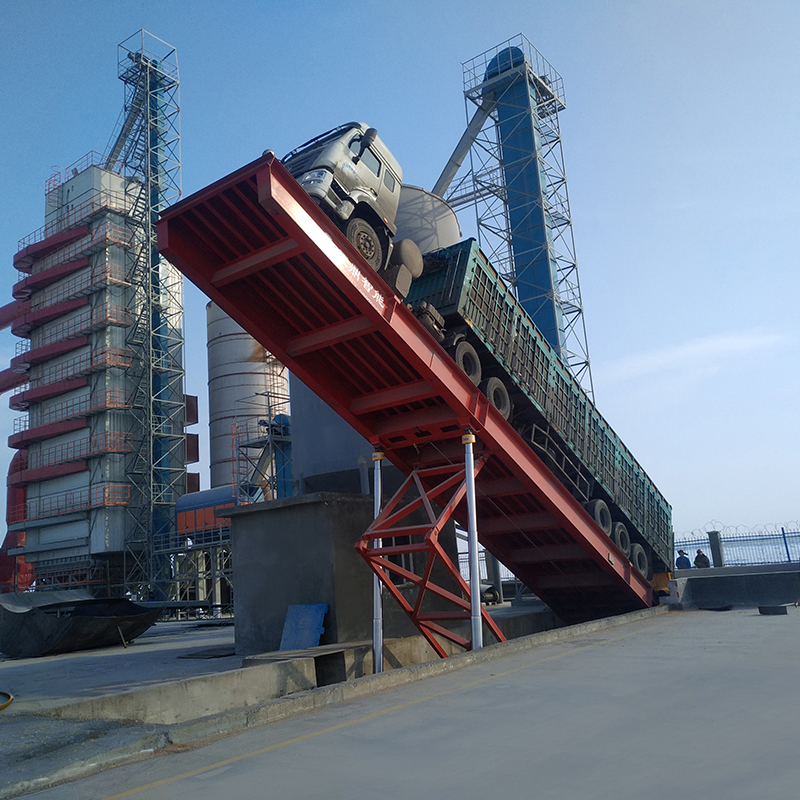
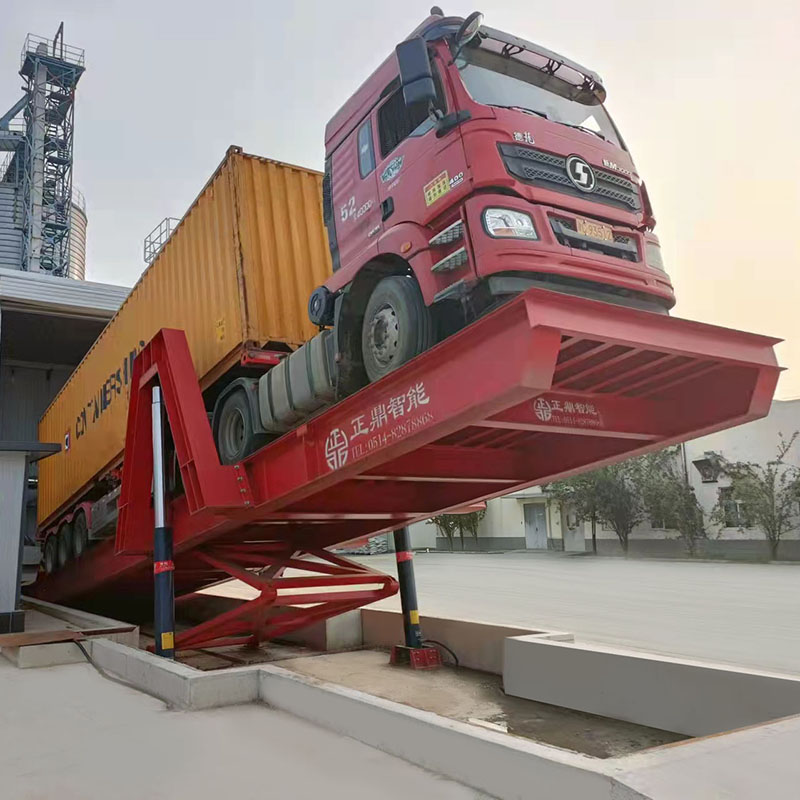
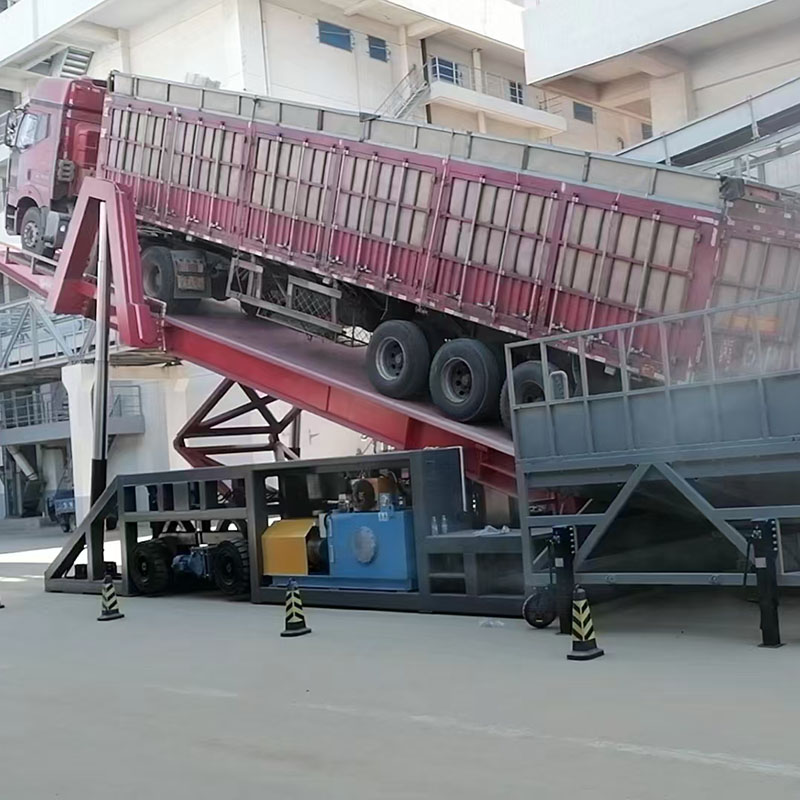
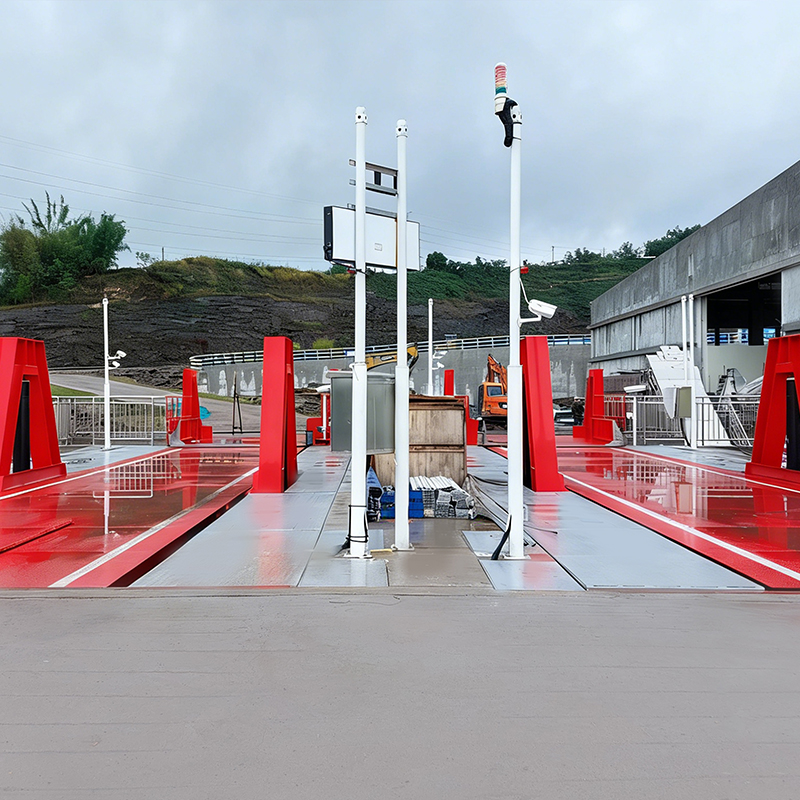
A truck dumper raises or tilts a full road vehicle so bulk material discharges by gravity. Rear-turn dumpers are common for trailers and containers that discharge from the rear. Side-turn truck dumpers can suit specific trailer designs and tight layouts. Models range from basic fixed units to shallow-foundation, pitless, mobile, enclosed dust-control, and unattended designs with integrated weighing.
For plants with limited civil work, a pitless or shallow-foundation truck dumper can reduce construction cost and permit faster installation. For dusty materials, an enclosed truck dumper with a dust-control system protects the working area and helps meet environmental requirements. For high-frequency receiving, an unattended truck dumper with integrated weighing combines discharge and measurement in one cycle.
Side-Turn Truck Dumpers and Automatic Variants
Side-turn truck dumpers are useful when the trailer structure or unloading direction favors lateral discharge. Automatic side-turn truck dumpers add positioning, clamping, and cycle control to reduce operator involvement. They can improve repeatability when the same trailer type arrives many times per shift, but they require disciplined vehicle alignment and maintenance.
Container Loading and Unloading Equipment
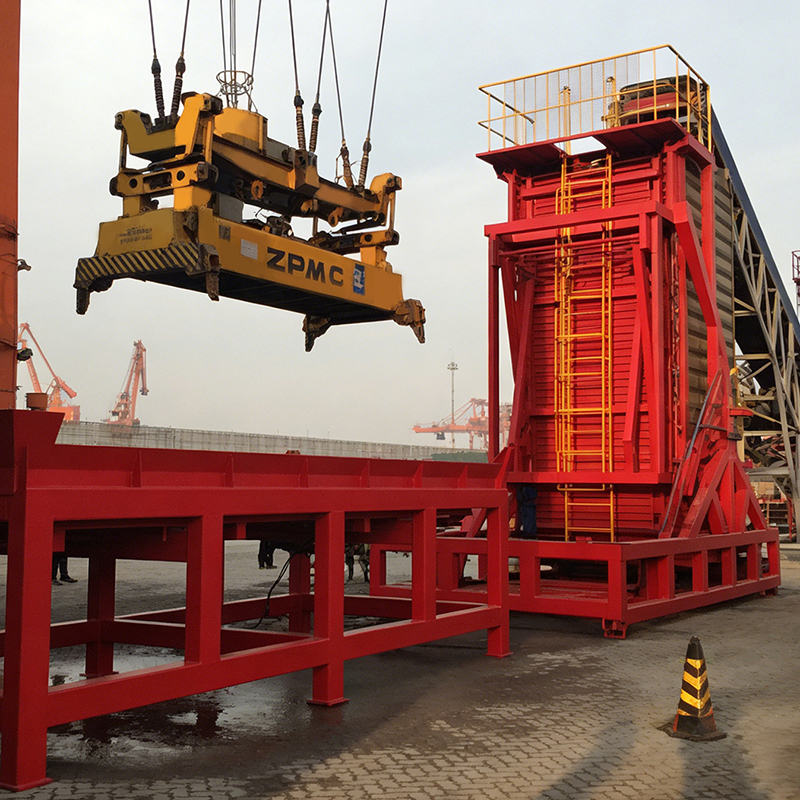
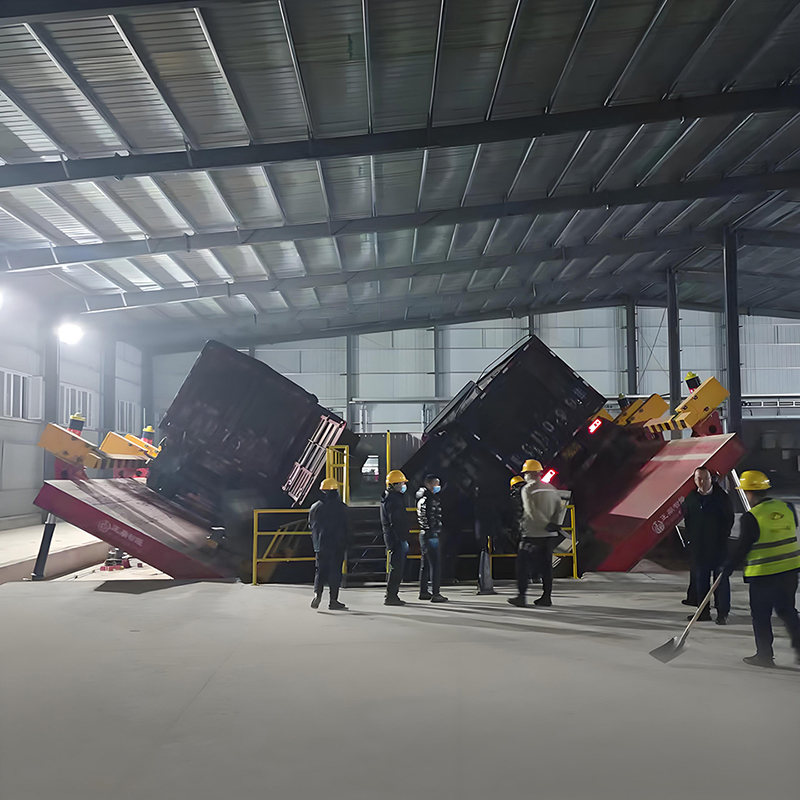
Container operations need more than a forklift. A container flipping machine can rotate a container for efficient discharge or loading, while container loaders and continuous container handling systems support higher-volume flows. Gantry container tilters serve yards and terminals where containers must be positioned, tilted, and released safely.
The main selection question is whether the container is a transport unit, a processing vessel, or both. If the material must be discharged into a pit or conveyor, a tilter or flipping machine may be the correct interface. If the container is loaded at a warehouse, a container loader may offer better control of load distribution and worker safety.
Oat Processing Equipment as Specialized Materials Handling
Some materials handling challenges are processing challenges. Oat dehullers, drum groats cutters, and kiln granotherm units handle grain through mechanical and thermal steps. They show that materials handling can extend beyond truck and container transfer into product preparation, where gentle movement and controlled residence time matter.
Choose the equipment family first, then the model: rear-turn, side-turn, container, or processing equipment should follow the material and vehicle reality, not a generic preference.
How to Choose a Materials Handling System: Site, Material, and Throughput
Selection starts with a site survey and a material profile. The survey should record available pit depth, approach road slope, turning radius, discharge height, power supply, dust sensitivity, and the number of vehicle types expected over the next five years. The material profile should include bulk density, particle size, abrasiveness, moisture, temperature, and whether the product is fragile. Throughput should be expressed in trucks per hour, tonnes per hour, or containers per shift, not only in equipment capacity.
| Configuration | Best fit | Key constraint |
|---|---|---|
| Fixed rear-turn truck dumper | High-volume bulk receiving with a dedicated pit and conveyor | Requires civil work, space, and consistent vehicle access |
| Side-turn truck dumper | Trailers or layouts that favor lateral discharge | Vehicle compatibility and side clearance must be confirmed |
| Shallow-foundation truck dumper | Sites with limited excavation depth or expensive soil conditions | Discharge geometry and conveyor angle need careful design |
| Pitless truck dumper | Retrofit projects and locations where pit construction is impractical | Ramp length and above-ground structure may consume yard space |
| Mobile truck dumper | Temporary yards, multiple receiving points, or changing project sites | Mobility adds setup checks and road surface requirements |
| Enclosed dumper with dust control | Powder, grain dust, or materials with strict housekeeping limits | Air volume, filtration, and maintenance access must be sized correctly |
| Unattended dumper with weighing | High-frequency receiving with traceability and low labor cost | Controls, sensors, and calibration require reliable service support |
After the configuration is shortlisted, check the transfer points. A dumper may discharge well, but if the hopper, feeder, or conveyor cannot accept the peak flow, material will back up and the truck cycle will slow. Dust control should be considered early because retrofitting an enclosure around an existing dumper is usually more expensive than specifying it from the beginning. Weighing should also be planned early if the site needs incoming material reconciliation.
For fragile products, a buffer hopper can reduce impact. In one food application, an orange unloading system used a buffer chamber so fruit entered the conveyor with less drop damage. The same principle applies to grains, oilseeds, and other products where cracking or bruising reduces value. The equipment supplier should understand the difference between moving a tonne of coal and moving a tonne of fresh produce.
The best materials handling configuration is the one that matches the site, material, and peak flow together; a mismatch in any one of those areas will appear as a daily operational penalty.
Materials Handling Performance Comparison
To compare options, model the receiving lane rather than the machine alone. A small terminal may handle about twelve trucks per shift with front-end loaders and manual coordination. A fixed dumper can lift practical throughput to roughly fifty or sixty trucks per shift when the discharge and return lanes stay clear. Adding weighing and unattended controls can push the practical number higher, provided the upstream conveyor and storage system keep pace. The chart below uses illustrative daily truck counts, not universal guarantees, because cycle time also depends on driver behavior, material flowability, and maintenance condition. Use it as a planning comparison, then replace the values with your own gate, weighbridge, and conveyor data.
The first bar shows manual unloading with a loader and shared discharge area. In this case, the truck driver waits for equipment, the loader waits for clear space, and dust control depends on operator behavior. The second bar shows a mobile loader or forklift arrangement. It offers flexibility and lower initial civil work, but it usually has a lower practical ceiling because each load involves multiple movements. The third bar shows a fixed truck dumper. Throughput rises because the vehicle is positioned, lifted, and discharged in a controlled cycle, while the receiving conveyor runs continuously. The fourth bar adds unattended controls and integrated weighing. The gain comes from shorter idle time, fewer manual decisions, and automatic data capture at the discharge point.
These differences matter most when receiving hours are fixed. If a plant receives grain only between 7 a.m. and 3 p.m., a lower-throughput method can create a queue that extends beyond the working window. A higher-throughput dumper can absorb arrival peaks, but it also requires reliable maintenance and a conveyor sized for peak flow. If the conveyor jams, the dumper becomes a parking space rather than a production asset. The chart also shows why weighing integration should be evaluated as a throughput feature, not only as a reporting feature. When weighing is integrated into the unloading cycle, the truck does not need a separate weighbridge stop after discharge. That single change can remove several minutes per vehicle and reduce traffic at the gate. For container operations, the same logic applies to container flipping and loading equipment: cycle time is governed by positioning, clamping, tilting, and release, not by the nominal lifting capacity alone. A plant that compares only purchase price may choose a slower configuration and then pay for it through overtime, demurrage, or extra vehicle waiting. A better comparison includes labor, fuel, dust cleanup, maintenance, and lost receiving hours. The illustrative numbers should be replaced with observed cycle times from a trial or a reference site. Even a difference of ten trucks per day can change staffing needs and storage planning. The important conclusion is that materials handling throughput is a lane design issue, not just a machine specification issue.
Throughput gains come from removing waiting, repositioning, and separate weighing stops across the whole receiving lane, not from increasing one machine's rated capacity.
Safety, Maintenance, and Operating Discipline in Materials Handling
Bulk unloading involves heavy vehicles, raised loads, hydraulic pressure, dust, and pedestrian traffic. Safety should be designed into the equipment layout. The approach lane needs clear signage, controlled access, and enough space for a driver to align without reverse blind spots. The dumper platform should prevent falls during maintenance and inspection. Dust control should reduce exposure at the discharge point and around conveyors.
Maintenance planning should begin before installation. Daily checks typically cover hydraulic oil level, hose condition, clamping devices, limit switches, and emergency stops. Weekly checks may include structural bolts, platform wear, conveyor belt tracking, and dust collector pressure. Monthly or annual service should verify synchronization, calibration, and control logic. A machine that is difficult to inspect will eventually be inspected less often.
- Keep a spare-parts list for hydraulic seals, hoses, sensors, and limit switches.
- Record cycle time and downtime so maintenance can be planned around receiving peaks.
- Train operators on alignment limits, load distribution, and emergency procedures.
- Clean dust accumulation from platforms, rails, and control cabinets.
- Check weighing calibration after structural work or sensor replacement.
For teams that need practical troubleshooting guidance, the site's maintenance guidance for container loading and unloading equipment is a useful starting point. It reflects the same principle: most unplanned downtime comes from small mechanical or control issues that were visible before failure.
Safety and uptime are linked: a materials handling system that is easy to inspect, clean, and isolate will also be more reliable during peak receiving periods.
Working with a Materials Handling Manufacturer or Supplier
When comparing a manufacturer, project supplier, or equipment wholesaler, look beyond the product list. Ask who designs the interface between the dumper, hopper, conveyor, dust system, and weighing controls. Ask whether the supplier can provide references in your material category and whether spare parts are available after commissioning. A true manufacturer usually controls critical fabrication and assembly, while a trading wholesaler may only resell another factory's equipment.
This site's company background describes a Jiangsu-based manufacturer of intelligent logistics equipment, including truck dumpers, side-turn truck dumpers, container loading and unloading equipment, and oat processing equipment. Its stated export markets include Japan, Brazil, Egypt, Pakistan, India, the Middle East, and Southeast Asia, with users reported in brewing, grain, oilseed, chemical, food, and building materials industries. Those categories align closely with the bulk and container materials handling needs described above.
For sites that must relocate receiving equipment, a mobile truck dumper can be a practical bridge between permanent infrastructure and temporary operations. For permanent high-volume terminals, fixed or unattended configurations usually offer better cycle discipline. The right choice depends on expected service life, road quality, and whether the site will remain in one location.
A capable supplier should be able to explain the full materials handling path, not just quote a machine; interface design is where most project risk is either removed or hidden.
FAQ: Materials Handling Systems and Equipment
What is materials handling in a bulk plant?
Materials handling is the movement, storage, protection, and control of materials through receiving, transfer, production, and dispatch. In a bulk plant, it includes truck unloading, conveyor transport, silo or stockpile storage, dust control, weighing, and container or vehicle loading.
Which materials handling equipment is best for bulk grain?
For bulk grain, a truck dumper with a controlled discharge hopper and dust management is often the best fit. If the site cannot excavate a deep pit, a shallow-foundation or pitless truck dumper may be preferable. If receiving volume is high, an unattended dumper with integrated weighing can reduce cycle time and improve traceability.
How do truck dumpers improve materials handling?
Truck dumpers replace multiple loader movements with one controlled tilt cycle. They reduce vehicle waiting, lower labor demand, improve dust containment when enclosed, and can combine unloading with weighing. The gain is greatest when the receiving lane, hopper, and conveyor are sized for the same peak flow.
Can container handling equipment work with bulk materials?
Yes. Container flipping machines, gantry tilters, and container loaders are used when bulk or unitized materials must be discharged from or loaded into containers. The key is to confirm the container type, load weight, discharge angle, and whether the material needs a buffer to prevent impact damage.
What should I check before buying a materials handling system?
Check vehicle types, material properties, peak throughput, pit depth, dust requirements, weighing needs, maintenance access, and spare-parts support. Compare total receiving cycle time rather than only equipment price. A manufacturer or supplier should provide layout drawings, control logic, and a commissioning plan.
Use the FAQ as a pre-purchase checklist: if the answers do not cover vehicle, material, site, and downstream flow, the project is not ready for equipment selection.
Materials handling projects succeed when the receiving method, storage flow, safety controls, and dispatch process are treated as one system. A truck dumper, side-turn dumper, container flipping machine, or mobile unloading unit is only one part of that system. The most reliable results come from measuring real cycles, matching equipment to the material and site, and selecting a manufacturer or supplier that can support the full handling path after commissioning.
Plan materials handling from the receiving lane backward and from the storage process forward; the equipment choice becomes clearer once both ends of the flow are defined.


