

 English
 русский
 Español
 Français
 Português
 عربى
عربى



+86-13588556918
Content
- 1 What Is a Truck Dumper? A Clear Definition
- 2 Core Working Principle of a Hydraulic Dumper
- 3 Types of Truck Dumpers and Their Applications
- 4 Industry Applications: Where Truck Dumpers Deliver Maximum Value
- 5 Safe Truck Dumper Design: Engineering Controls That Matter
- 6 Truck Dumper Maintenance Tips for Maximum Uptime
- 7 Truck Dumper Efficiency Solutions: Automation and Integration
- 8 Selecting the Right Heavy-Duty Truck Dumper: Specification Guide
- 9 About Jiangsu Zhengding Intelligent Equipment Co., Ltd.
- 10 Frequently Asked Questions
What Is a Truck Dumper? A Clear Definition
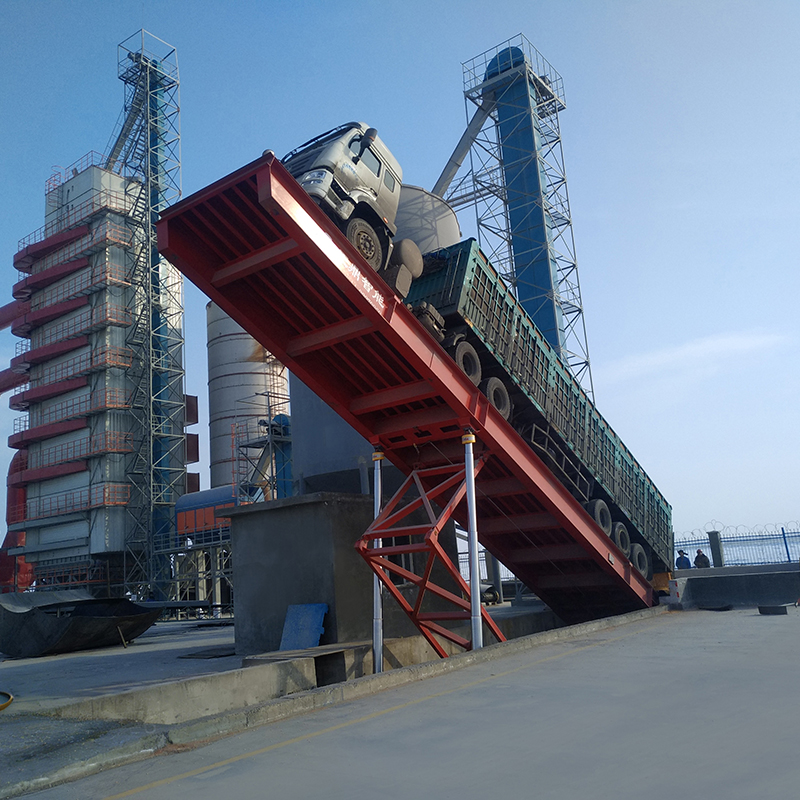
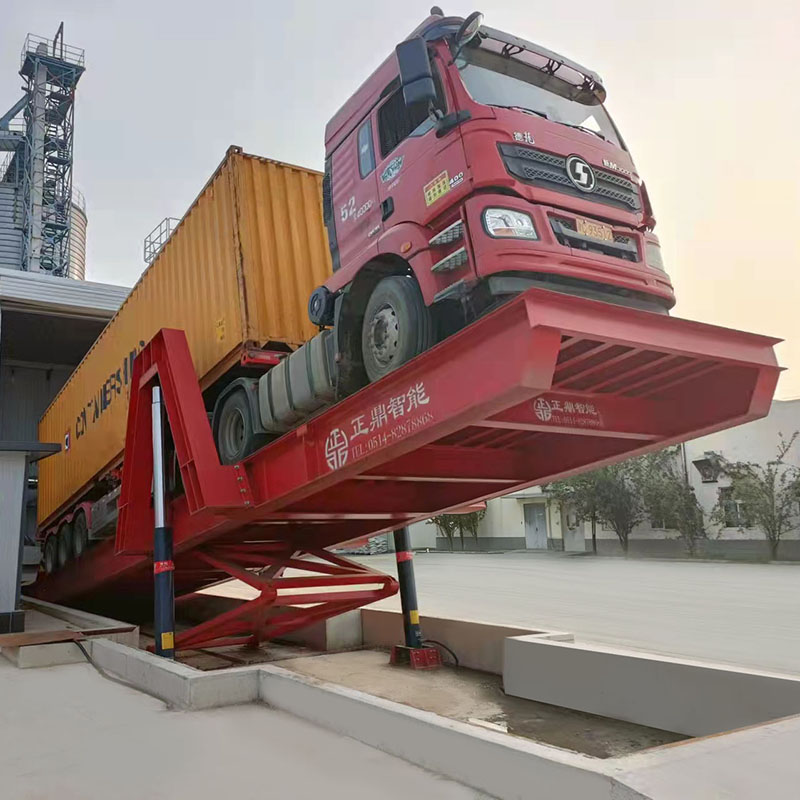
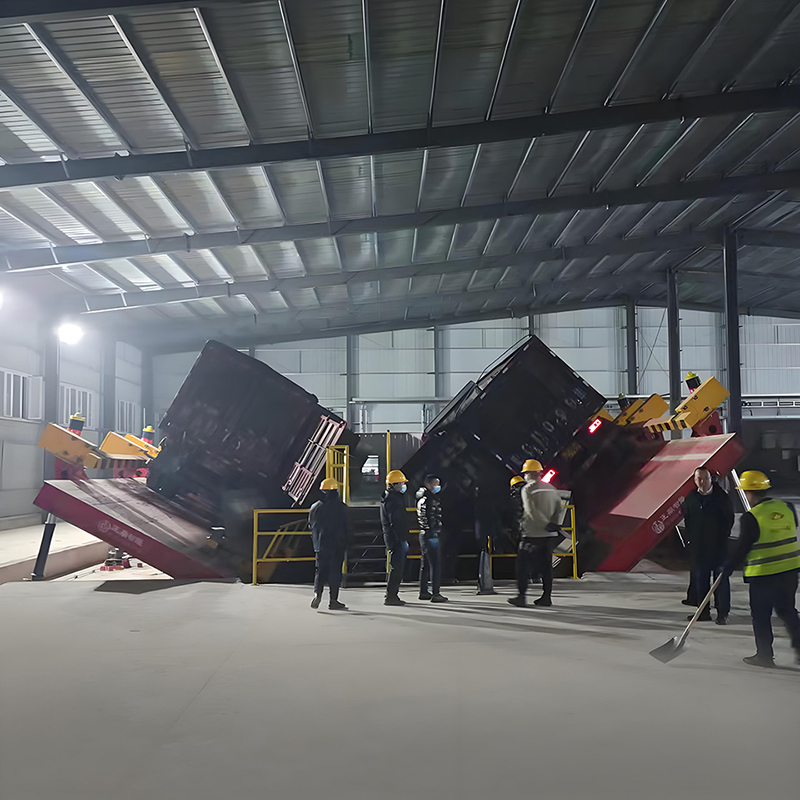
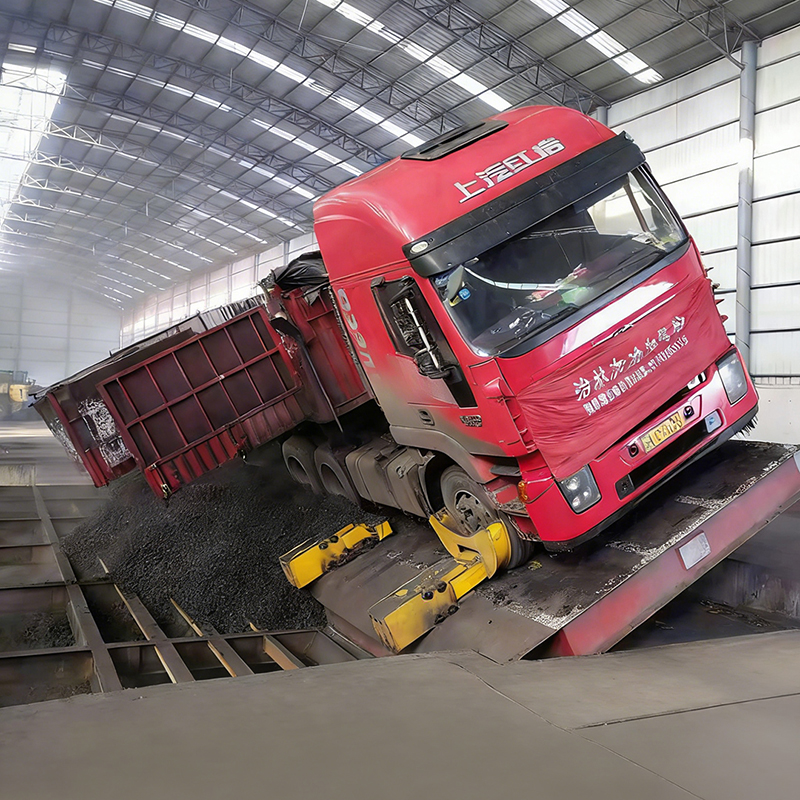
A truck dumper — also referred to as a hydraulic dumper, industrial dumper, or trailer dumper — is a heavy-duty mechanical platform system engineered to tilt an entire loaded truck or trailer to discharge bulk materials rapidly and with minimal manual labor. Unlike conventional tipping solutions, modern truck dumpers operate through precision-controlled hydraulic actuators or mechanical synchronization systems that can safely elevate vehicles weighing anywhere from 20 to over 80 metric tons to angles of 40° to 55°. The result is a fast, repeatable, and operator-friendly unloading process that serves as the backbone of high-throughput industrial logistics.
The core advantage of a bulk material dumper over manual or crane-assisted unloading is speed and consistency. In grain terminals, cement plants, coal yards, and steel mills, a single automated truck dumper system can process dozens of vehicles per shift, dramatically reducing labor dependency and unloading cycle time. Facilities that have adopted heavy-duty truck dumper technology consistently report unloading efficiency improvements of 60% to 80% compared to shovel-and-bucket methods.
Understanding how these machines work — their mechanical principles, hydraulic circuits, safety interlocks, and maintenance demands — is essential for procurement engineers, plant managers, and logistics directors who want to maximize throughput while protecting personnel and equipment. This article provides a thorough, data-driven examination of truck dumper technology from first principles to advanced operational best practices.
Core Working Principle of a Hydraulic Dumper
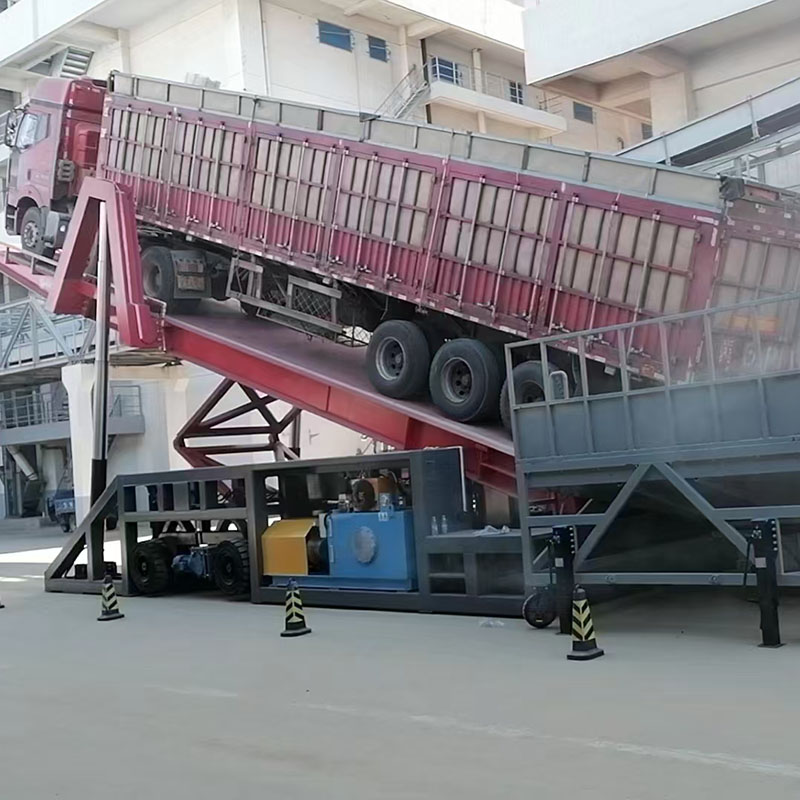
At its simplest, a hydraulic dumper converts pressurized fluid energy into linear mechanical force that tilts a loaded platform. A hydraulic power unit — typically consisting of an electric motor driving a gear pump — pressurizes oil to between 160 and 250 bar. This pressurized oil is directed through directional control valves into one or more double-acting cylinders mounted beneath the tipping platform. As the cylinders extend, the platform rotates about a rear pivot, gradually increasing the tilt angle until gravity pulls the bulk cargo into the receiving hopper below.
The critical engineering challenge in any industrial dumper is synchronization. When two cylinders operate in parallel — as is common on wide platforms — any difference in extension speed creates lateral twisting forces that can damage the frame, misalign the pivot bearings, or cause sudden instability. Traditional systems attempt synchronization by metering oil flow via proportional valves, a method that is sensitive to oil temperature, viscosity variations, and valve wear. Jiangsu Zhengding Intelligent Equipment developed a mechanical rigid synchronization mechanism that physically constrains both cylinders to move at identical rates regardless of load distribution, eliminating the failure modes inherent in flow-metering approaches and extending cylinder service life significantly.
Equally important is the descent phase. A hydraulic holding valve — sometimes called a counterbalance valve — is installed directly at the cylinder port. This valve traps oil in the cylinder during any sudden pressure loss such as a hose rupture, preventing uncontrolled platform drop. The controlled lowering cycle is governed by the directional valve, which meters the return oil flow rate to ensure a smooth, predictable descent that protects both the vehicle and the structural foundation.
Unloading Speed Comparison: Methods vs. Efficiency
This 3D-style bar chart compares the relative unloading efficiency of five common bulk material handling methods on a normalized 100-point scale. Manual shoveling achieves only 10% efficiency, constrained by labor intensity and physical limits. Crane-assisted methods improve to roughly 35% due to mechanical advantage but remain bottlenecked by positioning time. Tipping trailers reach 65% efficiency — adequate for small operations but insufficient for high-throughput industrial facilities. A stationary truck dumper achieves the maximum benchmark of 100%, combining fast cycle times, automation-readiness, and consistent material discharge angles. A portable truck dumper lands at 80%, offering flexibility at a modest efficiency trade-off. These figures illustrate why capital investment in dedicated dumper infrastructure consistently delivers strong ROI in bulk-handling industries.
Types of Truck Dumpers and Their Applications
The category of truck dumpers is broader than many engineers initially appreciate. Selecting the wrong type for an application leads to structural overload, suboptimal discharge angles, or safety hazards. The primary classification axes are tipping direction (rear vs. side), foundation type (pit-mounted vs. surface-mounted), degree of automation, and load capacity. Below is a structured overview of the most commercially significant variants.
Rear Truck Dumpers
The rear-tipping configuration is the most prevalent globally. The vehicle drives forward onto the platform, the tailgate is aligned with the discharge hopper, and the platform tilts rearward. This layout is ideal for granular materials — grain, coal, crushed stone — because the load slides cleanly under gravity with minimal residue. Rear hydraulic dumpers are typically installed over in-ground hoppers and can process vehicles in 4 to 8 minutes per cycle depending on material characteristics and tilt angle.
Side-Turn Truck Dumpers
Side-turn or lateral industrial dumpers rotate the loaded platform 90° to one side, discharging cargo through the truck's side panel into an adjacent hopper. This configuration is favored in facilities with limited approach length, such as indoor warehouses or congested port terminals, because the vehicle does not need a long straight run-up. Side-turn designs are particularly effective for cylindrical or bag-packaged goods that cannot be safely rear-discharged without spillage. The mechanical complexity of the rotation mechanism demands premium-grade bearings and seals, but the operational footprint advantage frequently justifies the cost.
Portable and Surface-Mounted Truck Dumpers
A portable truck dumper is a self-contained unit that requires no in-ground civil works, making it suitable for temporary sites, rental fleets, or operations that need to be relocated periodically. Surface-mounted designs anchor to a prepared concrete pad rather than a below-grade pit. While portable dumpers typically handle lighter payloads (up to 30–40 tons), advances in high-strength steel fabrication are pushing capacity limits upward. For truck dumper for mining applications where seasonal extraction sites change annually, portable configurations offer compelling economics.
| Type | Tilt Direction | Max Capacity (t) | Cycle Time (min) | Best Industry Fit |
|---|---|---|---|---|
| Rear Dumper | Rearward | 80+ | 4–8 | Grain, Coal, Cement |
| Side-Turn Dumper | Lateral 90° | 60 | 5–10 | Food, Chemical, Port |
| Portable Dumper | Rearward | 40 | 6–12 | Mining, Temporary Sites |
| Automated Dumper | Rear/Side | 80+ | 3–6 | Steel, Oil, Large Terminals |
Industry Applications: Where Truck Dumpers Deliver Maximum Value
Bulk material dumper systems are deployed across a remarkably diverse range of industries, and the operational requirements — discharge angle, corrosion resistance, explosion-proof electrics, food-grade surface coatings — vary substantially between sectors. Understanding which design features matter in each context helps buyers write accurate specifications and avoid costly mismatches.
Truck Dumper Adoption Rate by Industry Sector (%)
This horizontal bar chart shows the estimated penetration rate of truck dumper technology across six major bulk-handling sectors, based on industry survey data. Grain and agriculture leads at 92%, driven by the high volume-per-delivery economics of harvested commodity markets and the physical challenges of manually unloading 30-ton grain trailers. Coal and mining follow at 88%, where shift-based production targets make cycle-time variability economically unacceptable. Steel and metal manufacturing adopts dumpers in roughly 79% of facilities that handle raw material inputs such as ore concentrate and coke. The chemical sector at 72% increasingly specifies safe truck dumper design features like explosion-proof electrics and stainless-steel contact surfaces. Cement maintains 68% adoption due to the abrasive nature of the material and the need for enclosed hopper systems to control dust emissions. Food and oil sectors at 55% represent growth markets as hygiene standards drive operators toward enclosed, automated bulk material dumper systems.
- Steel mills use heavy-duty truck dumper platforms rated to 80+ tons to unload iron ore and coke continuously across three-shift production cycles.
- Grain terminals deploy automated truck dumper systems linked to weighbridge data and moisture analyzers for fully integrated quality control workflows.
- Chemical plants require IP65-rated or ATEX-certified control panels on their industrial dumpers to safely operate near solvent and powder environments.
- Truck dumper for mining deployments at quarry sites often prioritize rapid repositioning, making mobile or semi-portable designs the preferred choice.
- Food-grade oil and oilseed processors specify stainless-steel hydraulic fittings and NSF-compliant hydraulic fluid in their trailer dumper specifications.
Safe Truck Dumper Design: Engineering Controls That Matter
Safe truck dumper design is not a checklist item; it is an integrated engineering discipline. Each component of the safety architecture — mechanical, hydraulic, electronic, and procedural — must function correctly in isolation and in combination. Facilities with comprehensive safety programs experience 85–95% fewer incidents compared to those relying on operator vigilance alone. The following engineering controls should be considered non-negotiable in any modern hydraulic dumper specification.
Safety Performance Radar: Basic vs. Advanced Dumper Design
This radar chart compares the safety performance of a basic-specification truck dumper (grey) against an advanced-design unit (red) across six critical safety dimensions. The most dramatic gaps appear in hydraulic safety systems and structural integrity, where basic designs rely on standard components while advanced units incorporate redundant holding valves, higher-grade steel, and fatigue-life calculations. Restraint systems show a similarly large gap — basic designs often rely on manual wheel chocks, while advanced units deploy automatic interlocked clamps that cannot be bypassed. The interlock controls dimension reflects whether the PLC logic prevents operation in unsafe conditions. An advanced safe truck dumper design that scores highly across all six dimensions reduces incident rates by over 90% compared to minimal-compliance equipment. This visualization underscores why safety should be treated as a design philosophy rather than an afterthought in industrial dumper procurement.
Vehicle Restraint Systems
A positive mechanical restraint that prevents the vehicle from rolling forward off the tipping platform is the single most important safety feature on any trailer dumper. Wheel chocks alone — even large rubber ones — can be displaced on wet or contaminated surfaces. Interlocked wheel clamps or front bumper stops that physically block forward movement and are electrically connected to the tilt interlock circuit provide a far higher level of protection. The PLC should be programmed to refuse any tilt command unless the restraint engaged sensor signals confirmation.
Hydraulic Counterbalance Valves
A hydraulic counterbalance (holding) valve installed directly at the cylinder cap port ensures that even if all hoses in the circuit rupture simultaneously, the cylinder cannot retract and the platform cannot descend uncontrolled. This is distinct from a directional control valve, which only prevents flow when powered. The counterbalance valve is a passive device that requires no electrical power to function. Specifying imported-brand valves with proven MTTF (mean time to failure) ratings above 10 million cycles is a worthwhile investment over the lifetime of the equipment.
Truck Dumper Maintenance Tips for Maximum Uptime
Unplanned downtime on a truck dumper in a high-throughput terminal is disproportionately expensive. A dumper serving 50 vehicles per shift that goes offline for 4 hours represents 25 or more vehicles backed up, potentially blocking road access and incurring demurrage costs. Applying structured truck dumper maintenance tips — preventive, predictive, and corrective — is the most reliable way to protect operational continuity. The following framework is based on common OEM recommendations and field experience across heavy industrial environments.
Annual Maintenance Cost Trend: Preventive vs. Reactive Programs
This line chart compares the 5-year annual maintenance cost trajectory for reactive maintenance (grey dashed) versus a structured preventive maintenance program (red solid) on a comparable industrial dumper installation. In Year 1, reactive maintenance costs approximately $28,000 annually while preventive maintenance runs around $18,000 — a meaningful but modest difference. However, the reactive approach escalates unpredictably as cumulative wear manifests in simultaneous component failures, reaching $38,000 by Year 5. The preventive approach actually decreases over time as operators become familiar with the system and optimized inspection intervals reduce unnecessary part replacements, landing at approximately $10,000 annually by Year 5. Over five years, the total cost differential exceeds $60,000 for a single machine, providing a strong financial justification for investing in structured truck dumper maintenance tips and formal service schedules from day one of operation.
Daily Operator Inspections
Before the first cycle of each shift, the operator should visually inspect hydraulic hoses for cracks, abrasion, or seeping oil; check the oil reservoir level and verify it falls within the sight gauge operating band; confirm all limit switches are present and undamaged; verify the emergency stop buttons at all locations are functional by testing each one; and listen during the first tilt cycle for any abnormal noise from cylinders or pivots. These checks take under five minutes but catch the majority of developing faults before they become costly failures.
Scheduled Preventive Maintenance Intervals
- Every 500 operating hours: Replace hydraulic oil filter elements; check cylinder rod chrome surface for pitting or scoring; inspect pivot pin bushings for wear.
- Every 2,000 hours: Full hydraulic oil analysis and replacement if contamination exceeds ISO 4406 cleanliness code 18/16/13; inspect all structural welds at high-stress zones; calibrate tilt angle sensors.
- Annually: Pressure-test counterbalance valves to rated holding capacity; load-test platform to 110% of rated capacity; inspect foundation anchor bolts for corrosion and correct torque.
- Every 5–7 years: Replace all hydraulic hose assemblies regardless of visual condition; consider a structural fatigue assessment by a qualified engineer for platforms exceeding 50,000 cycles.
Truck Dumper Efficiency Solutions: Automation and Integration
The most impactful truck dumper efficiency solutions available today stem not from mechanical improvements alone — hydraulic technology for this application is already mature — but from digital integration between the dumper, the facility's weighbridge, conveyor management system, and enterprise resource planning (ERP) software. An automated truck dumper system that automatically calls forward trucks from a queue, confirms vehicle registration against a pre-approved supplier list, logs gross/tare weights, and generates discharge records without any manual data entry can increase effective throughput by 25–40% versus a manually operated dumper handling the same vehicle volume.
Vehicles Processed Per Shift vs. Automation Level
This 3D column chart quantifies the throughput impact of increasing automation levels on a standard 8-hour shift at a bulk terminal using a truck dumper. Manual operation processes approximately 18 vehicles per shift — constrained by operator response time, manual documentation, and the need for a dedicated controller per machine. Semi-automated systems — where the tipping sequence is motorized but vehicle positioning and record-keeping remain manual — nearly double throughput to 35 vehicles per shift. A fully automated truck dumper system with PLC control, automatic restraint actuation, and sensor-based tilt profiling achieves 55 vehicles per shift, a 3× improvement over manual. Full integration with weighbridge, queue management, and ERP data flows pushes throughput to 72 vehicles per shift — 4× manual — while simultaneously reducing documentation errors to near zero. These gains represent a strong business case for truck dumper efficiency solutions built on digital integration rather than hardware alone.
Key software features that distinguish leading automated truck dumper systems include real-time PLC diagnostics with remote access for OEM engineers, configurable tilt profiles per material type (steeper angles for wet grain vs. dry cement), automated maintenance reminders triggered by cycle counters rather than calendar time, and integration APIs compatible with major WMS and ERP platforms. Facilities that invest in this digital layer consistently report faster ROI realization — often within 18–24 months — because the operational savings extend far beyond the dumper itself into improved scheduling and reduced demurrage.
Selecting the Right Heavy-Duty Truck Dumper: Specification Guide
Specifying a heavy-duty truck dumper requires answering a structured set of questions about the application before evaluating supplier proposals. Undersized platforms create structural overload risks; oversized units represent unnecessary capital expenditure. The following specification parameters are critical inputs for any accurate quotation or engineering proposal.
| Parameter | Typical Range | Notes |
|---|---|---|
| Gross Vehicle Weight (GVW) | 20–100 t | Include heaviest future vehicle type |
| Platform Length | 8–16 m | Accommodate longest trailer + tractor |
| Maximum Tilt Angle | 40°–55° | Depends on material's angle of repose |
| Cycle Time Target | 4–12 min | Determines hydraulic power unit sizing |
| Daily Cycle Count | 20–200+ | Drives structural fatigue life design |
| Foundation Type | Pit / Surface | Affects civil construction cost and timeline |
| Environmental Rating | IP54–ATEX | Depends on dust and explosion risk |
Beyond the core mechanical specification, buyers should evaluate the supplier's after-sales support capability — specifically: spare parts availability within 48 hours for critical hydraulic components; remote diagnostic capability via modem or cloud platform; local service engineers within a reasonable travel radius; and a documented track record with installations of comparable scale and industry context. A supplier who has shipped equipment to grain terminals in Southeast Asia, steel mills in the Middle East, and food processing facilities in Europe has encountered and resolved the operational edge cases that a less experienced manufacturer has not.
About Jiangsu Zhengding Intelligent Equipment Co., Ltd.
Jiangsu Zhengding Intelligent Equipment Co., Ltd. is a national high-tech enterprise primarily engaged in the research, development, and manufacturing of intelligent logistics equipment. The company provides systematic solutions for the automatic loading and unloading of cars and containers for customers across diverse industries.
Zhengding wholeheartedly provides users with a comprehensive range of automatic loading and unloading equipment including rear dumpers, side dumpers, car loading equipment, and container flippers. It stands as one of the companies in China with the most complete range of automatic loading and unloading equipment for cars and containers. Products are widely deployed in the steel, chemical, cement, coal, grain, oil, and food industries, and exported to Japan, Brazil, Egypt, Pakistan, India, the Middle East, and Southeast Asian countries.
The annual sales volume and technical performance of Zhengding's automatic loading and unloading equipment for vehicles hold a leading position in China. Typical international clients include Budweiser, Heineken, Buhler Group, Wilmar International, Cargill, DuPont, Louis Dreyfus, Charoen Pokphand Group, and Saint-Gobain Group — a roster that reflects the company's ability to meet the demanding operational and quality standards of global industry leaders.
Zhengding's proprietary high-precision oil cylinder synchronous stability system sets its truck dumpers apart from conventional designs. By employing mechanical rigid synchronization rather than flow-metering, the system delivers superior operational reliability, reduced vibration, minimal cylinder impact loading, and significantly extended service life — making it a technically differentiated choice for high-cycle industrial applications.


