

 English
 русский
 Español
 Français
 Português
 عربى
عربى



+86-13588556918
Content
- 1 What Is a Shallow Foundation Truck Dumper
- 2 How the Shallow Pit Design Lowers Civil Engineering Costs
- 3 Excavation Depth Comparison for Truck Dumper Foundations
- 4 Core Engineering Features of a Shallow Foundation Truck Dumper
- 5 Three-Dimensional Structural Overview of the Truck Dumper Platform
- 6 Performance and Safety Design Attributes
- 7 Civil Construction Cost Reduction at a Glance
- 8 Typical Industries That Use Shallow Foundation Truck Dumpers
- 9 Choosing a Shallow Foundation Truck Dumper Manufacturer
- 10 About Jiangsu Zhengding Intelligent Equipment Co., Ltd.
- 11 Frequently Asked Questions
A shallow foundation truck dumper is a hydraulic vehicle-tipping platform whose foundation pit depth is limited to the thickness of the platform itself, rather than the full height of the tipping structure. Because the supporting pit only needs to be as deep as the platform frame, on-site excavation, concrete pouring and reinforcement work are all reduced, which is why this design is reported by the manufacturer to lower civil engineering costs by more than 60 percent compared with a conventional deep-pit truck dumper. This article explains how the shallow foundation truck-dumper design works, what data supports its cost and safety advantages, how it compares with conventional deep-pit systems, and what buyers should look for when sourcing this type of equipment from a truck dumper manufacturer.
What Is a Shallow Foundation Truck Dumper
A truck dumper, sometimes written as truck-dumper or vehicle tipper, is a piece of loading and unloading equipment that lifts and tilts a loaded truck, trailer or container so that bulk material can be discharged by gravity into a hopper, pit or receiving station. Traditional truck dumper installations rely on a deep foundation pit that houses the tilting frame, hydraulic cylinders and counterweight structure below ground level, which typically requires several meters of excavation, drainage provisions and structural concrete work before the mechanical equipment can even be installed.
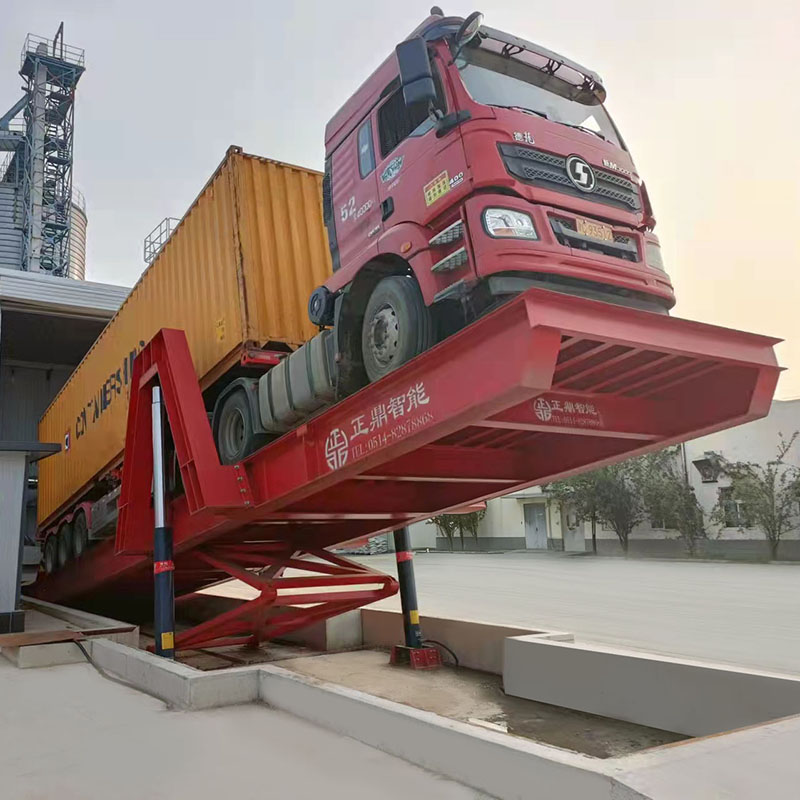
The shallow foundation truck dumper design changes this relationship between the equipment and the civil works around it. Instead of sinking the tilting frame into a deep pit, the platform sits on a shallow foundation whose depth corresponds only to the thickness of the platform structure itself. The hydraulic cylinders, synchronization system and support legs are engineered so that the lifting and tipping motion occurs largely above grade, which is why this configuration is sometimes referred to as an above-ground or low-pit truck dumper.
This approach is particularly relevant for facilities in the steel, chemical, cement, coal, grain, oil and food processing industries, where truck and container unloading stations are often added to existing yards that were not originally designed to accommodate deep pit excavation, high groundwater tables, or underground utility conflicts.
How the Shallow Pit Design Lowers Civil Engineering Costs
Before looking at the chart below, it helps to understand why foundation depth is the single biggest driver of civil engineering cost in a truck dumper project. Every additional meter of pit depth increases the volume of soil that must be excavated and removed, the amount of structural concrete needed to retain the pit walls, and the complexity of dewatering and drainage systems required to keep the pit dry. Deeper pits also extend construction schedules, since excavation, shoring, waterproofing and curing must all be completed in sequence before the mechanical equipment can be installed. For this reason, manufacturers that redesign the tipping mechanism to work within a shallow pit are directly targeting the largest cost component of the overall installation. The chart below illustrates how a shallow foundation truck dumper compares with a conventional deep-pit design in terms of relative civil engineering cost.
The donut chart above sets the conventional deep-pit truck dumper foundation at a baseline of 100 percent of civil engineering cost and shows the shallow foundation truck dumper consuming only a fraction of that baseline. The dark red arc represents the remaining cost share after adopting the shallow pit design, while the light pink arc represents the portion of cost that is eliminated. According to the manufacturer's engineering specifications, the shallow foundation configuration reduces civil construction cost by up to 70 percent, since the excavation depth is limited to the thickness of the platform rather than the full height of the tipping frame. This reduction is driven primarily by the elimination of deep excavation, reduced concrete volume for retaining structures, and a shorter dewatering and curing period before installation can proceed. A smaller pit also reduces the amount of structural steel needed for shoring during construction, which further compounds the savings on the civil works side of the project. For plant operators working with existing yards, a shallower pit reduces the likelihood of encountering buried utilities, cable trenches or high groundwater tables that commonly complicate deep excavation projects. The reduced footprint below grade also shortens the overall installation timeline, since civil contractors can complete the shallow pit and pour the supporting slab in a fraction of the time required for a deep foundation. This time saving is particularly valuable for facilities that need to bring a new truck unloading station into service quickly, such as during a plant expansion or a seasonal harvest period in grain and food processing operations. Because less excavation is required, the amount of spoil that must be trucked off site and disposed of is also reduced, which has a secondary benefit for sites with limited space for temporary soil storage. Taken together, these factors explain why the shallow foundation truck-dumper concept is positioned as a practical alternative for projects where deep pit construction is costly, slow, or constrained by site conditions.
Excavation Depth Comparison for Truck Dumper Foundations
Foundation depth is the physical dimension that ultimately drives most of the cost and schedule differences described in the previous section, so it is useful to visualize it directly. In a conventional truck dumper, the pit must be deep enough to house the full tilting frame, hydraulic cylinder stroke and counterweight structure, which typically places the bottom of the pit well below the surrounding grade. In a shallow foundation truck dumper, the pit depth is limited to the thickness of the platform structure, since the tilting mechanism operates largely at or above grade level. The horizontal bar chart below expresses this difference using a relative excavation depth index, where the conventional design is treated as the reference point and the shallow foundation design is shown as a proportionally shallower pit.
In the chart above, the longer dark red bar represents the excavation depth index of a conventional deep-pit truck dumper, which is set at 100 to serve as the reference value for comparison. The shorter bar directly below it represents the shallow foundation truck dumper, whose excavation depth index sits at roughly 30 on the same relative scale, consistent with the manufacturer's statement that pit depth corresponds only to the thickness of the platform. This visual gap between the two bars is the physical reason behind the cost reduction shown in the donut chart earlier in this article, since less depth translates directly into less excavation volume, less concrete, and less time spent on shoring and dewatering. A shallower excavation also reduces the risk profile of the construction phase itself, because workers spend less time in confined, below-grade spaces and the pit walls require less temporary support during the pour. For site engineers evaluating a truck dumper for bulk cargo unloading, this depth comparison is often the first practical filter used when deciding whether a deep-pit or shallow foundation design is feasible for a given location. Sites with a high water table, existing underground piping, or limited excavation access frequently find that a shallow foundation truck dumper is the only realistic option without extensive and costly site remediation. Conversely, sites with ample space, low groundwater and no buried utility conflicts may still choose a deep-pit design if plant layout considerations make it preferable, since both configurations remain valid engineering approaches depending on project conditions. The relative depth index used in this chart is intended as an illustrative comparison based on the platform-thickness principle described by the manufacturer, rather than an exact measurement for any specific installation, since actual pit dimensions vary by model, capacity and site-specific engineering review. Buyers evaluating a truck-dumper for their own facility should request project-specific foundation drawings from the supplier so that the exact excavation requirement can be confirmed against local soil conditions.
Core Engineering Features of a Shallow Foundation Truck Dumper
Beyond the shallow pit itself, several engineering features work together to make this type of truck dumper safe, stable and efficient to operate on a daily basis. These characteristics are particularly relevant to plant managers who are comparing a truck-dumper purchase against long-term maintenance and safety considerations, rather than looking only at the initial installation cost.
- High-precision oil cylinder synchronous stability system: keeps both sides of the tilting platform moving in unison, which improves safety, reduces vibration during operation, lowers the mechanical impact on the oil cylinders, and extends cylinder service life.
- Full automatic retaining wheel fixing device: secures the truck's wheels automatically so the operator does not need to walk into the dusty unloading area to fix the vehicle manually, supporting simple, safe and efficient remote operation.
- Imported hydraulic cylinders and pumps: selected from established international brands for reliability and a long service life under repeated loading and tipping cycles.
- Unmanned control capability: allows the truck driver to complete the unloading operation independently, without requiring a dedicated professional operator on site for every cycle.
- Shallow foundation structural design: limits pit depth to the thickness of the platform, which is the core structural feature behind the civil engineering cost reduction discussed earlier in this article.
These features are designed to work together rather than in isolation. For example, the synchronous stability system reduces mechanical stress during each tipping cycle, which in turn supports the long service life claimed for the imported cylinders and pumps, while the automatic retaining wheel device and unmanned control capability reduce the number of operators required to be physically present in the loading zone during each cycle.
Three-Dimensional Structural Overview of the Truck Dumper Platform
To make the shallow foundation concept easier to visualize, the isometric diagram below shows the main structural elements of a truck dumper platform in a simplified three-dimensional view. Rather than showing exact engineering dimensions, the diagram is intended to illustrate how the platform, hydraulic support legs, pivot hinge and shallow foundation slab relate to one another in space. The labels point to the four structural zones that were described earlier in this article: the tilting platform where the truck or container sits, the hydraulic cylinder legs that provide the lifting force, the pivot hinge at the base of the ramp, and the shallow foundation slab that replaces a deep excavated pit.
In the isometric view above, the dark red surface represents the platform on which the truck or container rests during loading and unloading, and it is this surface that tilts through its working angle when the hydraulic cylinders extend. The two vertical support legs beneath the platform house the imported hydraulic cylinders described in the product characteristics section, and their synchronized extension is what keeps the platform level and stable as it rises. At the base of the ramp, the pivot hinge allows the lower edge of the platform to remain in contact with the ground level while the upper section lifts, which is the mechanical detail that makes an above-ground tipping motion possible without a deep pit. The shaded slab beneath the structure represents the shallow foundation itself, and its depth corresponds only to the thickness of the platform structure rather than extending down to accommodate the full tilting mechanism, which is the central engineering principle behind this product category. This diagram is a simplified representation for illustrative purposes and does not replace project-specific structural drawings, which should always be obtained from the manufacturer before construction begins.
Performance and Safety Design Attributes
Civil engineering cost is only one part of the decision when selecting a truck dumper, since day-to-day operating safety and long-term reliability matter just as much to plant managers. The radar chart below translates the design features described earlier into a simple illustrative rating across five attributes, based on the manufacturer's stated design characteristics rather than an independent laboratory test. It is intended to give a qualitative sense of where the design choices concentrate their benefits, rather than to represent a precise numerical benchmark against any external standard. Each axis of the chart corresponds to one of the engineering features already discussed in the product characteristics section above. Reading the chart from the center outward, a point closer to the edge indicates a stronger emphasis on that particular design attribute.
Along the operational safety axis, the shallow foundation truck dumper is positioned toward the outer edge of the chart because the automatic retaining wheel fixing device removes the need for an operator to approach a loaded vehicle in a dusty unloading zone. The cylinder service life axis reflects the combination of the synchronous stability system and the use of imported cylinders and pumps, both of which are described as contributing to a longer working life for the hydraulic components. The automation level axis reflects the unmanned control capability, which allows the truck driver to operate the equipment directly without a dedicated operator being present for every cycle. The vibration control axis reflects the synchronous stability system's role in keeping the platform level during lifting, which reduces mechanical shock transmitted to the cylinders and the supporting structure. The maintenance simplicity axis reflects a combination of fewer moving parts exposed below grade, due to the shallow foundation, and the overall design philosophy of reducing manual intervention during normal operating cycles. Because the pit itself is shallower, routine inspection and maintenance of the foundation area is generally more accessible than in a deep-pit installation, where technicians may need to descend into a confined space to inspect structural elements. It is worth repeating that this radar chart is a qualitative illustration of the design's stated priorities rather than a certified test result, and plant engineers evaluating a specific truck-dumper model should request the manufacturer's technical datasheet and, where applicable, third-party inspection reports for the exact model under consideration. Readers comparing multiple suppliers should treat this type of chart as a starting point for asking detailed technical questions rather than as a final basis for procurement decisions on its own.
Civil Construction Cost Reduction at a Glance
Because civil engineering cost is the single figure most frequently cited when discussing shallow foundation truck dumpers, it is useful to present it one more time in a dedicated gauge format that summarizes the entire discussion in a single visual. The gauge below shows the reported cost reduction achievement for the shallow foundation design relative to a conventional deep-pit installation, expressed as a percentage of the maximum figure referenced by the manufacturer. This chart is meant to function as a quick-reference summary for readers who want the headline number without reading through the full cost breakdown discussed earlier in the article. The needle position corresponds directly to the manufacturer's stated reduction range of roughly 60 to 70 percent depending on project conditions.
The needle in this gauge chart points close to the upper portion of the scale, illustrating that the manufacturer's reported reduction of up to 70 percent represents a substantial share of the theoretical maximum on this illustrative 0 to 100 percent scale. This single figure summarizes everything discussed in the earlier sections of this article: less excavation depth translates into less concrete, less shoring, less dewatering, and a shorter overall construction schedule before the truck dumper can be commissioned. For budget planning purposes, procurement teams can use this figure as a starting reference point when comparing quotations for civil works between a conventional deep-pit truck dumper and a shallow foundation truck dumper on the same site. It is important to note that the exact percentage achieved on any individual project depends on local soil conditions, the depth of the water table, the specific model and capacity selected, and the civil contractor's own pricing, so the 60 to 70 percent range should be treated as a representative figure rather than a guaranteed outcome for every installation. Even accounting for this variability, the direction of the saving is consistent across projects, since the underlying engineering principle, limiting pit depth to platform thickness, applies regardless of site-specific conditions. Facilities considering a new truck unloading station, or looking to replace an aging deep-pit dumper, may find that the shallow foundation approach shortens the time between project approval and commissioning, since civil works are typically the longest lead-time item in this type of installation. For multinational operators managing several plants across different regions, standardizing on a shallow foundation truck-dumper design can also simplify civil engineering specifications across sites with varying soil and groundwater conditions, since the foundation requirement is less sensitive to those variables than a deep-pit design would be.
Typical Industries That Use Shallow Foundation Truck Dumpers
Truck dumper equipment, including the shallow foundation configuration, is used across a range of bulk material handling industries where trucks, trailers or containers need to be unloaded quickly and safely. The table below summarizes some of the sectors where this type of equipment is commonly applied, along with the general type of material typically handled in each case.
| Typical industries and material types associated with truck dumper equipment | |
| Industry | Typical material handled |
| Steel | Ore, scrap metal, coke |
| Chemical | Bulk powder and granular chemical products |
| Cement | Clinker, raw meal, aggregate |
| Coal | Coal and coal by-products |
| Grain and food | Grain, oilseed, feed and other bulk food products |
Because unloading needs differ across these industries, a truck dumper is often specified alongside other automatic loading and unloading equipment, such as side dumpers, car loading equipment and container flippers, so that a single site can handle multiple vehicle and container types through the same unloading station.
Choosing a Shallow Foundation Truck Dumper Manufacturer
When evaluating a truck dumper manufacturer or wholesaler for a shallow foundation project, buyers typically look beyond the headline cost saving and review several additional factors before making a sourcing decision. The following list summarizes the main points procurement and engineering teams commonly evaluate when comparing suppliers of automatic loading and unloading equipment.
- Whether the supplier can provide project-specific structural and foundation drawings rather than only generic marketing dimensions.
- The brand and specification of the hydraulic cylinders and pumps used in the system, since these components directly affect long-term reliability.
- Whether the retaining wheel fixing device and control system support unmanned or remote operation suited to the buyer's staffing model.
- The manufacturer's track record and experience across the buyer's specific industry, whether that is steel, chemical, cement, coal, grain or food processing.
- Export experience and after-sales support capability for buyers located outside the manufacturer's home country.
Working through this checklist with a shortlist of truck-dumper suppliers or wholesalers helps ensure that the equipment ultimately selected matches both the site's civil engineering constraints and the plant's day-to-day operational requirements.
About Jiangsu Zhengding Intelligent Equipment Co., Ltd.
Jiangsu Zhengding Intelligent Equipment Co., Ltd. is a national high-tech enterprise mainly engaged in the research and development and manufacturing of intelligent logistics equipment. The company provides systematic solutions for the automatic loading and unloading of cars and containers for customers across different industries. It wholeheartedly provides users with various types of automatic loading and unloading equipment, including rear dumpers, side dumpers, car loading equipment and container flippers, and is one of the companies with a relatively complete range of automatic loading and unloading equipment for cars and containers in China.
The company's products are widely used in the steel, chemical, cement, coal, grain, oil and food industries, and are exported to Japan, Brazil, Egypt, Pakistan, India, the Middle East and Southeast Asian countries. The annual sales volume and technical performance of its automatic loading and unloading equipment for cars are in a leading position in China, and typical international users include Budweiser, Heineken, Buhler Group, Wilmar International, Cargill, DuPont, Louis Dreyfuss, Charoen Pokphand Group and Saint-Gobain Group.
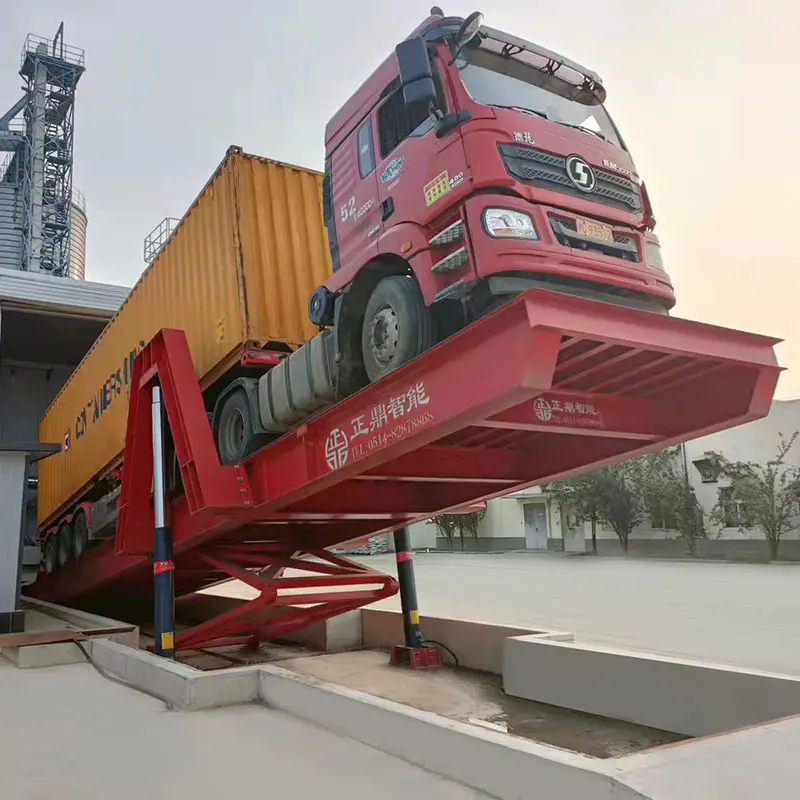
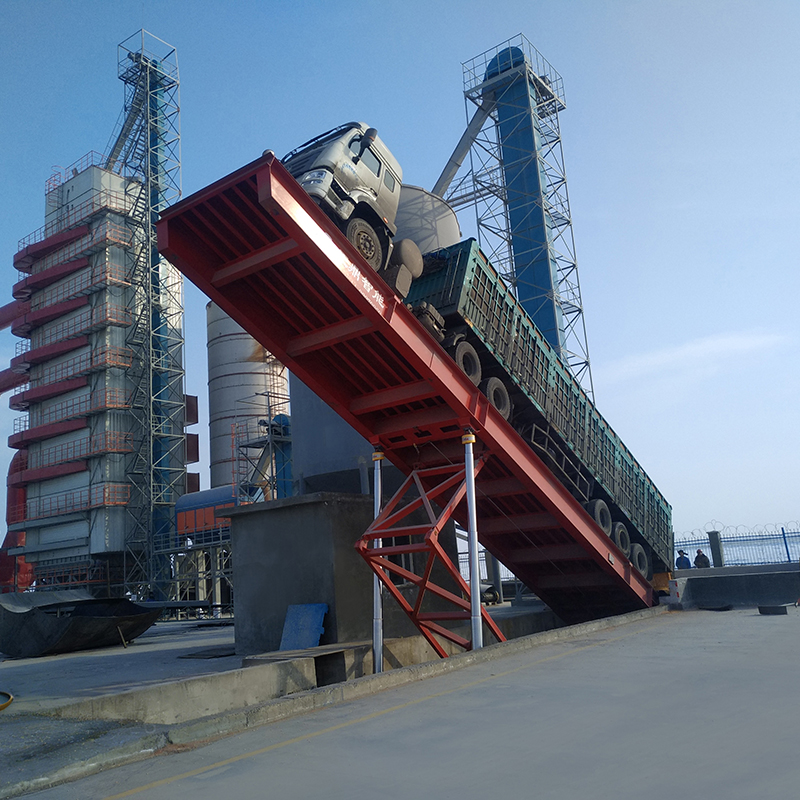
The image above shows a shallow foundation truck dumper lifting a loaded truck and container trailer during an unloading cycle, illustrating how the platform rises above grade while the supporting foundation beneath it remains shallow, consistent with the platform-thickness design principle described throughout this article.
Frequently Asked Questions
Q1: What makes a truck dumper a shallow foundation design?
A truck dumper is classified as a shallow foundation design when the depth of its foundation pit is limited to the thickness of the platform structure itself, rather than extending down to accommodate the full tilting frame as in a conventional deep-pit design.
Q2: How much can a shallow foundation truck dumper reduce civil engineering costs?
According to the manufacturer's engineering specifications, a shallow foundation truck dumper can reduce civil engineering costs by roughly 60 to 70 percent compared with a conventional deep-pit truck dumper, mainly by reducing excavation, concrete and dewatering requirements.
Q3: Is unmanned operation possible with a shallow foundation truck-dumper?
Yes, this equipment can support unmanned control so that the truck driver completes the unloading operation directly, supported by an automatic retaining wheel fixing device that removes the need for an operator to enter the loading zone manually.
Q4: Which industries commonly use this type of truck dumper?
Shallow foundation truck dumpers are commonly used in the steel, chemical, cement, coal, grain, oil and food industries, wherever trucks, trailers or containers need to be unloaded through gravity discharge on a limited construction budget or timeline.


